" height="31.469717497114758px" id="eCOXNpv5s" transform="translate(0 8.53)" width="32.43161611406683px"/><path d="M 6.851 1.35 C 6.851 4.361 4.335 6.803 1.23 6.803 L 0 6.803 L 0 5.452 C 0 2.442 2.515 0 5.62 0 L 6.85 0 L 6.85 1.35 Z" fill="rgb(255, 87, 20)" height="6.8031511867128245px" id="yGyYVDzJf" transform="translate(16.216 0)" width="6.851178904096614px"/><path d="M 59.255 11.828 C 59.12 11.828 59.053 11.758 59.053 11.615 L 59.053 0.426 C 59.053 0.285 59.12 0.214 59.255 0.214 L 66.26 0.214 C 66.394 0.214 66.46 0.284 66.46 0.427 L 66.46 1.881 C 66.46 2.022 66.394 2.093 66.26 2.093 L 61.248 2.093 L 61.248 5.054 L 65.821 5.054 C 65.955 5.054 66.022 5.125 66.022 5.268 L 66.022 6.633 C 66.022 6.774 65.955 6.845 65.821 6.845 L 61.248 6.845 L 61.248 9.948 L 66.26 9.948 C 66.394 9.948 66.46 10.019 66.46 10.161 L 66.46 11.616 C 66.46 11.757 66.394 11.828 66.26 11.828 Z M 51.202 12.04 C 50.313 12.04 49.532 11.874 48.861 11.544 C 48.203 11.213 47.662 10.694 47.307 10.054 C 46.942 9.403 46.758 8.606 46.758 7.66 L 46.758 4.38 C 46.758 2.962 47.184 1.88 48.038 1.135 C 48.904 0.378 50.087 0 51.587 0 C 52.661 0 53.563 0.166 54.294 0.497 C 55.037 0.828 55.581 1.289 55.922 1.88 C 56.276 2.459 56.398 3.127 56.287 3.884 C 56.276 4.024 56.202 4.097 56.068 4.097 L 54.295 4.078 C 54.148 4.078 54.081 4.008 54.092 3.866 C 54.117 3.44 54.038 3.079 53.855 2.784 C 53.684 2.477 53.416 2.246 53.05 2.092 C 52.685 1.939 52.215 1.862 51.641 1.862 C 50.751 1.862 50.08 2.074 49.629 2.5 C 49.178 2.914 48.953 3.559 48.953 4.433 L 48.953 7.607 C 48.953 8.494 49.172 9.143 49.612 9.558 C 50.062 9.971 50.727 10.178 51.605 10.178 C 52.459 10.178 53.111 9.989 53.562 9.611 C 54.014 9.22 54.239 8.659 54.239 7.926 L 54.239 7.359 L 51.77 7.359 C 51.623 7.359 51.55 7.288 51.55 7.146 L 51.55 5.958 C 51.55 5.828 51.623 5.762 51.77 5.762 L 56.123 5.762 C 56.257 5.762 56.325 5.828 56.325 5.958 L 56.325 9.22 C 56.325 9.622 56.331 10.031 56.343 10.444 C 56.367 10.858 56.41 11.242 56.471 11.597 C 56.495 11.667 56.483 11.728 56.434 11.774 C 56.395 11.81 56.342 11.829 56.288 11.827 L 54.86 11.827 C 54.809 11.83 54.758 11.817 54.714 11.792 C 54.674 11.751 54.643 11.703 54.623 11.65 C 54.594 11.479 54.569 11.308 54.549 11.136 L 54.512 10.55 L 54.476 10.55 C 54.265 10.862 53.998 11.132 53.69 11.348 C 53.364 11.583 52.998 11.757 52.61 11.863 C 52.151 11.986 51.677 12.046 51.201 12.04 Z M 34.943 11.828 C 34.809 11.828 34.742 11.758 34.742 11.615 L 34.742 0.426 C 34.742 0.285 34.809 0.214 34.943 0.214 L 37.541 0.214 C 37.662 0.214 37.748 0.261 37.797 0.355 L 40.741 6.119 C 40.949 6.508 41.138 6.886 41.309 7.253 C 41.63 7.897 41.923 8.553 42.187 9.222 L 42.241 9.222 C 42.217 8.903 42.199 8.559 42.186 8.193 L 42.15 7.059 L 42.15 0.427 C 42.15 0.285 42.217 0.214 42.352 0.214 L 44.071 0.214 C 44.217 0.214 44.29 0.284 44.29 0.427 L 44.29 11.616 C 44.29 11.757 44.217 11.828 44.071 11.828 L 41.509 11.828 C 41.388 11.828 41.303 11.781 41.254 11.686 L 38.4 6.119 C 38.215 5.759 38.032 5.399 37.852 5.037 C 37.683 4.664 37.513 4.291 37.34 3.92 C 37.189 3.57 37.036 3.222 36.882 2.873 L 36.827 2.873 L 36.864 3.99 C 36.876 4.369 36.882 4.747 36.882 5.125 L 36.882 11.615 C 36.882 11.757 36.809 11.828 36.663 11.828 Z M 22.818 11.828 C 22.659 11.828 22.598 11.752 22.635 11.597 L 26.586 0.373 C 26.622 0.267 26.701 0.213 26.823 0.213 L 29.164 0.213 C 29.299 0.213 29.384 0.267 29.421 0.373 L 33.389 11.597 C 33.439 11.752 33.383 11.828 33.225 11.828 L 31.286 11.828 C 31.165 11.828 31.085 11.775 31.048 11.668 L 28.689 4.381 C 28.567 3.99 28.446 3.607 28.324 3.228 L 27.994 2.057 L 27.957 2.057 C 27.848 2.436 27.732 2.82 27.609 3.21 C 27.5 3.589 27.384 3.967 27.262 4.344 L 24.958 11.65 C 24.921 11.769 24.837 11.828 24.702 11.828 L 22.817 11.828 Z M 25.323 9.399 L 25.744 7.661 L 30.189 7.661 L 30.628 9.399 Z M 12.919 11.828 C 12.784 11.828 12.717 11.758 12.717 11.615 L 12.717 0.426 C 12.717 0.285 12.784 0.214 12.919 0.214 L 16.76 0.214 C 18.333 0.214 19.479 0.509 20.199 1.1 C 20.918 1.68 21.278 2.531 21.278 3.654 C 21.278 4.47 21.083 5.161 20.692 5.728 C 20.314 6.284 19.748 6.668 18.992 6.881 L 18.992 6.917 L 21.936 11.58 C 21.986 11.65 21.992 11.711 21.954 11.757 C 21.93 11.805 21.875 11.828 21.79 11.828 L 19.76 11.828 C 19.655 11.831 19.556 11.777 19.504 11.686 L 16.742 7.201 L 14.912 7.201 L 14.912 11.616 C 14.912 11.757 14.839 11.828 14.694 11.828 Z M 14.912 5.516 L 16.669 5.516 C 17.51 5.516 18.119 5.374 18.497 5.09 C 18.887 4.806 19.083 4.351 19.083 3.725 C 19.083 3.11 18.906 2.672 18.553 2.413 C 18.198 2.152 17.601 2.022 16.759 2.022 L 14.912 2.022 L 14.912 5.515 Z M 5.412 12.04 C 3.804 12.04 2.596 11.668 1.791 10.923 C 0.986 10.166 0.585 9.084 0.585 7.678 L 0.585 4.362 C 0.585 2.943 0.986 1.862 1.791 1.117 C 2.596 0.372 3.804 0 5.413 0 C 7.01 0 8.211 0.372 9.016 1.117 C 9.821 1.862 10.223 2.943 10.223 4.362 L 10.223 7.678 C 10.223 9.084 9.821 10.167 9.017 10.923 C 8.211 11.667 7.01 12.04 5.413 12.04 Z M 5.412 10.178 C 6.279 10.178 6.931 9.959 7.37 9.522 C 7.809 9.073 8.029 8.423 8.029 7.572 L 8.029 4.469 C 8.029 3.618 7.809 2.974 7.37 2.536 C 6.931 2.086 6.279 1.862 5.413 1.862 C 4.546 1.862 3.889 2.086 3.437 2.536 C 2.999 2.974 2.778 3.618 2.778 4.469 L 2.778 7.572 C 2.778 8.423 2.999 9.073 3.437 9.522 C 3.889 9.959 4.548 10.178 5.413 10.178 Z M 59.488 25.96 C 59.38 25.96 59.326 25.905 59.326 25.796 L 59.326 15.351 C 59.326 15.241 59.38 15.187 59.488 15.187 L 61.849 15.187 C 63.197 15.187 64.205 15.565 64.874 16.321 C 65.542 17.068 65.877 18.203 65.877 19.726 L 65.877 21.026 C 65.877 22.682 65.548 23.921 64.891 24.743 C 64.233 25.555 63.235 25.96 61.898 25.96 Z M 60.863 24.545 L 61.8 24.545 C 62.674 24.545 63.316 24.266 63.726 23.707 C 64.136 23.148 64.34 22.27 64.34 21.075 L 64.34 19.677 C 64.34 18.635 64.136 17.862 63.726 17.359 C 63.316 16.854 62.664 16.601 61.768 16.601 L 60.863 16.601 L 60.863 24.546 Z M 50.762 25.96 C 50.664 25.96 50.616 25.905 50.616 25.796 L 50.616 15.351 C 50.616 15.241 50.664 15.187 50.762 15.187 L 53.285 15.187 C 54.396 15.187 55.215 15.439 55.743 15.944 C 56.272 16.447 56.535 17.215 56.535 18.246 C 56.535 19.036 56.396 19.677 56.115 20.171 C 55.858 20.644 55.44 21.011 54.935 21.207 L 54.935 21.223 L 56.972 25.746 C 57.037 25.889 57 25.96 56.86 25.96 L 55.468 25.96 C 55.393 25.96 55.338 25.922 55.306 25.845 L 53.398 21.486 L 52.154 21.486 L 52.154 25.796 C 52.154 25.906 52.105 25.96 52.008 25.96 L 50.763 25.96 Z M 52.153 20.154 L 53.253 20.154 C 53.867 20.154 54.309 20.006 54.578 19.71 C 54.848 19.414 54.984 18.953 54.984 18.328 C 54.984 17.692 54.848 17.242 54.578 16.979 C 54.309 16.716 53.878 16.585 53.285 16.585 L 52.153 16.585 Z M 41.428 25.96 C 41.32 25.96 41.282 25.9 41.315 25.78 L 43.983 15.318 C 44.006 15.231 44.064 15.187 44.162 15.187 L 45.828 15.187 C 45.914 15.187 45.973 15.231 46.005 15.317 L 48.706 25.78 C 48.727 25.9 48.685 25.96 48.577 25.96 L 47.202 25.96 C 47.137 25.96 47.084 25.916 47.04 25.829 L 45.455 18.92 C 45.369 18.56 45.289 18.198 45.213 17.835 C 45.138 17.473 45.062 17.106 44.987 16.732 L 44.954 16.732 C 44.889 17.106 44.819 17.473 44.743 17.835 C 44.668 18.187 44.592 18.548 44.517 18.92 L 42.932 25.829 C 42.911 25.916 42.851 25.96 42.754 25.96 Z M 43.207 23.526 L 43.482 22.178 L 46.458 22.178 L 46.765 23.526 L 43.208 23.526 Z M 33.5 25.96 C 33.391 25.96 33.338 25.905 33.338 25.796 L 33.338 15.351 C 33.338 15.241 33.391 15.187 33.5 15.187 L 35.861 15.187 C 37.209 15.187 38.217 15.565 38.886 16.321 C 39.554 17.068 39.889 18.203 39.889 19.726 L 39.889 21.026 C 39.889 22.682 39.559 23.921 38.902 24.743 C 38.244 25.555 37.247 25.96 35.909 25.96 Z M 34.874 24.545 L 35.813 24.545 C 36.686 24.545 37.328 24.266 37.737 23.707 C 38.147 23.148 38.351 22.27 38.351 21.075 L 38.351 19.677 C 38.351 18.635 38.147 17.862 37.737 17.359 C 37.328 16.854 36.675 16.601 35.78 16.601 L 34.874 16.601 L 34.874 24.546 Z M 24.031 25.96 C 23.934 25.96 23.885 25.905 23.885 25.796 L 23.885 15.351 C 23.885 15.241 23.934 15.187 24.031 15.187 L 25.858 15.187 C 25.955 15.187 26.015 15.225 26.036 15.301 L 28.091 21.059 C 28.209 21.366 28.322 21.695 28.43 22.045 C 28.549 22.397 28.656 22.737 28.755 23.066 C 28.862 23.383 28.947 23.679 29.012 23.953 L 29.061 23.953 C 29.037 23.619 29.015 23.284 28.996 22.949 L 28.964 21.832 L 28.964 15.351 C 28.964 15.241 29.012 15.187 29.109 15.187 L 30.306 15.187 C 30.404 15.187 30.452 15.241 30.452 15.351 L 30.452 25.796 C 30.452 25.906 30.404 25.96 30.306 25.96 L 28.495 25.96 C 28.419 25.96 28.36 25.922 28.317 25.845 L 26.311 20.253 C 26.121 19.736 25.943 19.215 25.778 18.69 C 25.638 18.201 25.492 17.713 25.341 17.226 L 25.309 17.226 C 25.319 17.544 25.325 17.901 25.325 18.296 L 25.357 19.447 C 25.368 19.83 25.374 20.193 25.374 20.532 L 25.374 25.796 C 25.374 25.906 25.325 25.96 25.228 25.96 Z M 14.698 25.96 C 14.589 25.96 14.552 25.9 14.584 25.78 L 17.253 15.318 C 17.274 15.231 17.334 15.187 17.431 15.187 L 19.097 15.187 C 19.183 15.187 19.242 15.231 19.275 15.317 L 21.975 25.78 C 21.998 25.9 21.954 25.96 21.847 25.96 L 20.471 25.96 C 20.407 25.96 20.353 25.916 20.309 25.829 L 18.724 18.92 C 18.639 18.56 18.558 18.198 18.482 17.835 C 18.407 17.473 18.331 17.106 18.256 16.732 L 18.224 16.732 C 18.159 17.106 18.089 17.473 18.013 17.835 C 17.938 18.187 17.862 18.548 17.787 18.92 L 16.202 25.829 C 16.18 25.916 16.121 25.96 16.023 25.96 Z M 16.476 23.526 L 16.752 22.178 L 19.728 22.178 L 20.035 23.526 L 16.477 23.526 Z M 10.267 25.96 C 10.17 25.96 10.122 25.905 10.122 25.796 L 10.122 16.619 L 7.97 16.619 C 7.874 16.619 7.825 16.559 7.825 16.438 L 7.825 15.353 C 7.825 15.242 7.874 15.188 7.97 15.188 L 13.81 15.188 C 13.906 15.188 13.955 15.242 13.955 15.353 L 13.955 16.437 C 13.955 16.558 13.906 16.618 13.81 16.618 L 11.658 16.618 L 11.658 25.797 C 11.658 25.907 11.609 25.961 11.512 25.961 L 10.267 25.961 Z M 2.948 26.093 C 1.848 26.093 1.061 25.807 0.587 25.237 C 0.123 24.667 -0.066 23.91 0.02 22.967 C 0.03 22.814 0.085 22.737 0.182 22.737 L 1.378 22.737 C 1.487 22.737 1.54 22.814 1.54 22.968 C 1.498 23.548 1.6 23.987 1.848 24.282 C 2.107 24.568 2.495 24.711 3.013 24.711 C 3.52 24.711 3.892 24.595 4.128 24.365 C 4.366 24.135 4.485 23.773 4.485 23.28 C 4.485 23.027 4.452 22.802 4.387 22.605 C 4.32 22.403 4.209 22.218 4.063 22.062 C 3.897 21.877 3.7 21.721 3.481 21.602 L 1.751 20.566 C 1.169 20.204 0.743 19.803 0.473 19.365 C 0.215 18.915 0.09 18.367 0.101 17.72 C 0.111 16.854 0.355 16.195 0.829 15.746 C 1.314 15.285 2.015 15.055 2.932 15.055 C 3.946 15.055 4.706 15.324 5.212 15.861 C 5.729 16.387 5.945 17.134 5.859 18.099 C 5.838 18.263 5.784 18.345 5.697 18.345 L 4.469 18.345 C 4.361 18.345 4.317 18.263 4.34 18.098 C 4.383 17.582 4.281 17.183 4.033 16.898 C 3.796 16.602 3.44 16.453 2.965 16.453 C 2.545 16.453 2.222 16.558 1.995 16.766 C 1.769 16.963 1.655 17.27 1.655 17.687 C 1.645 18.071 1.72 18.389 1.881 18.64 C 2.043 18.882 2.313 19.112 2.69 19.333 L 4.372 20.351 C 4.782 20.592 5.105 20.851 5.343 21.124 C 5.59 21.388 5.769 21.695 5.876 22.046 C 5.985 22.385 6.038 22.797 6.038 23.28 C 6.038 24.168 5.79 24.858 5.294 25.352 C 4.798 25.846 4.016 26.092 2.949 26.092 Z" fill="rgb(23, 23, 23)" height="26.09262957451628px" id="G_jsIAzLG" transform="translate(40.54 11.039)" width="66.46047841033874px"/></g></svg>)
" height="31.469717497114758px" id="nxleYtm6x" transform="translate(1 8.53)" width="32.43161611406683px"/><path d="M 6.851 1.35 C 6.851 4.361 4.335 6.803 1.23 6.803 L 0 6.803 L 0 5.452 C 0 2.442 2.515 0 5.62 0 L 6.85 0 L 6.85 1.35 Z" fill="rgb(255, 87, 20)" height="6.8031511867128245px" id="ZZ56pTyUM" transform="translate(17.216 0)" width="6.851178904096614px"/></svg>)
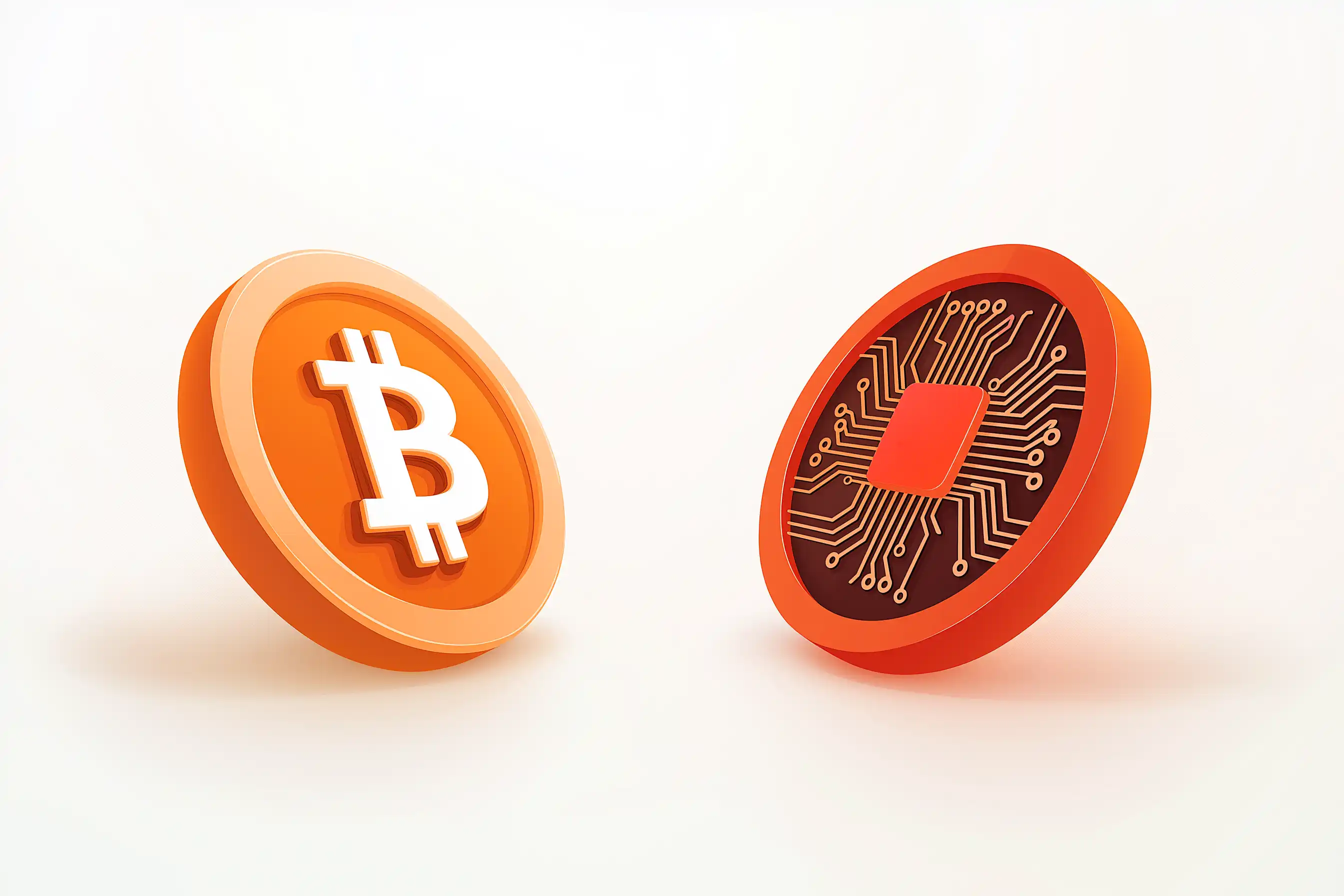
The battle for the future of money is no longer theoretical. Bitcoin, launched in 2009 as the world’s first decentralised cryptocurrency, now competes for attention alongside Central Bank Digital Currencies (CBDC), state-issued digital money that over 130 countries are actively exploring or piloting starting in early 2025. Bitcoin’s market cap regularly exceeds hundreds of billions of dollars, while governments from Beijing to Brussels are racing to define what official digital currency will look like.
This sets up a fundamental question: will the future of digital money be driven by open, permissionless networks like Bitcoin, or by centrally controlled CBDCs issued by institutions like the Federal Reserve Bank and other central banks? The answer may well be both. In this guide, you’ll learn how these two approaches differ in technology, governance, privacy, and practical use cases, giving you the knowledge to navigate the rapidly evolving landscape of digital currency.
What is a Central Bank Digital Currency (CBDC)?
A central bank digital currency is a digital form of a nation’s fiat currency, issued and backed directly by its central bank. Think of it as an electronic version of physical cash, a digital dollar, digital euro, or digital yuan that carries the same legal tender status as paper currency.
The critical distinction is that a CBDC is a direct liability of the central bank itself. This makes it fundamentally different from the money in your bank account (which is a liability of a commercial bank) or privately issued stablecoins (which are liabilities of private companies).
Two Main Types of CBDCs
Retail CBDCs are designed for everyday use by the general public. Examples include:
The Bahamas’ Sand Dollar (launched 2020)
Nigeria’s eNaira
Jamaica’s JAM-DEX
Wholesale CBDCs are used among financial institutions and central banks for large-value transactions and interbank settlements. Projects like mBridge connect multiple central banks to test cross-border settlement systems.
Current Global Status
The CBDC landscape is evolving rapidly:
Launched: The Bahamas, Jamaica, and Nigeria have operational retail CBDCs
Large-scale pilot: China’s digital yuan has processed hundreds of billions of yuan in test transactions across major cities
In development: The European Central Bank is piloting a digital euro; India is testing the e-rupee
Cautious approach: The U.S. has paused retail CBDC development but continues wholesale experiments through projects like Project Agorá
Key Policy Goals
Central banks pursuing CBDCs typically cite several objectives:
Faster, cheaper payments within existing payment systems
Greater financial inclusion for unbanked populations
Enhanced regulatory oversight and transaction transparency
A policy response to the rise of stablecoins and other cryptocurrencies
Reduced reliance on physical currency and cash handling costs
What is Bitcoin?
Bitcoin is a decentralised, open-source cryptocurrency created in 2009 by the pseudonymous Satoshi Nakamoto. It emerged in the aftermath of the 2008 financial crisis as a direct response to centralised banking failures, offering a new model for digital money that operates without intermediaries.
Here are the core characteristics that define Bitcoin:
Public blockchain: Bitcoin runs on a globally distributed ledger maintained by thousands of independent nodes. Every transaction is recorded publicly and cannot be altered once confirmed.
Proof-of-work mining: Miners compete using computing power to validate transactions and secure the network. In return, they receive block rewards (currently about 3.125 BTC per block after the 2024 halving) plus transaction fees.
Fixed supply: The total supply is capped at 21 million BTC, enforcing algorithmic scarcity. This fixed monetary policy contrasts sharply with fiat currency systems where central banks can expand supply.
Peer-to-peer transactions: Users can send bitcoin directly to one another without banks or payment processors. Transactions are confirmed by the network, typically within 10-minute blocks.
Primary roles today: Bitcoin functions as a speculative asset, a “digital gold” store of value, and a payment rail for cross-border transfers. Some merchants accept it for online commerce, though adoption remains limited.
Legal status: Bitcoin is not legal tender in most countries. Notable exceptions include El Salvador, which adopted it as legal tender in 2021. In most jurisdictions, it’s treated as property, a commodity, or a virtual asset for tax and regulatory purposes.
Volatility: Bitcoin’s price is highly volatile, with annual swings of 300% or more in some years. This volatility limits its current utility as everyday money.
Bitcoin vs CBDC: Core Differences
Understanding the fundamental differences between Bitcoin and CBDCs requires looking beyond the fact that both are digital. These systems represent opposing philosophies about who should control money.
Governance
Bitcoin: Decentralised and community-driven. No central authority grants access or controls the network. Changes require broad consensus among developers, miners, and users.
CBDCs: Centrally governed by central banks and shaped by national legislation. The People’s Bank of China, the Reserve Bank of India, and other central banks maintain direct control over their respective CBDCs.
Monetary Policy
Bitcoin: Fixed, pre-programmed supply schedule with halvings approximately every four years. No entity can create more bitcoin or adjust interest rates on holdings.
CBDCs: Subject to the same elastic supply and policy tools as existing fiat currency. Central banks retain full authority over monetary policy, including the ability to expand or contract supply.
Legal Status
Bitcoin: Usually treated as property, a commodity, or a virtual asset, not legal tender in most jurisdictions.
CBDCs: Full legal tender status, equivalent to physical cash. A government backed digital currency that must be accepted for debts and transactions.
Infrastructure
Bitcoin: Permissionless public blockchain technology where anyone can participate, run a node, or mine.
CBDCs: Typically use permissioned ledgers or centralised databases controlled by approved entities and selected financial institutions.
Value Stability
Bitcoin: Market-driven price determined by supply and demand. Annual volatility can exceed 300%.
CBDCs: Designed to maintain 1:1 parity with the national currency. A digital euro equals one physical euro by design.
Technology and Security Models
Both Bitcoin and CBDCs are digital, but they rely on fundamentally different technical architectures and security models. These differences shape everything from transaction speed to censorship resistance.
Bitcoin’s Infrastructure
Bitcoin operates on a public, globally distributed blockchain maintained by thousands of independent nodes worldwide.
Consensus mechanism: Proof-of-work mining, where miners compete using computing power to validate transactions. This process consumes significant energy (approximately 150 TWh annually) but provides robust security against attacks.
Immutability: Once transactions receive several confirmations, they become effectively irreversible. No central authority can modify the ledger.
Throughput limitations: The base layer processes roughly 7 transactions per second, compared to Visa’s 24,000. Layer-2 solutions like the Lightning Network address scalability, potentially handling millions of transactions.
Resilience: No single point of failure. The network continues operating as long as nodes exist globally.
CBDC Infrastructures
Most CBDCs use permissioned ledgers or centralised databases operated by the central bank and authorised intermediaries.
Access control: Only approved financial institutions and regulated wallets can interact with the system. Users must complete KYC (Know Your Customer) verification.
Identity integration: Accounts or wallets are tied to verified identities, enabling compliance with anti-money laundering requirements.
Reversibility: Central banks or designated authorities can freeze accounts, reverse transactions, or recover access when credentials are lost.
Integration: CBDCs connect directly with existing banking infrastructure and payment systems, enabling seamless adoption.
Resilience Trade-offs
Aspect | Bitcoin | CBDC |
Censorship resistance | High, no entity can block transactions | Low, central authority can freeze funds |
Single point of failure | None, distributed globally | Potential, central systems |
Energy consumption | High (proof-of-work) | Low (centralised systems) |
Transaction reversibility | Extremely difficult | Built-in capability |
Regulatory compliance | Optional via exchanges | Mandatory by design |
China’s digital yuan exemplifies the permissioned approach, with tight integration into existing banking and payments networks, real-time transaction monitoring, and the ability to set spending limits by location or purpose.
Privacy, Control, and Censorship
Privacy and control represent the most politically sensitive differences between Bitcoin and CBDCs. These design choices reflect deeper values about the relationship between individuals, their money, and the state.
Bitcoin’s Privacy Model
Bitcoin offers pseudonymity rather than true anonymity:
Public transactions: All bitcoin transactions are recorded on a transparent public ledger. Anyone can view transaction amounts and addresses.
Address pseudonymity: Bitcoin addresses aren’t inherently tied to legal identities. However, once an address is linked to a person (through exchanges, IP logs, or other data), their entire transaction history becomes visible.
No central control: No central authority can freeze funds, block transactions, or seize assets at the protocol level. This censorship resistance is a core feature.
Law enforcement access: Despite pseudonymity, blockchain analytics firms regularly help authorities trace criminal activity. The public nature of the blockchain actually aids investigation in many cases.
CBDC Privacy Models
CBDCs typically incorporate identity verification and government oversight:
Identity linkage: Users access CBDCs through regulated wallets or bank accounts that require KYC verification. Transactions are tied to verified identities.
Central visibility: Central banks or designated authorities can access complete transaction histories, subject to national privacy laws.
Compliance by design: Anti-money laundering and counter-terrorism financing requirements are built into the system architecture.
Programmability and Control
CBDCs enable capabilities that Bitcoin cannot replicate:
Transaction limits: Spending caps by amount, time period, or merchant category
Targeted stimulus: Direct payments to specific populations or for specific purposes
Expiring money: Time-limited currency that must be spent within a window
Geographic restrictions: Funds valid only in certain regions or at approved merchants
These features have sparked intense debate. China’s e-CNY design has raised concerns about surveillance potential, while the European Union and United States continue public discussions about what privacy guarantees any retail CBDC should include.
Consumer Protection Trade-offs
Feature | Bitcoin | CBDC |
Fund recovery if keys lost | Generally impossible | Built-in recovery mechanisms |
Fraud reversal | Not possible | Central bank can reverse |
Account freezing | No central authority can freeze | Authorities can freeze for legal reasons |
Self-custody option | Yes, full control | Depends on design |
Bitcoin offers self-sovereignty: you control your funds completely, but if private keys are lost or stolen, recovery is generally impossible. CBDCs provide consumer protection through the banking sector and regulatory oversight, but users surrender direct control over their funds.
Economic and Policy Implications
Bitcoin and CBDCs have vastly different implications for banking systems, monetary policy, and financial stability. Understanding these differences matters for anyone evaluating how digital money might reshape economies.
Bitcoin’s Economic Role
Bitcoin’s fixed supply and decentralised nature create unique economic dynamics:
Digital gold narrative: Many holders treat Bitcoin as a hedge against inflation or currency debasement, similar to gold. Some central banks have even considered it as a potential reserve asset.
Capital flight potential: In countries with capital controls or unstable currencies, Bitcoin provides a means of moving value across borders outside traditional financial transactions.
Limited monetary policy impact: Because no entity controls Bitcoin’s supply, it cannot be used as a monetary policy tool. Its influence on fiat stability comes only through market adoption and regulatory responses.
Volatility constraints: Annual price swings make Bitcoin impractical as a unit of account or medium of exchange for most purposes today.
CBDC’s Economic Implications
Central bank digital currencies could fundamentally alter the relationship between citizens and the banking system:
Direct central bank access: Retail CBDCs allow the general public to hold risk-free central bank money directly, not just through commercial banks.
Bank disintermediation risk: If citizens move deposits from commercial banks into CBDC wallets, banks could face funding challenges, potentially affecting their ability to lend.
Financial stability concerns: During banking crises, easy access to risk-free CBDC could accelerate bank runs as depositors flee to safety.
Enhanced policy transmission: CBDCs could enable more direct monetary policy tools:
Programmable stimulus payments
Negative interest rates on holdings (controversial)
Targeted support for specific economic sectors
Policy Developments to Watch
Major economies are taking different approaches:
European Central Bank: Actively developing a digital euro, with extensive public consultation on privacy and design
U.S. Federal Reserve: Cautious on retail CBDCs, focusing instead on wholesale projects like Project Agorá and earlier experiments like Project Hamilton
Bank for International Settlements: Coordinating international settlements experiments among member central banks
Emerging markets: Many developing nations see CBDCs as tools for financial inclusion and cheaper payments, balancing benefits against infrastructure and security costs
Use Cases and Real-World Examples
Theory matters less than practice. Here’s where Bitcoin and CBDCs are actually being used today.
Bitcoin Use Cases
Bitcoin has found practical adoption in several scenarios:
Cross-border remittances: Sending money internationally via Bitcoin can cost under 1% in fees, compared to traditional remittance services averaging 6-7%. This benefits migrant workers sending money home.
Inflation hedging: In countries experiencing high inflation or currency instability, parts of Latin America, Turkey, Nigeria, some citizens use Bitcoin as a savings vehicle to preserve purchasing power.
Capital controls circumvention: Where governments restrict currency conversion or outflows, Bitcoin provides an alternative (though often legally grey) channel for moving value.
Merchant payments: A growing ecosystem of payment processors allows businesses to accept Bitcoin and receive settlement in local fiat currency, reducing volatility risk.
Institutional adoption: Companies and investment funds increasingly hold Bitcoin as a treasury reserve asset, treating it as digital gold within diversified portfolios.
CBDC Use Cases
Launched and pilot CBDCs demonstrate different value propositions:
Bahamas’ Sand Dollar: Launched in 2020, it improves payment access across remote islands where traditional banking infrastructure is limited. Offline payment capability works in disaster-prone areas.
Nigeria’s eNaira: Aimed at financial inclusion in a country where many lack bank accounts. Enables government transfers and payments without requiring traditional bank relationships.
Jamaica’s JAM-DEX: Targets similar inclusion goals while reducing cash handling costs for businesses and government.
China’s digital yuan: The most extensive pilot globally, with hundreds of billions of yuan in cumulative test transactions. Used for retail payments, public transport, and e-commerce. Demonstrates programmability features and government distribution capabilities.
Cross-Border Experiments
The mBridge project connects central banks from China, Thailand, the UAE, and Hong Kong to test wholesale CBDC-based international settlements. This could dramatically reduce the time and cost of global payments between participating nations.
Key distinction: Bitcoin is globally accessible by default, anyone with internet access can use it regardless of location. CBDC usage is geographically bound and shaped by each jurisdiction’s regulations.
Bitcoin, CBDCs, and Stablecoins: How They Interact
The digital money landscape includes a third major player: privately issued stablecoins. Understanding how these three categories interact is essential for grasping the full picture.
What Are Stablecoins?
Stablecoins are cryptocurrencies designed to maintain stable value, typically pegged 1:1 to fiat currencies like the U.S. dollar. Major examples include:
USDT (Tether): The largest stablecoin by market cap
USDC (Circle): Often favoured for regulatory compliance
Other digital currencies backed by commodities, algorithms, or mixed collateral
Unlike Bitcoin’s volatile price, stablecoins aim for predictability. Unlike CBDCs, they’re issued by private sector companies rather than governments.
The Middle Ground
Stablecoins occupy an interesting position between Bitcoin and CBDCs:
Characteristic | Bitcoin | Stablecoins | CBDCs |
Issuer | None (decentralised) | Private companies | Central banks |
Price stability | Volatile | Stable (by design) | Stable (by definition) |
Blockchain-based | Yes | Usually | Sometimes |
Redeemable | No backing | Yes (for fiat) | Yes (equals cash) |
Regulatory status | Varies | Increasingly regulated | Legal tender |
Competitive Dynamics
Stablecoins have influenced CBDC development in several ways:
Catalyst for urgency: The rapid growth of stablecoins, particularly concerns about Facebook’s proposed Libra/Diem project, accelerated CBDC research at many central banks.
Private alternative: Some policymakers view regulated stablecoins as potentially delivering CBDC-like benefits (fast digital payments, programmability) without requiring direct government involvement.
Monetary sovereignty concerns: Central banks worry that widespread stablecoin adoption could undermine their control over monetary policy and payment systems.
How They Work Together
In practice, these forms of other forms of digital money often complement rather than compete:
Bitcoin serves as a reserve or speculative asset in crypto markets
Stablecoins function as the primary medium of exchange for crypto trading and decentralised finance
CBDCs could become the standard for regulated domestic payments
The future likely involves all three coexisting, with users choosing based on specific needs: self-sovereign savings (Bitcoin), blockchain-based payments (stablecoins), or government-integrated transactions (CBDCs).
How Individuals and Businesses Might Use Bitcoin vs CBDCs
Once CBDCs are widely deployed, how might different users interact with these systems in practice?
For Individuals
Scenarios favouring Bitcoin:
Sending money to family abroad without high remittance fees
Saving in an asset outside local currency, particularly in inflation-prone economies
Maintaining financial privacy from domestic surveillance (within legal limits)
Accessing funds when travelling internationally without currency conversion
Resisting capital controls or account freezes (noting legal implications)
Scenarios favouring CBDCs:
Instant domestic payments integrated with existing banking apps
Receiving government benefits, tax refunds, or stimulus payments directly
Everyday low-value transactions with built-in consumer protection
Paying taxes or government fees with immediate settlement
Transactions requiring regulatory compliance and transparency
For Businesses
Potential benefits of accepting Bitcoin:
Reaching global customers without currency conversion friction
Faster settlement compared to traditional cross border payments
Programmable payments via smart contracts (through Bitcoin-adjacent infrastructure or layer-2 solutions)
Attracting crypto-native customer segments
Treasury diversification for companies comfortable with volatility risk
Potential benefits of CBDC integration:
Direct connection with national real-time payment systems
Reduced cash handling costs and security concerns
Simplified compliance and audit trails
Potential automation of tax collection and reporting
Integration with government procurement and contracts
Operational Considerations
Factor | Bitcoin | CBDC |
Custody | Self-custody or crypto custodians | Regulated financial intermediaries |
Compliance burden | Varies by jurisdiction | Built into system design |
Transaction reversibility | Not possible | Available for disputes |
Technical complexity | Higher (key management) | Lower (bank-like interfaces) |
Settlement finality | Minutes to hours | Instant |
The future payment stack for many businesses may be hybrid: traditional bank money for existing relationships, CBDCs for domestic efficiency, stablecoins for crypto-native customers, and Bitcoin acceptance for global reach and specific use cases.
Risks, Criticisms, and Ongoing Debates
Both Bitcoin and CBDCs face significant criticism from different stakeholders. A balanced understanding requires acknowledging these concerns.
Bitcoin-Related Concerns
Volatility: Most cryptocurrencies, including Bitcoin, experience price swings that make them impractical as stable money. Irretrievable losses have bankrupted firms and eroded public trust.
Illicit finance: While blockchain data is traceable, Bitcoin has been used for criminal activity including ransomware and darknet markets. However, most transaction volume is speculative rather than illicit.
Environmental impact: Proof-of-work mining consumes approximately 150 TWh annually, comparable to some countries’ total electricity usage. Proponents note that roughly 54% comes from renewable sources, but environmental concerns persist.
Security risks: Users who lose private keys lose access permanently. Exchanges and wallets face cyber attacks regularly.
CBDC-Related Concerns
Surveillance expansion: CBDCs could enable unprecedented government visibility into everyday financial transactions, raising concerns about privacy erosion even with legal protections.
Programmable control: The ability to limit how, when, and where money can be spent creates potential for government overreach, even if current proposals don’t include such features.
Financial stability risks: If citizens move deposits from commercial banks into CBDC wallets during stress events, it could accelerate bank runs and destabilize the banking sector.
Cybersecurity vulnerabilities: Centralized CBDC systems create high-value targets for attackers. A successful breach could affect an entire national payment system.
National security implications: CBDC design choices have geopolitical dimensions, particularly regarding cross-border data access and international settlements.
Ongoing Policy Debates
In the United States and European Union, legislative discussions continue over:
What privacy guarantees should any retail CBDC include?
Should CBDCs use an intermediated model through commercial banks, or allow direct central bank accounts?
How should limits be set on CBDC holdings to prevent bank disintermediation?
In emerging markets, debates balance financial inclusion benefits against risks of over-centralization and infrastructure vulnerabilities.
Design choices matter enormously. Features like offline payment capability, tiered privacy based on transaction size, and intermediary requirements can significantly mitigate many risks. CBDCs are still in early stages, and final designs will shape how severe or manageable these concerns become.
Future Outlook: Coexistence or Competition?
Looking ahead, both Bitcoin and CBDCs appear likely to coexist, but serving very different purposes and reflecting different values about money.
Probable Scenarios
CBDCs become domestic payment infrastructure:
Embedded in banking apps and government services
Standard for receiving wages, benefits, and tax refunds
Integrated with real-time payment systems
Bitcoin remains a global, neutral asset:
Store of value comparable to digital gold
Settlement layer for high-value international transfers
Held by individuals, institutions, and potentially some nation-states as reserves (following El Salvador’s example)
Regulatory Trends
Expect stronger regulation across the crypto ecosystem:
Increased compliance requirements for exchanges and on/off-ramps
Clearer frameworks for stablecoin issuers
More defined boundaries between regulated and unregulated digital assets
These regulations will shape how easily people move between Bitcoin, CBDCs, and traditional money, potentially creating friction or facilitating integration depending on jurisdiction.
Unresolved Questions
Several fundamental questions remain:
How much transaction privacy will CBDCs ultimately offer to the general public?
Will any additional countries adopt Bitcoin as legal tender or reserve asset?
How will wholesale CBDCs reshape global payments and international settlements?
Can design choices like zero-knowledge proofs bring blockchain-style privacy benefits to government-issued digital money?
A Framework for Understanding
Rather than viewing Bitcoin and CBDCs as interchangeable or directly competing, it’s more useful to see them as distinct tools shaped by different values:
Priority | Bitcoin | CBDC |
Core value | Decentralisation and autonomy | State-backed stability and control |
Trust model | Cryptographic verification | Institutional and legal guarantees |
Governance | Community consensus | Central authority |
Primary use | Store of value, censorship-resistant transfers | Everyday payments, policy implementation |
The bitcoin vs CBDC debate isn’t about which system will “win”, it’s about understanding what each offers and what trade-offs each requires. For individuals concerned about financial sovereignty and holding assets outside government control, Bitcoin offers unique properties. For those prioritising stability, consumer protection, and seamless integration with existing financial systems, CBDCs provide benefits that decentralised currency cannot match.
The future of digital money will likely include both, alongside stablecoins and traditional bank deposits. Understanding how these systems work, their key features, risks, and potential benefits, positions you to make informed decisions about your own financial future, regardless of which direction technology and policy ultimately take.