" height="31.469717497114758px" id="eCOXNpv5s" transform="translate(0 8.53)" width="32.43161611406683px"/><path d="M 6.851 1.35 C 6.851 4.361 4.335 6.803 1.23 6.803 L 0 6.803 L 0 5.452 C 0 2.442 2.515 0 5.62 0 L 6.85 0 L 6.85 1.35 Z" fill="rgb(255, 87, 20)" height="6.8031511867128245px" id="yGyYVDzJf" transform="translate(16.216 0)" width="6.851178904096614px"/><path d="M 59.255 11.828 C 59.12 11.828 59.053 11.758 59.053 11.615 L 59.053 0.426 C 59.053 0.285 59.12 0.214 59.255 0.214 L 66.26 0.214 C 66.394 0.214 66.46 0.284 66.46 0.427 L 66.46 1.881 C 66.46 2.022 66.394 2.093 66.26 2.093 L 61.248 2.093 L 61.248 5.054 L 65.821 5.054 C 65.955 5.054 66.022 5.125 66.022 5.268 L 66.022 6.633 C 66.022 6.774 65.955 6.845 65.821 6.845 L 61.248 6.845 L 61.248 9.948 L 66.26 9.948 C 66.394 9.948 66.46 10.019 66.46 10.161 L 66.46 11.616 C 66.46 11.757 66.394 11.828 66.26 11.828 Z M 51.202 12.04 C 50.313 12.04 49.532 11.874 48.861 11.544 C 48.203 11.213 47.662 10.694 47.307 10.054 C 46.942 9.403 46.758 8.606 46.758 7.66 L 46.758 4.38 C 46.758 2.962 47.184 1.88 48.038 1.135 C 48.904 0.378 50.087 0 51.587 0 C 52.661 0 53.563 0.166 54.294 0.497 C 55.037 0.828 55.581 1.289 55.922 1.88 C 56.276 2.459 56.398 3.127 56.287 3.884 C 56.276 4.024 56.202 4.097 56.068 4.097 L 54.295 4.078 C 54.148 4.078 54.081 4.008 54.092 3.866 C 54.117 3.44 54.038 3.079 53.855 2.784 C 53.684 2.477 53.416 2.246 53.05 2.092 C 52.685 1.939 52.215 1.862 51.641 1.862 C 50.751 1.862 50.08 2.074 49.629 2.5 C 49.178 2.914 48.953 3.559 48.953 4.433 L 48.953 7.607 C 48.953 8.494 49.172 9.143 49.612 9.558 C 50.062 9.971 50.727 10.178 51.605 10.178 C 52.459 10.178 53.111 9.989 53.562 9.611 C 54.014 9.22 54.239 8.659 54.239 7.926 L 54.239 7.359 L 51.77 7.359 C 51.623 7.359 51.55 7.288 51.55 7.146 L 51.55 5.958 C 51.55 5.828 51.623 5.762 51.77 5.762 L 56.123 5.762 C 56.257 5.762 56.325 5.828 56.325 5.958 L 56.325 9.22 C 56.325 9.622 56.331 10.031 56.343 10.444 C 56.367 10.858 56.41 11.242 56.471 11.597 C 56.495 11.667 56.483 11.728 56.434 11.774 C 56.395 11.81 56.342 11.829 56.288 11.827 L 54.86 11.827 C 54.809 11.83 54.758 11.817 54.714 11.792 C 54.674 11.751 54.643 11.703 54.623 11.65 C 54.594 11.479 54.569 11.308 54.549 11.136 L 54.512 10.55 L 54.476 10.55 C 54.265 10.862 53.998 11.132 53.69 11.348 C 53.364 11.583 52.998 11.757 52.61 11.863 C 52.151 11.986 51.677 12.046 51.201 12.04 Z M 34.943 11.828 C 34.809 11.828 34.742 11.758 34.742 11.615 L 34.742 0.426 C 34.742 0.285 34.809 0.214 34.943 0.214 L 37.541 0.214 C 37.662 0.214 37.748 0.261 37.797 0.355 L 40.741 6.119 C 40.949 6.508 41.138 6.886 41.309 7.253 C 41.63 7.897 41.923 8.553 42.187 9.222 L 42.241 9.222 C 42.217 8.903 42.199 8.559 42.186 8.193 L 42.15 7.059 L 42.15 0.427 C 42.15 0.285 42.217 0.214 42.352 0.214 L 44.071 0.214 C 44.217 0.214 44.29 0.284 44.29 0.427 L 44.29 11.616 C 44.29 11.757 44.217 11.828 44.071 11.828 L 41.509 11.828 C 41.388 11.828 41.303 11.781 41.254 11.686 L 38.4 6.119 C 38.215 5.759 38.032 5.399 37.852 5.037 C 37.683 4.664 37.513 4.291 37.34 3.92 C 37.189 3.57 37.036 3.222 36.882 2.873 L 36.827 2.873 L 36.864 3.99 C 36.876 4.369 36.882 4.747 36.882 5.125 L 36.882 11.615 C 36.882 11.757 36.809 11.828 36.663 11.828 Z M 22.818 11.828 C 22.659 11.828 22.598 11.752 22.635 11.597 L 26.586 0.373 C 26.622 0.267 26.701 0.213 26.823 0.213 L 29.164 0.213 C 29.299 0.213 29.384 0.267 29.421 0.373 L 33.389 11.597 C 33.439 11.752 33.383 11.828 33.225 11.828 L 31.286 11.828 C 31.165 11.828 31.085 11.775 31.048 11.668 L 28.689 4.381 C 28.567 3.99 28.446 3.607 28.324 3.228 L 27.994 2.057 L 27.957 2.057 C 27.848 2.436 27.732 2.82 27.609 3.21 C 27.5 3.589 27.384 3.967 27.262 4.344 L 24.958 11.65 C 24.921 11.769 24.837 11.828 24.702 11.828 L 22.817 11.828 Z M 25.323 9.399 L 25.744 7.661 L 30.189 7.661 L 30.628 9.399 Z M 12.919 11.828 C 12.784 11.828 12.717 11.758 12.717 11.615 L 12.717 0.426 C 12.717 0.285 12.784 0.214 12.919 0.214 L 16.76 0.214 C 18.333 0.214 19.479 0.509 20.199 1.1 C 20.918 1.68 21.278 2.531 21.278 3.654 C 21.278 4.47 21.083 5.161 20.692 5.728 C 20.314 6.284 19.748 6.668 18.992 6.881 L 18.992 6.917 L 21.936 11.58 C 21.986 11.65 21.992 11.711 21.954 11.757 C 21.93 11.805 21.875 11.828 21.79 11.828 L 19.76 11.828 C 19.655 11.831 19.556 11.777 19.504 11.686 L 16.742 7.201 L 14.912 7.201 L 14.912 11.616 C 14.912 11.757 14.839 11.828 14.694 11.828 Z M 14.912 5.516 L 16.669 5.516 C 17.51 5.516 18.119 5.374 18.497 5.09 C 18.887 4.806 19.083 4.351 19.083 3.725 C 19.083 3.11 18.906 2.672 18.553 2.413 C 18.198 2.152 17.601 2.022 16.759 2.022 L 14.912 2.022 L 14.912 5.515 Z M 5.412 12.04 C 3.804 12.04 2.596 11.668 1.791 10.923 C 0.986 10.166 0.585 9.084 0.585 7.678 L 0.585 4.362 C 0.585 2.943 0.986 1.862 1.791 1.117 C 2.596 0.372 3.804 0 5.413 0 C 7.01 0 8.211 0.372 9.016 1.117 C 9.821 1.862 10.223 2.943 10.223 4.362 L 10.223 7.678 C 10.223 9.084 9.821 10.167 9.017 10.923 C 8.211 11.667 7.01 12.04 5.413 12.04 Z M 5.412 10.178 C 6.279 10.178 6.931 9.959 7.37 9.522 C 7.809 9.073 8.029 8.423 8.029 7.572 L 8.029 4.469 C 8.029 3.618 7.809 2.974 7.37 2.536 C 6.931 2.086 6.279 1.862 5.413 1.862 C 4.546 1.862 3.889 2.086 3.437 2.536 C 2.999 2.974 2.778 3.618 2.778 4.469 L 2.778 7.572 C 2.778 8.423 2.999 9.073 3.437 9.522 C 3.889 9.959 4.548 10.178 5.413 10.178 Z M 59.488 25.96 C 59.38 25.96 59.326 25.905 59.326 25.796 L 59.326 15.351 C 59.326 15.241 59.38 15.187 59.488 15.187 L 61.849 15.187 C 63.197 15.187 64.205 15.565 64.874 16.321 C 65.542 17.068 65.877 18.203 65.877 19.726 L 65.877 21.026 C 65.877 22.682 65.548 23.921 64.891 24.743 C 64.233 25.555 63.235 25.96 61.898 25.96 Z M 60.863 24.545 L 61.8 24.545 C 62.674 24.545 63.316 24.266 63.726 23.707 C 64.136 23.148 64.34 22.27 64.34 21.075 L 64.34 19.677 C 64.34 18.635 64.136 17.862 63.726 17.359 C 63.316 16.854 62.664 16.601 61.768 16.601 L 60.863 16.601 L 60.863 24.546 Z M 50.762 25.96 C 50.664 25.96 50.616 25.905 50.616 25.796 L 50.616 15.351 C 50.616 15.241 50.664 15.187 50.762 15.187 L 53.285 15.187 C 54.396 15.187 55.215 15.439 55.743 15.944 C 56.272 16.447 56.535 17.215 56.535 18.246 C 56.535 19.036 56.396 19.677 56.115 20.171 C 55.858 20.644 55.44 21.011 54.935 21.207 L 54.935 21.223 L 56.972 25.746 C 57.037 25.889 57 25.96 56.86 25.96 L 55.468 25.96 C 55.393 25.96 55.338 25.922 55.306 25.845 L 53.398 21.486 L 52.154 21.486 L 52.154 25.796 C 52.154 25.906 52.105 25.96 52.008 25.96 L 50.763 25.96 Z M 52.153 20.154 L 53.253 20.154 C 53.867 20.154 54.309 20.006 54.578 19.71 C 54.848 19.414 54.984 18.953 54.984 18.328 C 54.984 17.692 54.848 17.242 54.578 16.979 C 54.309 16.716 53.878 16.585 53.285 16.585 L 52.153 16.585 Z M 41.428 25.96 C 41.32 25.96 41.282 25.9 41.315 25.78 L 43.983 15.318 C 44.006 15.231 44.064 15.187 44.162 15.187 L 45.828 15.187 C 45.914 15.187 45.973 15.231 46.005 15.317 L 48.706 25.78 C 48.727 25.9 48.685 25.96 48.577 25.96 L 47.202 25.96 C 47.137 25.96 47.084 25.916 47.04 25.829 L 45.455 18.92 C 45.369 18.56 45.289 18.198 45.213 17.835 C 45.138 17.473 45.062 17.106 44.987 16.732 L 44.954 16.732 C 44.889 17.106 44.819 17.473 44.743 17.835 C 44.668 18.187 44.592 18.548 44.517 18.92 L 42.932 25.829 C 42.911 25.916 42.851 25.96 42.754 25.96 Z M 43.207 23.526 L 43.482 22.178 L 46.458 22.178 L 46.765 23.526 L 43.208 23.526 Z M 33.5 25.96 C 33.391 25.96 33.338 25.905 33.338 25.796 L 33.338 15.351 C 33.338 15.241 33.391 15.187 33.5 15.187 L 35.861 15.187 C 37.209 15.187 38.217 15.565 38.886 16.321 C 39.554 17.068 39.889 18.203 39.889 19.726 L 39.889 21.026 C 39.889 22.682 39.559 23.921 38.902 24.743 C 38.244 25.555 37.247 25.96 35.909 25.96 Z M 34.874 24.545 L 35.813 24.545 C 36.686 24.545 37.328 24.266 37.737 23.707 C 38.147 23.148 38.351 22.27 38.351 21.075 L 38.351 19.677 C 38.351 18.635 38.147 17.862 37.737 17.359 C 37.328 16.854 36.675 16.601 35.78 16.601 L 34.874 16.601 L 34.874 24.546 Z M 24.031 25.96 C 23.934 25.96 23.885 25.905 23.885 25.796 L 23.885 15.351 C 23.885 15.241 23.934 15.187 24.031 15.187 L 25.858 15.187 C 25.955 15.187 26.015 15.225 26.036 15.301 L 28.091 21.059 C 28.209 21.366 28.322 21.695 28.43 22.045 C 28.549 22.397 28.656 22.737 28.755 23.066 C 28.862 23.383 28.947 23.679 29.012 23.953 L 29.061 23.953 C 29.037 23.619 29.015 23.284 28.996 22.949 L 28.964 21.832 L 28.964 15.351 C 28.964 15.241 29.012 15.187 29.109 15.187 L 30.306 15.187 C 30.404 15.187 30.452 15.241 30.452 15.351 L 30.452 25.796 C 30.452 25.906 30.404 25.96 30.306 25.96 L 28.495 25.96 C 28.419 25.96 28.36 25.922 28.317 25.845 L 26.311 20.253 C 26.121 19.736 25.943 19.215 25.778 18.69 C 25.638 18.201 25.492 17.713 25.341 17.226 L 25.309 17.226 C 25.319 17.544 25.325 17.901 25.325 18.296 L 25.357 19.447 C 25.368 19.83 25.374 20.193 25.374 20.532 L 25.374 25.796 C 25.374 25.906 25.325 25.96 25.228 25.96 Z M 14.698 25.96 C 14.589 25.96 14.552 25.9 14.584 25.78 L 17.253 15.318 C 17.274 15.231 17.334 15.187 17.431 15.187 L 19.097 15.187 C 19.183 15.187 19.242 15.231 19.275 15.317 L 21.975 25.78 C 21.998 25.9 21.954 25.96 21.847 25.96 L 20.471 25.96 C 20.407 25.96 20.353 25.916 20.309 25.829 L 18.724 18.92 C 18.639 18.56 18.558 18.198 18.482 17.835 C 18.407 17.473 18.331 17.106 18.256 16.732 L 18.224 16.732 C 18.159 17.106 18.089 17.473 18.013 17.835 C 17.938 18.187 17.862 18.548 17.787 18.92 L 16.202 25.829 C 16.18 25.916 16.121 25.96 16.023 25.96 Z M 16.476 23.526 L 16.752 22.178 L 19.728 22.178 L 20.035 23.526 L 16.477 23.526 Z M 10.267 25.96 C 10.17 25.96 10.122 25.905 10.122 25.796 L 10.122 16.619 L 7.97 16.619 C 7.874 16.619 7.825 16.559 7.825 16.438 L 7.825 15.353 C 7.825 15.242 7.874 15.188 7.97 15.188 L 13.81 15.188 C 13.906 15.188 13.955 15.242 13.955 15.353 L 13.955 16.437 C 13.955 16.558 13.906 16.618 13.81 16.618 L 11.658 16.618 L 11.658 25.797 C 11.658 25.907 11.609 25.961 11.512 25.961 L 10.267 25.961 Z M 2.948 26.093 C 1.848 26.093 1.061 25.807 0.587 25.237 C 0.123 24.667 -0.066 23.91 0.02 22.967 C 0.03 22.814 0.085 22.737 0.182 22.737 L 1.378 22.737 C 1.487 22.737 1.54 22.814 1.54 22.968 C 1.498 23.548 1.6 23.987 1.848 24.282 C 2.107 24.568 2.495 24.711 3.013 24.711 C 3.52 24.711 3.892 24.595 4.128 24.365 C 4.366 24.135 4.485 23.773 4.485 23.28 C 4.485 23.027 4.452 22.802 4.387 22.605 C 4.32 22.403 4.209 22.218 4.063 22.062 C 3.897 21.877 3.7 21.721 3.481 21.602 L 1.751 20.566 C 1.169 20.204 0.743 19.803 0.473 19.365 C 0.215 18.915 0.09 18.367 0.101 17.72 C 0.111 16.854 0.355 16.195 0.829 15.746 C 1.314 15.285 2.015 15.055 2.932 15.055 C 3.946 15.055 4.706 15.324 5.212 15.861 C 5.729 16.387 5.945 17.134 5.859 18.099 C 5.838 18.263 5.784 18.345 5.697 18.345 L 4.469 18.345 C 4.361 18.345 4.317 18.263 4.34 18.098 C 4.383 17.582 4.281 17.183 4.033 16.898 C 3.796 16.602 3.44 16.453 2.965 16.453 C 2.545 16.453 2.222 16.558 1.995 16.766 C 1.769 16.963 1.655 17.27 1.655 17.687 C 1.645 18.071 1.72 18.389 1.881 18.64 C 2.043 18.882 2.313 19.112 2.69 19.333 L 4.372 20.351 C 4.782 20.592 5.105 20.851 5.343 21.124 C 5.59 21.388 5.769 21.695 5.876 22.046 C 5.985 22.385 6.038 22.797 6.038 23.28 C 6.038 24.168 5.79 24.858 5.294 25.352 C 4.798 25.846 4.016 26.092 2.949 26.092 Z" fill="rgb(23, 23, 23)" height="26.09262957451628px" id="G_jsIAzLG" transform="translate(40.54 11.039)" width="66.46047841033874px"/></g></svg>)
" height="31.469717497114758px" id="nxleYtm6x" transform="translate(1 8.53)" width="32.43161611406683px"/><path d="M 6.851 1.35 C 6.851 4.361 4.335 6.803 1.23 6.803 L 0 6.803 L 0 5.452 C 0 2.442 2.515 0 5.62 0 L 6.85 0 L 6.85 1.35 Z" fill="rgb(255, 87, 20)" height="6.8031511867128245px" id="ZZ56pTyUM" transform="translate(17.216 0)" width="6.851178904096614px"/></svg>)
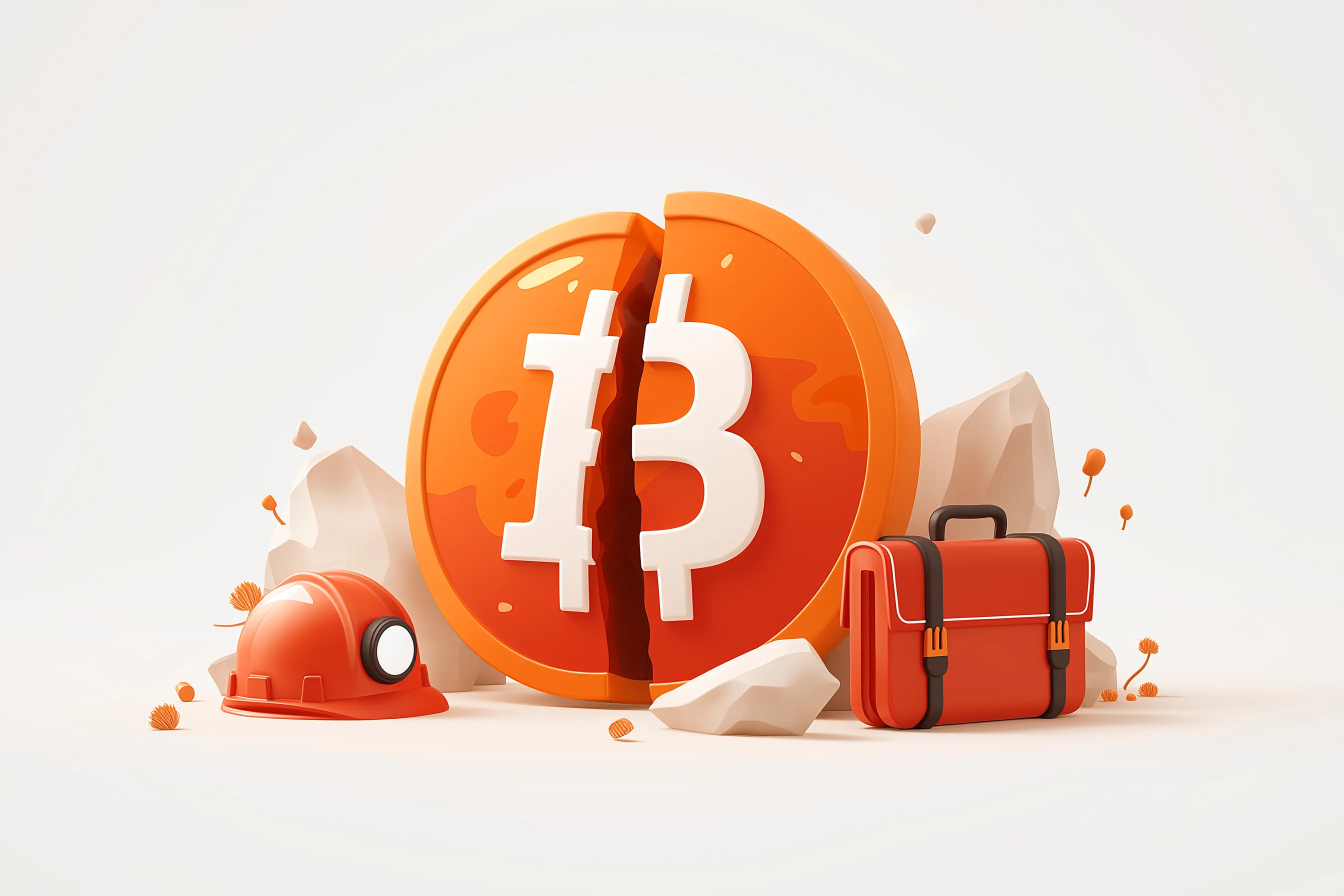
If you’ve been searching for information about Bitcoin halving 2026, you’re likely wondering whether a major supply cut is happening this year. The short answer: no protocol halving is scheduled for 2026. But that doesn’t mean 2026 is not a critical year for Bitcoin investors.
The most recent halving event occurred on April 20, 2024, and all of 2026 operates under that reduced supply regime. Historically, the scarcity created by halving events has often led to a rise in Bitcoin’s price, attracting increased investor interest. Understanding what this means for Bitcoin’s price, mining economics, and your investment strategy is exactly what this guide covers.
Quick overview: Is there a Bitcoin halving in 2026?
Let’s address the confusion directly. There is no Bitcoin halving scheduled for the calendar year 2026. The last bitcoin halving took place on April 20, 2024, at block height 840,000. The next bitcoin halving date is projected for approximately April 2028, when block 1,050,000 is mined.
So why does “Bitcoin halving 2026” get so much search interest? Because 2026 sits squarely in the post-halving phase of Bitcoin’s 4-year cycle. Historically, this period has been where major price moves occur. Many investors are trying to understand how the reduced issuance from the 2024 halving will influence market conditions throughout 2026.
The current bitcoin block reward stands at 3.125 BTC per block after the April 2024 halving. This represents half of the previous 6.25 BTC reward and will remain constant until the next halving reduces it further to 1.5625 BTC.
Metric | 2024 (Pre-April) | 2026 | 2028 (Post-Halving) |
Block Reward | 6.25 BTC | 3.125 BTC | 1.5625 BTC |
New BTC per Day | ~900 BTC | ~450 BTC | ~225 BTC |
Annual New Supply | ~328,500 BTC | ~164,250 BTC | ~82,125 BTC |
Narrative Focus | Halving anticipation | Post-halving cycle | Next halving buildup |
For investors navigating 2026, the key insight is this: you’re operating in a reduced issuance environment where historically, significant price appreciation has occurred. But as mentioned earlier, past performance doesn’t guarantee future results, and various factors beyond the halving influence market outcomes.
What is Bitcoin halving and how does it work?
Bitcoin halving is an automatic mechanism coded directly into the bitcoin blockchain that reduces mining rewards by 50% every 210,000 blocks mined. Given Bitcoin’s target of one block every 10 minutes, this occurs approximately every four years.
This isn’t discretionary monetary policy set by central banks. The halving schedule was established by Satoshi Nakamoto in Bitcoin’s original code and cannot be changed without consensus from the entire network. It’s the foundation of Bitcoin’s controlled supply and its positioning as a deflationary asset.
Bitcoin halving dates and reward changes:
November 28, 2012: First halving reduced block reward from 50 BTC to 25 BTC
July 9, 2016: Second halving reduced reward from 25 BTC to 12.5 BTC
May 11, 2020: Third halving reduced reward from 12.5 BTC to 6.25 BTC
April 20, 2024: Fourth halving reduced reward from 6.25 BTC to 3.125 BTC
The halving mechanism ensures Bitcoin’s total supply caps at precisely 21 million BTC, with the last bitcoin expected to be mined around the year 2140. As of 2026, approximately 19.5 million BTC have already been mined, representing about 93% of the total supply.
Bitcoin miners earn revenue through two sources: the block reward (newly minted BTC) and transaction fees paid by users. Currently, the block reward dominates miner income, but as bitcoin halvings continue reducing this subsidy toward zero, transaction fees will eventually become miners’ sole compensation for securing the bitcoin network.
Bitcoin halving history and price performance
Historical data shows a clear pattern around bitcoin halving dates, though the relationship between halving and price remains debated among analysts. Here’s how each cycle played out:
It’s also important to note that trading activity—both retail and institutional—has historically intensified around halving events. Increased trading strategies, including technical analysis and algorithmic trading, often contribute to heightened price volatility and shifts in market sentiment during these periods.
2012 Halving (November 28, 2012) Bitcoin’s price hovered around $12 when the first halving occurred. Over the following 12 months, BTC rallied dramatically, eventually exceeding $1,000 by late 2013. This represented roughly an 8,000% gain from the halving price.
2016 Halving (July 9, 2016) The price of bitcoin sat near $650 at the second halving. The subsequent bull run pushed BTC to approximately $19,800 in December 2017, a roughly 2,900% increase over 18 months.
2020 Halving (May 11, 2020) With bitcoin’s price around $8,600 at the halving, the cryptocurrency surged amid increasing institutional interest and COVID-era monetary stimulus. BTC peaked near $69,000 in November 2021, representing about 700% gains.
2024 Halving (April 20, 2024) The latest halving differed from previous cycles in one significant way: BTC had already set an all-time high near $73,000 in March 2024, before the halving occurred. This marked the first time Bitcoin reached new highs ahead of a halving rather than after. Price action through 2026 continues to evolve.
Halving Date | Block Reward After | BTC Price Near Halving | Peak Price After | Time to Peak |
Nov 28, 2012 | 25 BTC | ~$12 | ~$1,150 | ~12 months |
Jul 9, 2016 | 12.5 BTC | ~$650 | ~$19,800 | ~18 months |
May 11, 2020 | 6.25 BTC | ~$8,600 | ~$69,000 | ~18 months |
Apr 20, 2024 | 3.125 BTC | ~$63,000 | TBD | TBD |
While the trend toward higher prices following halvings is evident, it’s crucial to note that post-peak drawdowns have been severe. After the 2013 and 2017 peaks, Bitcoin experienced 80%+ declines. The cryptocurrency market is highly volatile, and investing without understanding this risk can lead to significant losses.
Some analysts view halving as a primary price driver due to reduced issuance creating supply constraints. Others argue that macro conditions, liquidity cycles, and broader market sentiment dominate, with halving serving more as a narrative catalyst than a fundamental cause.
Where 2026 fits in the 4-year Bitcoin cycle
The idea of a 4-year Bitcoin cycle has become embedded in crypto market analysis. This framework divides each halving-to-halving period into distinct phases:
Pre-halving accumulation: 12-18 months before halving, anticipation builds
Halving event: Supply cut occurs, media attention peaks
Post-halving expansion: 12-18 months after, historically strongest price performance
Bear market/reset: Euphoria fades, prices correct significantly
Under this model, 2026 positions in the post-halving expansion phase, roughly comparable to 2013, 2017, and 2021 in previous cycles. These were years of significant price appreciation and increased demand as market participants reacted to reduced issuance.
Historical patterns suggest the 12-18 months following each halving have been particularly important:
Strong appreciation: Each previous cycle saw multi-hundred-percent gains during this window
Peak narratives: Media coverage intensifies, new investors enter
Euphoria indicators: On-chain metrics show retail FOMO near cycle tops
Subsequent corrections: Every expansion has been followed by prolonged bear markets
As of 2026, Bitcoin is navigating several factors simultaneously:
Post-ETF adoption dynamics with spot Bitcoin ETFs accumulating over 1 million BTC in holdings
The 2024 halving’s supply effects fully in play
Interest rates and Fed policy influencing risk asset appetite
Regulatory developments across major jurisdictions
Whether 2026 follows historical patterns or breaks them depends on how these several factors interact. Cycle analysis provides a framework, but it’s not a crystal ball.
Bitcoin halving chart analysis: trends and patterns
A bitcoin halving chart visually tracks the scheduled reductions in block rewards over time, offering investors a powerful tool to analyze the cryptocurrency market’s long-term trends. By studying the chart, you can see how each halving event—when the reward for mining new blocks is cut in half—has historically coincided with significant shifts in bitcoin’s price and market dynamics.
The chart highlights a clear pattern: after every halving, the number of new bitcoins entering circulation drops sharply, leading to increasing scarcity. This reduction in new supply, combined with steady or rising demand, has often preceded major price surges. For example, historical data shows that bitcoin’s price tends to climb in the months following a halving event, as the market adjusts to the lower rate of new coin creation.
Investors use the bitcoin halving chart to identify these recurring cycles and to inform their bitcoin holdings and investment strategies. The decreasing block reward, visible on the chart, underscores the deflationary nature of bitcoin and its appeal as a store of value. By understanding these trends and patterns, investors can better anticipate potential market movements and make more informed decisions about when to buy, hold, or adjust their positions in bitcoin.
Ultimately, the bitcoin halving chart serves as a roadmap for navigating the evolving landscape of the cryptocurrency market, helping investors visualize the impact of each halving event on supply, scarcity, and price.
Economic impact of the 2024 halving on 2026 supply and miners
The reduced issuance from April 2024’s halving directly affects every day of 2026. Let’s quantify this impact:
Before April 20, 2024:
Block reward: 6.25 BTC
New bitcoins per day: ~900 BTC
Annual new supply: ~328,500 BTC
After April 20, 2024 (including all of 2026):
Block reward: 3.125 BTC
New bitcoins per day: ~450 BTC
Annual new supply: ~164,250 BTC
This means Bitcoin’s inflation rate dropped from approximately 1.7% to about 0.85% annually. For perspective, this makes Bitcoin’s new supply rate lower than gold’s estimated 1.5-2% annual production increase.
Impact on Bitcoin Miners
Bitcoin miners face immediate revenue pressure after any halving. Their block subsidy income literally halves overnight while operational costs remain constant. The 2024 halving was no exception:
High-cost miners with expensive electricity become unprofitable first
Mining profits concentrate among operations with cheapest power (hydro, stranded gas)
Hashrate typically dips 20-30% as inefficient rigs go offline
Network difficulty adjusts downward, then recovers as efficient miners expand
Post-2024, top mining pools control over 50% of network hashrate, reflecting ongoing consolidation. Smaller players struggle to compete without access to cheap energy or cutting-edge ASICs.
Era | Block Reward | New BTC/Year | Miner Break-even Sensitivity |
2020-2024 | 6.25 BTC | ~328,500 | Moderate |
2024-2028 | 3.125 BTC | ~164,250 | High |
Transaction fees have grown in importance for miner revenue. The 2024 halving coincided with increased “Runes” and Ordinals inscription activity, briefly spiking fees to $50+ per transaction. While this provided temporary relief, fees currently cover only 5-10% of miner income, meaning the subsidy remains critical.
For 2026, expect continued pressure on mining economics. Operations unable to achieve efficiency gains or secure low-cost power will likely sell or consolidate, further concentrating the industry.
How many Bitcoin halvings are left?
As of now, there are approximately 29 bitcoin halvings remaining before the block reward reaches zero, which is projected to happen around the year 2140. Each halving event occurs roughly every four years, gradually reducing the number of new bitcoins entering the market. This process is central to bitcoin’s design, ensuring that the total supply will never exceed 21 million coins.
With each halving, the block reward is cut in half, meaning fewer new bitcoins are created and released into circulation. This reduced issuance can lead to increased demand and potentially higher prices, as the market adjusts to the growing scarcity. However, the exact number of halvings left may fluctuate slightly due to changes in the bitcoin network’s hashrate and the time it takes to mine new blocks.
For investors, understanding how many bitcoin halvings remain is crucial for long-term planning. The diminishing block reward and the approaching cap on total supply are key factors that influence market sentiment and investment decisions. Staying informed about the next halving date and monitoring market conditions can help investors position themselves effectively as the supply of new bitcoins continues to decrease.
How Bitcoin halving could influence BTC price in 2026
The supply-demand logic behind halving-driven price appreciation is straightforward: with new supply cut in half, less BTC enters circulation daily. At constant demand, reduced new supply creates upward price pressure. At increased demand, the effect amplifies.
In 2026, miners selling approximately 450 BTC daily versus 900 BTC pre-halving means roughly 450 fewer BTC hitting exchanges from mining operations each day. Over a year, that’s approximately 164,000 fewer new coins entering circulation compared to the prior era.
Historically, post-halving years have delivered substantial returns:
2013 (post-2012 halving): BTC rose from ~$13 to over $1,000
2017 (post-2016 halving): BTC rose from ~$1,000 to nearly $20,000
2021 (post-2020 halving): BTC rose from ~$29,000 to ~$69,000
However, 2026 differs from previous cycles in important ways. Several factors beyond halving will shape outcomes:
Spot Bitcoin ETF Flows US-listed spot Bitcoin ETFs launched in January 2024 and have accumulated significant bitcoin holdings. ETF inflows create direct buying pressure, while outflows create selling pressure. Monitoring these flows is crucial for 2026 analysis.
Macro Conditions Interest rates, inflation data, and recession risk all influence investor appetite for risk assets like Bitcoin. The Fed’s monetary policy trajectory matters significantly. In low-rate environments, risk assets historically outperform; in high-rate environments, they often struggle.
Regulatory Developments US regulatory clarity (or lack thereof), EU MiCA implementation, and Asian market rules will shape institutional participation. Favorable regulation could drive increased demand; hostile regulation could suppress it.
Corporate and Sovereign Adoption Companies adding BTC to balance sheets and nations experimenting with Bitcoin exposure create potential new demand sources beyond retail investors.
The “Priced In” Argument
Some analysts argue that halving effects are increasingly “priced in” before the event occurs. The 2024 halving was the most anticipated in Bitcoin’s history, with widespread media coverage and many investors accumulating beforehand. This could dampen post-halving returns compared to earlier cycles when halvings were less understood.
Risk Disclaimer: Nothing about halving guarantees higher prices. Market conditions can shift rapidly, and Bitcoin remains highly volatile. Historical patterns may not repeat. Investment objectives should account for the possibility of significant drawdowns regardless of supply dynamics.
Bitcoin halving 2026: investment strategies and risk management
For those considering how to invest during the post-halving cycle, several approaches merit consideration. None constitute personalized financial advice, but frameworks exist that many investors find useful.
Dollar-Cost Averaging (DCA)
Rather than attempting to time market peaks and troughs, DCA involves purchasing fixed dollar amounts at regular intervals. This approach:
Reduces emotional decision-making
Averages out entry prices over time
Works regardless of whether markets trend higher or lower
During 2026, DCA allows participation in potential upside while mitigating timing risk.
Accumulation During Pullbacks
Bitcoin rarely moves in straight lines. Even strong bull markets feature 20-30% corrections. Some investors prefer accumulating during these pullbacks rather than chasing parabolic moves or attempting to buy BTC at all-time highs.
Position Sizing Based on Risk Tolerance
Your financial situation should dictate allocation size. General principles include:
Only invest what you can afford to lose entirely
Consider BTC as one component of a diversified portfolio alongside stocks, bonds, and commodities
Avoid over-concentration regardless of conviction level
Account for liquidity needs over your investment time horizon
2026-Specific Risks to Monitor
The post-halving environment carries elevated risks:
Volatility spikes: 20-50% swings have occurred around halving windows historically
Altcoin mania: Speculative capital often rotates to riskier assets late in cycles
Leverage buildup: Derivatives markets can amplify both gains and losses
Regulatory surprises: Securities and Exchange Commission actions or legislation could shift sentiment rapidly
Tools and Metrics for 2026
Informed investors track multiple indicators:
On-chain data: Realized price, long-term holder supply, exchange inflows/outflows
ETF flows: Daily and weekly inflows/outflows from spot Bitcoin ETFs
Funding rates: Perpetual futures funding indicates market positioning
Macro indicators: DXY, yields, Fed communications, inflation prints
Combining halving cycle awareness with these metrics provides a more complete picture than relying on supply dynamics alone.
Last Bitcoin and the end of halving: what happens next?
The final bitcoin halving is expected to take place around the year 2140, marking the moment when the block reward drops to zero and no more new bitcoins are created. At this point, the total supply of bitcoin will be capped at 21 million, and the era of mining new bitcoins will come to an end.
When the last bitcoin is mined, miners will no longer receive new coins as a reward for validating transactions. Instead, their compensation will come entirely from transaction fees paid by users of the bitcoin network. This shift will make transaction fees the primary incentive for miners to continue securing the blockchain and processing transactions.
The end of halving and the transition to a fixed supply will likely increase the scarcity of bitcoin, which could drive up demand and prices. However, the actual impact on the cryptocurrency market will depend on various factors, including market conditions, investor sentiment, and the broader economic environment at the time. As with any investment, it’s important for investors to consider their financial situation, investment objectives, and risk tolerance before making decisions about their bitcoin holdings.
While the last halving will be a historic milestone for bitcoin, its long-term effects on the market, miners, and investors remain uncertain. Ongoing developments in technology, regulation, and global finance will all play a role in shaping the future of bitcoin after the final block reward is issued.
Frequently asked questions about Bitcoin halving in 2026
When is the next Bitcoin halving after 2024?
The next halving is projected for approximately April 2028, when block height 1,050,000 is reached. At that point, the block reward will drop from the current 3.125 BTC to 1.5625 BTC. The exact halving date depends on actual block times, which fluctuate with network hashrate.
How many bitcoin halvings are left?
After the 2024 halving, approximately 29 halvings remain. The halving process continues until the block subsidy becomes negligible, with the last new bitcoin expected to be mined around the year 2140. At that point, miners will rely entirely on transaction fees for revenue.
Does halving always make the price go up?
Historically, Bitcoin’s price has trended significantly higher in the 12-18 months following each halving. However, this pattern comes with important caveats: correlation doesn’t prove causation, severe drawdowns have followed every peak, and past performance offers no guarantee of future results. Market sentiment, macro conditions, and adoption trends all influence outcomes alongside supply dynamics.
Should I buy BTC before or after a halving?
This depends on your investment objectives, risk tolerance, and time horizon. Some investors accumulate before halvings anticipating supply-driven appreciation; others wait for post-halving volatility to create better entry points. Dollar-cost averaging removes the timing question entirely. Whatever approach you choose, ensure it aligns with your broader financial situation.
How many halvings have occurred so far?
Four bitcoin halvings have occurred: 2012, 2016, 2020, and 2024. Each reduced the block reward by 50%, bringing it from the original 50 BTC to the current 3.125 BTC.
Key takeaways for Bitcoin halving and the 2026 market
No halving occurs in 2026, but the entire year operates under the reduced 3.125 BTC block reward from April 2024’s halving
Historically, 12-18 months post-halving have seen major price moves, positioning 2026 as a potentially significant year in the cycle
Miner economics remain pressured with reduced issuance forcing efficiency improvements, consolidation, and greater reliance on transaction fees
Institutional factors now matter significantly: ETF flows, macro conditions, and regulatory clarity will heavily shape 2026 outcomes alongside supply dynamics
Halving is one variable, not a complete model: Over-reliance on 4-year cycle assumptions ignores the complexity of modern crypto markets with increasing scarcity representing just one demand driver
Risk management should guide strategy: Combining cycle awareness with disciplined position sizing, diversification, and realistic expectations serves investors better than pure halving hopium
Bitcoin halving remains central to understanding BTC’s monetary policy and long-term value proposition. The projected scarcity narrative continues to attract many investors to the asset. But 2026 results depend on factors extending far beyond the supply schedule: how institutions trade, how regulators act, how macro trends evolve, and how market participants respond to both opportunities and risks.
The best approach combines knowledge of Bitcoin’s mechanics with disciplined execution, appropriate position sizing for your circumstances, and intellectual humility about what any single indicator—including halving—can truly predict.