" height="31.469717497114758px" id="eCOXNpv5s" transform="translate(0 8.53)" width="32.43161611406683px"/><path d="M 6.851 1.35 C 6.851 4.361 4.335 6.803 1.23 6.803 L 0 6.803 L 0 5.452 C 0 2.442 2.515 0 5.62 0 L 6.85 0 L 6.85 1.35 Z" fill="rgb(255, 87, 20)" height="6.8031511867128245px" id="yGyYVDzJf" transform="translate(16.216 0)" width="6.851178904096614px"/><path d="M 59.255 11.828 C 59.12 11.828 59.053 11.758 59.053 11.615 L 59.053 0.426 C 59.053 0.285 59.12 0.214 59.255 0.214 L 66.26 0.214 C 66.394 0.214 66.46 0.284 66.46 0.427 L 66.46 1.881 C 66.46 2.022 66.394 2.093 66.26 2.093 L 61.248 2.093 L 61.248 5.054 L 65.821 5.054 C 65.955 5.054 66.022 5.125 66.022 5.268 L 66.022 6.633 C 66.022 6.774 65.955 6.845 65.821 6.845 L 61.248 6.845 L 61.248 9.948 L 66.26 9.948 C 66.394 9.948 66.46 10.019 66.46 10.161 L 66.46 11.616 C 66.46 11.757 66.394 11.828 66.26 11.828 Z M 51.202 12.04 C 50.313 12.04 49.532 11.874 48.861 11.544 C 48.203 11.213 47.662 10.694 47.307 10.054 C 46.942 9.403 46.758 8.606 46.758 7.66 L 46.758 4.38 C 46.758 2.962 47.184 1.88 48.038 1.135 C 48.904 0.378 50.087 0 51.587 0 C 52.661 0 53.563 0.166 54.294 0.497 C 55.037 0.828 55.581 1.289 55.922 1.88 C 56.276 2.459 56.398 3.127 56.287 3.884 C 56.276 4.024 56.202 4.097 56.068 4.097 L 54.295 4.078 C 54.148 4.078 54.081 4.008 54.092 3.866 C 54.117 3.44 54.038 3.079 53.855 2.784 C 53.684 2.477 53.416 2.246 53.05 2.092 C 52.685 1.939 52.215 1.862 51.641 1.862 C 50.751 1.862 50.08 2.074 49.629 2.5 C 49.178 2.914 48.953 3.559 48.953 4.433 L 48.953 7.607 C 48.953 8.494 49.172 9.143 49.612 9.558 C 50.062 9.971 50.727 10.178 51.605 10.178 C 52.459 10.178 53.111 9.989 53.562 9.611 C 54.014 9.22 54.239 8.659 54.239 7.926 L 54.239 7.359 L 51.77 7.359 C 51.623 7.359 51.55 7.288 51.55 7.146 L 51.55 5.958 C 51.55 5.828 51.623 5.762 51.77 5.762 L 56.123 5.762 C 56.257 5.762 56.325 5.828 56.325 5.958 L 56.325 9.22 C 56.325 9.622 56.331 10.031 56.343 10.444 C 56.367 10.858 56.41 11.242 56.471 11.597 C 56.495 11.667 56.483 11.728 56.434 11.774 C 56.395 11.81 56.342 11.829 56.288 11.827 L 54.86 11.827 C 54.809 11.83 54.758 11.817 54.714 11.792 C 54.674 11.751 54.643 11.703 54.623 11.65 C 54.594 11.479 54.569 11.308 54.549 11.136 L 54.512 10.55 L 54.476 10.55 C 54.265 10.862 53.998 11.132 53.69 11.348 C 53.364 11.583 52.998 11.757 52.61 11.863 C 52.151 11.986 51.677 12.046 51.201 12.04 Z M 34.943 11.828 C 34.809 11.828 34.742 11.758 34.742 11.615 L 34.742 0.426 C 34.742 0.285 34.809 0.214 34.943 0.214 L 37.541 0.214 C 37.662 0.214 37.748 0.261 37.797 0.355 L 40.741 6.119 C 40.949 6.508 41.138 6.886 41.309 7.253 C 41.63 7.897 41.923 8.553 42.187 9.222 L 42.241 9.222 C 42.217 8.903 42.199 8.559 42.186 8.193 L 42.15 7.059 L 42.15 0.427 C 42.15 0.285 42.217 0.214 42.352 0.214 L 44.071 0.214 C 44.217 0.214 44.29 0.284 44.29 0.427 L 44.29 11.616 C 44.29 11.757 44.217 11.828 44.071 11.828 L 41.509 11.828 C 41.388 11.828 41.303 11.781 41.254 11.686 L 38.4 6.119 C 38.215 5.759 38.032 5.399 37.852 5.037 C 37.683 4.664 37.513 4.291 37.34 3.92 C 37.189 3.57 37.036 3.222 36.882 2.873 L 36.827 2.873 L 36.864 3.99 C 36.876 4.369 36.882 4.747 36.882 5.125 L 36.882 11.615 C 36.882 11.757 36.809 11.828 36.663 11.828 Z M 22.818 11.828 C 22.659 11.828 22.598 11.752 22.635 11.597 L 26.586 0.373 C 26.622 0.267 26.701 0.213 26.823 0.213 L 29.164 0.213 C 29.299 0.213 29.384 0.267 29.421 0.373 L 33.389 11.597 C 33.439 11.752 33.383 11.828 33.225 11.828 L 31.286 11.828 C 31.165 11.828 31.085 11.775 31.048 11.668 L 28.689 4.381 C 28.567 3.99 28.446 3.607 28.324 3.228 L 27.994 2.057 L 27.957 2.057 C 27.848 2.436 27.732 2.82 27.609 3.21 C 27.5 3.589 27.384 3.967 27.262 4.344 L 24.958 11.65 C 24.921 11.769 24.837 11.828 24.702 11.828 L 22.817 11.828 Z M 25.323 9.399 L 25.744 7.661 L 30.189 7.661 L 30.628 9.399 Z M 12.919 11.828 C 12.784 11.828 12.717 11.758 12.717 11.615 L 12.717 0.426 C 12.717 0.285 12.784 0.214 12.919 0.214 L 16.76 0.214 C 18.333 0.214 19.479 0.509 20.199 1.1 C 20.918 1.68 21.278 2.531 21.278 3.654 C 21.278 4.47 21.083 5.161 20.692 5.728 C 20.314 6.284 19.748 6.668 18.992 6.881 L 18.992 6.917 L 21.936 11.58 C 21.986 11.65 21.992 11.711 21.954 11.757 C 21.93 11.805 21.875 11.828 21.79 11.828 L 19.76 11.828 C 19.655 11.831 19.556 11.777 19.504 11.686 L 16.742 7.201 L 14.912 7.201 L 14.912 11.616 C 14.912 11.757 14.839 11.828 14.694 11.828 Z M 14.912 5.516 L 16.669 5.516 C 17.51 5.516 18.119 5.374 18.497 5.09 C 18.887 4.806 19.083 4.351 19.083 3.725 C 19.083 3.11 18.906 2.672 18.553 2.413 C 18.198 2.152 17.601 2.022 16.759 2.022 L 14.912 2.022 L 14.912 5.515 Z M 5.412 12.04 C 3.804 12.04 2.596 11.668 1.791 10.923 C 0.986 10.166 0.585 9.084 0.585 7.678 L 0.585 4.362 C 0.585 2.943 0.986 1.862 1.791 1.117 C 2.596 0.372 3.804 0 5.413 0 C 7.01 0 8.211 0.372 9.016 1.117 C 9.821 1.862 10.223 2.943 10.223 4.362 L 10.223 7.678 C 10.223 9.084 9.821 10.167 9.017 10.923 C 8.211 11.667 7.01 12.04 5.413 12.04 Z M 5.412 10.178 C 6.279 10.178 6.931 9.959 7.37 9.522 C 7.809 9.073 8.029 8.423 8.029 7.572 L 8.029 4.469 C 8.029 3.618 7.809 2.974 7.37 2.536 C 6.931 2.086 6.279 1.862 5.413 1.862 C 4.546 1.862 3.889 2.086 3.437 2.536 C 2.999 2.974 2.778 3.618 2.778 4.469 L 2.778 7.572 C 2.778 8.423 2.999 9.073 3.437 9.522 C 3.889 9.959 4.548 10.178 5.413 10.178 Z M 59.488 25.96 C 59.38 25.96 59.326 25.905 59.326 25.796 L 59.326 15.351 C 59.326 15.241 59.38 15.187 59.488 15.187 L 61.849 15.187 C 63.197 15.187 64.205 15.565 64.874 16.321 C 65.542 17.068 65.877 18.203 65.877 19.726 L 65.877 21.026 C 65.877 22.682 65.548 23.921 64.891 24.743 C 64.233 25.555 63.235 25.96 61.898 25.96 Z M 60.863 24.545 L 61.8 24.545 C 62.674 24.545 63.316 24.266 63.726 23.707 C 64.136 23.148 64.34 22.27 64.34 21.075 L 64.34 19.677 C 64.34 18.635 64.136 17.862 63.726 17.359 C 63.316 16.854 62.664 16.601 61.768 16.601 L 60.863 16.601 L 60.863 24.546 Z M 50.762 25.96 C 50.664 25.96 50.616 25.905 50.616 25.796 L 50.616 15.351 C 50.616 15.241 50.664 15.187 50.762 15.187 L 53.285 15.187 C 54.396 15.187 55.215 15.439 55.743 15.944 C 56.272 16.447 56.535 17.215 56.535 18.246 C 56.535 19.036 56.396 19.677 56.115 20.171 C 55.858 20.644 55.44 21.011 54.935 21.207 L 54.935 21.223 L 56.972 25.746 C 57.037 25.889 57 25.96 56.86 25.96 L 55.468 25.96 C 55.393 25.96 55.338 25.922 55.306 25.845 L 53.398 21.486 L 52.154 21.486 L 52.154 25.796 C 52.154 25.906 52.105 25.96 52.008 25.96 L 50.763 25.96 Z M 52.153 20.154 L 53.253 20.154 C 53.867 20.154 54.309 20.006 54.578 19.71 C 54.848 19.414 54.984 18.953 54.984 18.328 C 54.984 17.692 54.848 17.242 54.578 16.979 C 54.309 16.716 53.878 16.585 53.285 16.585 L 52.153 16.585 Z M 41.428 25.96 C 41.32 25.96 41.282 25.9 41.315 25.78 L 43.983 15.318 C 44.006 15.231 44.064 15.187 44.162 15.187 L 45.828 15.187 C 45.914 15.187 45.973 15.231 46.005 15.317 L 48.706 25.78 C 48.727 25.9 48.685 25.96 48.577 25.96 L 47.202 25.96 C 47.137 25.96 47.084 25.916 47.04 25.829 L 45.455 18.92 C 45.369 18.56 45.289 18.198 45.213 17.835 C 45.138 17.473 45.062 17.106 44.987 16.732 L 44.954 16.732 C 44.889 17.106 44.819 17.473 44.743 17.835 C 44.668 18.187 44.592 18.548 44.517 18.92 L 42.932 25.829 C 42.911 25.916 42.851 25.96 42.754 25.96 Z M 43.207 23.526 L 43.482 22.178 L 46.458 22.178 L 46.765 23.526 L 43.208 23.526 Z M 33.5 25.96 C 33.391 25.96 33.338 25.905 33.338 25.796 L 33.338 15.351 C 33.338 15.241 33.391 15.187 33.5 15.187 L 35.861 15.187 C 37.209 15.187 38.217 15.565 38.886 16.321 C 39.554 17.068 39.889 18.203 39.889 19.726 L 39.889 21.026 C 39.889 22.682 39.559 23.921 38.902 24.743 C 38.244 25.555 37.247 25.96 35.909 25.96 Z M 34.874 24.545 L 35.813 24.545 C 36.686 24.545 37.328 24.266 37.737 23.707 C 38.147 23.148 38.351 22.27 38.351 21.075 L 38.351 19.677 C 38.351 18.635 38.147 17.862 37.737 17.359 C 37.328 16.854 36.675 16.601 35.78 16.601 L 34.874 16.601 L 34.874 24.546 Z M 24.031 25.96 C 23.934 25.96 23.885 25.905 23.885 25.796 L 23.885 15.351 C 23.885 15.241 23.934 15.187 24.031 15.187 L 25.858 15.187 C 25.955 15.187 26.015 15.225 26.036 15.301 L 28.091 21.059 C 28.209 21.366 28.322 21.695 28.43 22.045 C 28.549 22.397 28.656 22.737 28.755 23.066 C 28.862 23.383 28.947 23.679 29.012 23.953 L 29.061 23.953 C 29.037 23.619 29.015 23.284 28.996 22.949 L 28.964 21.832 L 28.964 15.351 C 28.964 15.241 29.012 15.187 29.109 15.187 L 30.306 15.187 C 30.404 15.187 30.452 15.241 30.452 15.351 L 30.452 25.796 C 30.452 25.906 30.404 25.96 30.306 25.96 L 28.495 25.96 C 28.419 25.96 28.36 25.922 28.317 25.845 L 26.311 20.253 C 26.121 19.736 25.943 19.215 25.778 18.69 C 25.638 18.201 25.492 17.713 25.341 17.226 L 25.309 17.226 C 25.319 17.544 25.325 17.901 25.325 18.296 L 25.357 19.447 C 25.368 19.83 25.374 20.193 25.374 20.532 L 25.374 25.796 C 25.374 25.906 25.325 25.96 25.228 25.96 Z M 14.698 25.96 C 14.589 25.96 14.552 25.9 14.584 25.78 L 17.253 15.318 C 17.274 15.231 17.334 15.187 17.431 15.187 L 19.097 15.187 C 19.183 15.187 19.242 15.231 19.275 15.317 L 21.975 25.78 C 21.998 25.9 21.954 25.96 21.847 25.96 L 20.471 25.96 C 20.407 25.96 20.353 25.916 20.309 25.829 L 18.724 18.92 C 18.639 18.56 18.558 18.198 18.482 17.835 C 18.407 17.473 18.331 17.106 18.256 16.732 L 18.224 16.732 C 18.159 17.106 18.089 17.473 18.013 17.835 C 17.938 18.187 17.862 18.548 17.787 18.92 L 16.202 25.829 C 16.18 25.916 16.121 25.96 16.023 25.96 Z M 16.476 23.526 L 16.752 22.178 L 19.728 22.178 L 20.035 23.526 L 16.477 23.526 Z M 10.267 25.96 C 10.17 25.96 10.122 25.905 10.122 25.796 L 10.122 16.619 L 7.97 16.619 C 7.874 16.619 7.825 16.559 7.825 16.438 L 7.825 15.353 C 7.825 15.242 7.874 15.188 7.97 15.188 L 13.81 15.188 C 13.906 15.188 13.955 15.242 13.955 15.353 L 13.955 16.437 C 13.955 16.558 13.906 16.618 13.81 16.618 L 11.658 16.618 L 11.658 25.797 C 11.658 25.907 11.609 25.961 11.512 25.961 L 10.267 25.961 Z M 2.948 26.093 C 1.848 26.093 1.061 25.807 0.587 25.237 C 0.123 24.667 -0.066 23.91 0.02 22.967 C 0.03 22.814 0.085 22.737 0.182 22.737 L 1.378 22.737 C 1.487 22.737 1.54 22.814 1.54 22.968 C 1.498 23.548 1.6 23.987 1.848 24.282 C 2.107 24.568 2.495 24.711 3.013 24.711 C 3.52 24.711 3.892 24.595 4.128 24.365 C 4.366 24.135 4.485 23.773 4.485 23.28 C 4.485 23.027 4.452 22.802 4.387 22.605 C 4.32 22.403 4.209 22.218 4.063 22.062 C 3.897 21.877 3.7 21.721 3.481 21.602 L 1.751 20.566 C 1.169 20.204 0.743 19.803 0.473 19.365 C 0.215 18.915 0.09 18.367 0.101 17.72 C 0.111 16.854 0.355 16.195 0.829 15.746 C 1.314 15.285 2.015 15.055 2.932 15.055 C 3.946 15.055 4.706 15.324 5.212 15.861 C 5.729 16.387 5.945 17.134 5.859 18.099 C 5.838 18.263 5.784 18.345 5.697 18.345 L 4.469 18.345 C 4.361 18.345 4.317 18.263 4.34 18.098 C 4.383 17.582 4.281 17.183 4.033 16.898 C 3.796 16.602 3.44 16.453 2.965 16.453 C 2.545 16.453 2.222 16.558 1.995 16.766 C 1.769 16.963 1.655 17.27 1.655 17.687 C 1.645 18.071 1.72 18.389 1.881 18.64 C 2.043 18.882 2.313 19.112 2.69 19.333 L 4.372 20.351 C 4.782 20.592 5.105 20.851 5.343 21.124 C 5.59 21.388 5.769 21.695 5.876 22.046 C 5.985 22.385 6.038 22.797 6.038 23.28 C 6.038 24.168 5.79 24.858 5.294 25.352 C 4.798 25.846 4.016 26.092 2.949 26.092 Z" fill="rgb(23, 23, 23)" height="26.09262957451628px" id="G_jsIAzLG" transform="translate(40.54 11.039)" width="66.46047841033874px"/></g></svg>)
" height="31.469717497114758px" id="nxleYtm6x" transform="translate(1 8.53)" width="32.43161611406683px"/><path d="M 6.851 1.35 C 6.851 4.361 4.335 6.803 1.23 6.803 L 0 6.803 L 0 5.452 C 0 2.442 2.515 0 5.62 0 L 6.85 0 L 6.85 1.35 Z" fill="rgb(255, 87, 20)" height="6.8031511867128245px" id="ZZ56pTyUM" transform="translate(17.216 0)" width="6.851178904096614px"/></svg>)
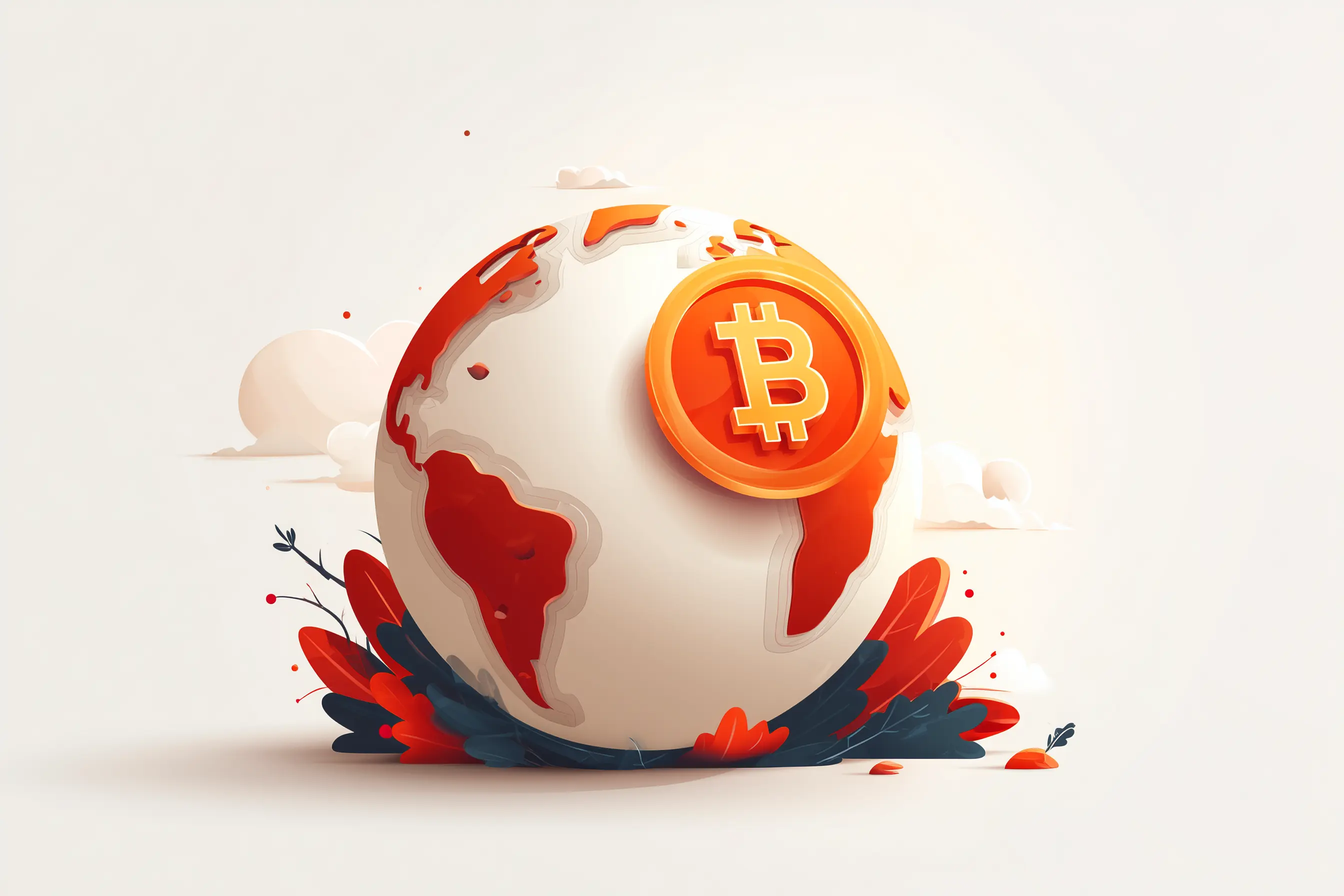
In a small market stall in Lagos, a street vendor uses a mobile phone to receive payment from a customer in Houston, no bank account required, no wire transfer fees eating into the margin, no three-to-five business day wait. In El Salvador, a farmer in a rural village without a single ATM within a 40-mile radius checks his balance, sends money to his daughter across the country, and pays a supplier, all in seconds.
In Argentina, a middle-class family quietly converts their inflation-ravaged pesos into Bitcoin to preserve what little purchasing power remains after another economic crisis.
These are not hypotheticals drawn from a futurist's whitepaper. They are happening right now, today, across a swath of the globe where traditional banking systems have long failed ordinary people. And at the center of this quiet financial revolution is Bitcoin, the world's first decentralized digital currency.
The narrative around Bitcoin in Western financial media has often been dominated by price speculation, institutional adoption, regulatory battles, and billionaire tweets. But zoom out, way out, to the places where the global majority actually lives, and a fundamentally different story emerges.
Bitcoin adoption in Africa, Bitcoin in Latin America, and the broader wave of global crypto growth are not just investment trends. They represent something far more consequential: the gradual democratization of financial access for billions of people who have historically been excluded from or exploited by conventional finance.
This article explores how and why Bitcoin is gaining ground in emerging economies, the specific use cases driving adoption, the challenges that remain, and what the next decade might look like for decentralized money in the developing world.
The Unbanked Problem: Understanding the Financial Exclusion Crisis
To understand why Bitcoin financial inclusion is such a powerful concept, you first need to understand the scale of the problem it addresses. According to World Bank data, approximately 1.4 billion adults worldwide remain entirely unbanked, meaning they have no account at a financial institution or mobile money provider. The vast majority of these individuals live in Sub-Saharan Africa, South Asia, Latin America, and parts of East Asia.
But the raw unbanked figure only tells part of the story. Hundreds of millions more are technically "banked" but remain chronically underserved, holding basic accounts they rarely use because the fees are too high, the branch is too far, the required documentation is too burdensome, or the minimum balance requirements are beyond reach. For these populations, credit is a fantasy, savings accounts are inaccessible, international transfers are impossibly expensive, and insurance products simply do not exist.
The consequences of financial exclusion are not abstract. They manifest as farmers who cannot secure crop loans and lose their harvests. They show up as diaspora workers sending money home through Western Union, watching 8–12% of every hard-earned dollar vanish in fees before it reaches their families. They appear as small business owners forced to keep cash under mattresses because they have no banking infrastructure, and losing it all to theft or fire. They surface as entire national economies held hostage by inflation and currency devaluation because citizens have no mechanism to store value outside of rapidly depreciating local fiat currencies.
Bitcoin does not solve all of these problems. But it addresses several of them in ways that no prior technology or institution has managed, and it does so permissionlessly, without requiring approval from a government, a bank, or any central authority.
Bitcoin Adoption in Africa: Continent at the Forefront
Africa consistently ranks among the highest regions in the world for cryptocurrency adoption on a per-capita basis, a trend that has only accelerated through the mid-2020s. Nigeria, Kenya, South Africa, Ghana, and Ethiopia have emerged as particularly active crypto ecosystems, driven not by speculative enthusiasm but by practical necessity.
Nigeria: The Peer-to-Peer Pioneer
Nigeria's relationship with Bitcoin is perhaps the most instructive case study on the continent. With a population of over 220 million people, a volatile naira, and one of the world's most active diaspora networks sending remittances home, the conditions for Bitcoin adoption were almost perfectly engineered by circumstance.
When the Central Bank of Nigeria (CBN) attempted to restrict cryptocurrency transactions through commercial banks in 2021, Nigerian traders simply pivoted to peer-to-peer (P2P) exchanges, cutting out intermediaries entirely and trading directly with one another. P2P Bitcoin volume in Nigeria skyrocketed. Rather than crushing adoption, the government's crackdown inadvertently demonstrated Bitcoin's core value proposition: it cannot be shut down.
The Nigerian experience also highlights how younger, tech-savvy African populations are approaching Bitcoin not as a get-rich-quick scheme but as a practical financial tool. Freelancers working for international clients use Bitcoin to receive payments they would otherwise never be able to access. Entrepreneurs use it to purchase goods from overseas suppliers. Parents use it to send school fees to children studying abroad.
Kenya and Ethiopia: Mobile-First Adoption
Kenya, already famous for pioneering mobile money through M-Pesa, presents a particularly interesting case. A population accustomed to conducting financial transactions entirely through mobile phones has proven highly receptive to Bitcoin and broader crypto adoption. The infrastructure for digital financial transactions already exists; Bitcoin simply adds another layer of functionality, particularly for cross-border transfers and inflation hedging.
Ethiopia, meanwhile, has attracted attention as a Bitcoin mining hub. With abundant hydroelectric power and a government initially open to crypto development, the country briefly positioned itself as an African mining center, a trend with implications not just for Bitcoin's global hash rate but for local economic development, energy infrastructure investment, and technology sector employment.
Bitcoin in Latin America: From El Salvador to Argentina
Latin America represents perhaps the most diverse and dynamic landscape for Bitcoin adoption globally, spanning everything from government-level legal tender experiments to grassroots community networks to desperate inflation flight. Bitcoin in Latin America is not a single story; it is dozens of overlapping ones.
El Salvador: The Legal Tender Experiment
No discussion of Bitcoin in Latin America is complete without El Salvador, which made international headlines in September 2021 by becoming the first country in the world to adopt Bitcoin as legal tender alongside the US dollar. President Nayib Bukele's Bitcoin Law mandated that all businesses accept Bitcoin for payments and launched the government-backed Chivo wallet, backed by a $30 million trust to provide initial liquidity.
The experiment has drawn both admirers and critics. On the positive side, El Salvador has positioned itself as a global Bitcoin hub, attracting crypto entrepreneurs and investment. Remittances, which represent a staggering 24% of El Salvador's GDP, have begun flowing through Bitcoin channels, saving Salvadoran families millions in transfer fees annually. The government has continued purchasing Bitcoin for its national treasury.
Critics, meanwhile, point to slow adoption rates among ordinary citizens, the IMF's concerns about macroeconomic stability, and the volatility risk inherent in holding national reserves in a fluctuating asset. The truth, as usual, is nuanced, but El Salvador has irrevocably changed the conversation about sovereign Bitcoin adoption, and several other nations have studied its experience closely.
Argentina: Inflation and the Bitcoin Hedge
Argentina's Bitcoin story is fundamentally different from El Salvador's, it is driven not by government initiative but by citizen desperation. Argentina has experienced chronic economic instability for decades, including multiple currency crises, debt defaults, and inflation rates that have periodically exceeded 100% annually. For ordinary Argentinians, preserving the value of their savings is not an abstract financial concern, it is an urgent daily reality.
Bitcoin has emerged as one of several tools Argentinians use to protect their wealth. While US dollar savings remain the most popular inflation hedge for those who can access them, Bitcoin offers a permissionless alternative for those who cannot, or for those who distrust even the dollar following Argentina's history of forced peso conversions and frozen bank accounts.
The pattern repeats across the region. In Venezuela, where hyperinflation has at times made the bolivar virtually worthless, Bitcoin and stablecoins have become lifelines. In Brazil, an increasingly sophisticated crypto market has developed among a young, urban population with high smartphone penetration and deep distrust of traditional financial institutions. In Mexico, remittance corridors from the United States have begun to incorporate Bitcoin in meaningful ways.
Remittances and Crypto: Dismantling the Transfer Fee Racket
One of the most compelling and immediate use cases for Bitcoin in emerging economies is the transformation of international remittances. Globally, remittances represent one of the most significant financial flows to developing nations, in some countries, they constitute a larger source of foreign income than foreign direct investment or international aid. In 2024, global remittances to low- and middle-income countries exceeded $650 billion.
Yet the traditional remittance industry has long been characterized by extractive fee structures. The global average cost to send $200 internationally sits around 6–7%, with costs in some corridors running significantly higher. Sending money from the United States to Sub-Saharan Africa, for instance, can cost 8–10% or more. These fees represent a massive and largely invisible tax on some of the world's poorest families, families who can least afford it.
Bitcoin, and particularly the Bitcoin Lightning Network, offers a fundamentally different cost structure. Lightning Network transactions can be processed for fractions of a cent, settling in seconds, 24 hours a day, 7 days a week, regardless of national borders or banking hours. Several companies have built businesses on top of this infrastructure specifically to serve remittance corridors, allowing a worker in Los Angeles to send $200 to a family member in Guatemala and have that family member receive the full amount, converted to local currency if desired, within minutes.
The implications are significant. If Bitcoin and the Lightning Network were to capture even a meaningful fraction of global remittance flows, the savings to recipient families would run into the tens of billions of dollars annually. That is money that would otherwise have been collected as fees by MoneyGram, Western Union, and their banking partners, redistributed instead to the workers and families it was meant to serve.
The crypto remittances sector is not without its frictions. Recipients in rural areas may struggle to convert Bitcoin into local currency. Volatility can erode value during the conversion window. Regulatory uncertainty in some receiving countries creates compliance complexity. But the direction of travel is clear, and the pace of innovation in this space has been rapid.
The Lightning Network: Bitcoin's Infrastructure for the Global South
Any serious discussion of Bitcoin's potential for financial inclusion must grapple with its technical evolution, particularly the Lightning Network, a second-layer payment protocol built on top of the Bitcoin blockchain that enables near-instant, low-cost transactions.
Early Bitcoin had a legitimate scalability problem for small, everyday transactions. The base layer blockchain processes a limited number of transactions per second, and during periods of high demand, fees can rise to levels that make micropayments impractical. The Lightning Network addresses this by enabling participants to open payment channels between each other, conducting many transactions off-chain and only settling the net result on the main blockchain.
For emerging economies, Lightning is particularly transformative. It enables a vendor in Nairobi to accept a payment of the equivalent of $2 for a meal with negligible fees. It allows a domestic worker in São Paulo to send $15 to a rural relative without losing a dollar to transaction costs. It makes it feasible to pay a freelancer in Manila for two hours of work without the fee structure making the transaction economically absurd.
The growing Lightning Network node count across Africa and Latin America reflects grassroots demand. Community Bitcoin educators, often young, technically literate locals, have established Lightning-based payment networks in specific communities, onboarding local businesses and residents onto circular Bitcoin economies. El Zonte's "Bitcoin Beach" project in El Salvador was perhaps the most famous early example, but similar initiatives have emerged in Kenya, Nigeria, Brazil, and beyond.
Challenges and Headwinds: What Bitcoin in Emerging Economies Still Must Overcome
The case for Bitcoin financial inclusion is compelling, but intellectually honest analysis demands engagement with the real challenges and limitations that complicate the narrative.
Volatility
Bitcoin's price volatility remains its most significant liability as a medium of exchange for low-income populations. A family in Venezuela that converts its savings to Bitcoin and watches the price drop 40% in three months has not been served by financial inclusion, it has been exposed to new risk. While Bitcoin advocates argue that long-term holding smooths out these fluctuations, subsistence-level families often cannot afford to hold, they need to spend.
Stablecoins, dollar-pegged digital assets, address this for some use cases, though they introduce their own questions about centralization, regulatory risk, and counterparty trust. The debate about whether Bitcoin or stablecoins are more appropriate for day-to-day financial inclusion use cases in emerging economies is ongoing and nuanced.
Infrastructure and Connectivity
Bitcoin requires an internet connection and a smartphone or computer. While mobile phone penetration has grown dramatically across the Global South, meaningful gaps remain, particularly in rural areas, among older populations, and among the poorest segments of society. The digital divide is real, and it means that Bitcoin adoption naturally skews toward younger, urban, more educated demographics rather than the most financially excluded populations.
Regulatory Environment
The regulatory landscape for Bitcoin in emerging economies is wildly uneven. Some governments have embraced crypto with open frameworks. Others have imposed outright bans. Many occupy an uncertain middle ground characterized by regulatory ambiguity that chills innovation and adoption. Governments facing currency pressures sometimes view Bitcoin as a direct threat to monetary sovereignty, and respond with hostility. Regulatory crackdowns in China, India, and across Africa have periodically disrupted crypto markets and user access.
Scams and Financial Literacy
The crypto space attracts scammers with the same magnetic force that draws legitimate innovators. Across Africa and Latin America, high-profile crypto scams have cost ordinary people significant sums, undermining trust and creating legitimate skepticism about the entire ecosystem. Financial literacy and consumer protection infrastructure in Bitcoin are still maturing, and the consequences of inadequate education fall disproportionately on less sophisticated, more vulnerable populations.
Global Crypto Growth: The Macro Trends Driving the Decade Ahead
Against this complex backdrop of opportunities and challenges, several powerful macro trends point toward continued and accelerating global crypto growth, particularly in emerging economies, over the coming decade.
Demographics are perhaps the most powerful. The populations of Sub-Saharan Africa and South Asia are among the youngest in the world. These are digital natives, people who will conduct their entire financial lives through mobile interfaces, who have no nostalgic attachment to brick-and-mortar banking, and who are actively seeking alternatives to the institutions that have failed previous generations. For these populations, Bitcoin is not an innovation imposed from outside, it is a technology that meets them where they already are.
Smartphone penetration continues to expand at remarkable speed. The cost of entry-level smartphones has fallen dramatically, and mobile data costs have dropped across much of the Global South. Each new smartphone user is a potential Bitcoin user, and the number of new smartphone users added each year in emerging markets dwarfs the total user base in developed ones.
Geopolitical and macroeconomic instability is, unfortunately, another driver. As global inflation, currency devaluation, and political instability continue to characterize the economic environment in many developing nations, the appeal of a scarce, decentralized, permissionless store of value will only intensify. Bitcoin was essentially designed for precisely the circumstances that hundreds of millions of people in emerging economies face.
Finally, the maturation of the Bitcoin ecosystem, better wallets, more intuitive interfaces, more on-ramps and off-ramps, more local exchange infrastructure, is steadily lowering the technical barriers that have historically limited adoption beyond early adopters.
The Road Ahead: What Bitcoin's Future in Emerging Economies Could Look Like
Looking forward, the trajectory for Bitcoin in emerging economies points toward deepening integration rather than sudden revolution. The most likely scenario is not a dramatic overnight transformation of global finance but a gradual, bottom-up accumulation of use cases, infrastructure, and users that collectively reshapes financial access for hundreds of millions of people over the next decade and beyond.
In the remittance sector, Bitcoin and Lightning are likely to claim an increasingly significant share of flows, particularly in high-fee corridors. As more fintech companies build user-friendly products on top of Bitcoin rails, consumers who may never interact directly with Bitcoin will benefit from its cost structure without needing to understand how it works, just as most people have no idea how SWIFT works when they wire money internationally.
On the savings and wealth preservation front, Bitcoin's role as a digital store of value will likely deepen in high-inflation economies. As Bitcoin's track record lengthens and institutional legitimacy grows, it becomes an increasingly credible, if volatile, alternative to devaluing local currencies for populations who have few other options.
The relationship between Bitcoin and governments in emerging economies will remain complex and contested. Some governments will continue to resist or attempt to ban Bitcoin, with limited long-term success given the technology's permissionless nature. Others will follow El Salvador's lead and experiment with integration at the national level. Many will likely adopt pragmatic regulatory frameworks that attempt to balance consumer protection, tax compliance, and financial stability concerns against the innovation and inclusion benefits that crypto can deliver.
Perhaps most importantly, the story of Bitcoin in emerging economies is fundamentally a human story, about the 1.4 billion people who currently lack access to the financial infrastructure that citizens of wealthy nations take entirely for granted. It is about a Nigerian freelancer who can now receive international payments. The Venezuelan family that preserved its savings through an economic collapse. The Salvadoran worker whose mother received the full value of the money he sent home. The Kenyan entrepreneur who secured a micro-loan without setting foot in a bank.
Conclusion: Bitcoin as Infrastructure, Not Just Investment
The mainstream financial narrative around Bitcoin still centers heavily on price, returns, and institutional adoption. These things matter, but they are not the whole story, and they may not even be the most important part of it.
In emerging economies across Africa, Latin America, South and Southeast Asia, and beyond, Bitcoin is increasingly being understood and used not primarily as a speculative asset but as infrastructure, financial infrastructure for people who have never had any. It is the bank account for the unbanked. The wire transfer without the wire fees. The inflation hedge for those without access to hard currency savings accounts. The payment network that doesn't require a government-issued ID, a credit history, or a minimum balance.
None of this means Bitcoin is a panacea. Volatility, infrastructure gaps, regulatory hostility, and financial literacy challenges are all real obstacles. The path from promise to universal access remains long and uneven. But the direction of travel, driven by demographics, technology, and the persistent failure of legacy financial systems to serve the global majority, increasingly favors Bitcoin's continued expansion into the lives of the world's most underserved populations.
The future of Bitcoin, it turns out, may be written not in the trading floors of Wall Street or the boardrooms of institutional asset managers, but in the market stalls of Lagos, the rural communities of El Salvador, the apartment blocks of Buenos Aires, and the mobile phones of a billion young Africans who have never owned a bank account, and may never need one.