" height="31.469717497114758px" id="eCOXNpv5s" transform="translate(0 8.53)" width="32.43161611406683px"/><path d="M 6.851 1.35 C 6.851 4.361 4.335 6.803 1.23 6.803 L 0 6.803 L 0 5.452 C 0 2.442 2.515 0 5.62 0 L 6.85 0 L 6.85 1.35 Z" fill="rgb(255, 87, 20)" height="6.8031511867128245px" id="yGyYVDzJf" transform="translate(16.216 0)" width="6.851178904096614px"/><path d="M 59.255 11.828 C 59.12 11.828 59.053 11.758 59.053 11.615 L 59.053 0.426 C 59.053 0.285 59.12 0.214 59.255 0.214 L 66.26 0.214 C 66.394 0.214 66.46 0.284 66.46 0.427 L 66.46 1.881 C 66.46 2.022 66.394 2.093 66.26 2.093 L 61.248 2.093 L 61.248 5.054 L 65.821 5.054 C 65.955 5.054 66.022 5.125 66.022 5.268 L 66.022 6.633 C 66.022 6.774 65.955 6.845 65.821 6.845 L 61.248 6.845 L 61.248 9.948 L 66.26 9.948 C 66.394 9.948 66.46 10.019 66.46 10.161 L 66.46 11.616 C 66.46 11.757 66.394 11.828 66.26 11.828 Z M 51.202 12.04 C 50.313 12.04 49.532 11.874 48.861 11.544 C 48.203 11.213 47.662 10.694 47.307 10.054 C 46.942 9.403 46.758 8.606 46.758 7.66 L 46.758 4.38 C 46.758 2.962 47.184 1.88 48.038 1.135 C 48.904 0.378 50.087 0 51.587 0 C 52.661 0 53.563 0.166 54.294 0.497 C 55.037 0.828 55.581 1.289 55.922 1.88 C 56.276 2.459 56.398 3.127 56.287 3.884 C 56.276 4.024 56.202 4.097 56.068 4.097 L 54.295 4.078 C 54.148 4.078 54.081 4.008 54.092 3.866 C 54.117 3.44 54.038 3.079 53.855 2.784 C 53.684 2.477 53.416 2.246 53.05 2.092 C 52.685 1.939 52.215 1.862 51.641 1.862 C 50.751 1.862 50.08 2.074 49.629 2.5 C 49.178 2.914 48.953 3.559 48.953 4.433 L 48.953 7.607 C 48.953 8.494 49.172 9.143 49.612 9.558 C 50.062 9.971 50.727 10.178 51.605 10.178 C 52.459 10.178 53.111 9.989 53.562 9.611 C 54.014 9.22 54.239 8.659 54.239 7.926 L 54.239 7.359 L 51.77 7.359 C 51.623 7.359 51.55 7.288 51.55 7.146 L 51.55 5.958 C 51.55 5.828 51.623 5.762 51.77 5.762 L 56.123 5.762 C 56.257 5.762 56.325 5.828 56.325 5.958 L 56.325 9.22 C 56.325 9.622 56.331 10.031 56.343 10.444 C 56.367 10.858 56.41 11.242 56.471 11.597 C 56.495 11.667 56.483 11.728 56.434 11.774 C 56.395 11.81 56.342 11.829 56.288 11.827 L 54.86 11.827 C 54.809 11.83 54.758 11.817 54.714 11.792 C 54.674 11.751 54.643 11.703 54.623 11.65 C 54.594 11.479 54.569 11.308 54.549 11.136 L 54.512 10.55 L 54.476 10.55 C 54.265 10.862 53.998 11.132 53.69 11.348 C 53.364 11.583 52.998 11.757 52.61 11.863 C 52.151 11.986 51.677 12.046 51.201 12.04 Z M 34.943 11.828 C 34.809 11.828 34.742 11.758 34.742 11.615 L 34.742 0.426 C 34.742 0.285 34.809 0.214 34.943 0.214 L 37.541 0.214 C 37.662 0.214 37.748 0.261 37.797 0.355 L 40.741 6.119 C 40.949 6.508 41.138 6.886 41.309 7.253 C 41.63 7.897 41.923 8.553 42.187 9.222 L 42.241 9.222 C 42.217 8.903 42.199 8.559 42.186 8.193 L 42.15 7.059 L 42.15 0.427 C 42.15 0.285 42.217 0.214 42.352 0.214 L 44.071 0.214 C 44.217 0.214 44.29 0.284 44.29 0.427 L 44.29 11.616 C 44.29 11.757 44.217 11.828 44.071 11.828 L 41.509 11.828 C 41.388 11.828 41.303 11.781 41.254 11.686 L 38.4 6.119 C 38.215 5.759 38.032 5.399 37.852 5.037 C 37.683 4.664 37.513 4.291 37.34 3.92 C 37.189 3.57 37.036 3.222 36.882 2.873 L 36.827 2.873 L 36.864 3.99 C 36.876 4.369 36.882 4.747 36.882 5.125 L 36.882 11.615 C 36.882 11.757 36.809 11.828 36.663 11.828 Z M 22.818 11.828 C 22.659 11.828 22.598 11.752 22.635 11.597 L 26.586 0.373 C 26.622 0.267 26.701 0.213 26.823 0.213 L 29.164 0.213 C 29.299 0.213 29.384 0.267 29.421 0.373 L 33.389 11.597 C 33.439 11.752 33.383 11.828 33.225 11.828 L 31.286 11.828 C 31.165 11.828 31.085 11.775 31.048 11.668 L 28.689 4.381 C 28.567 3.99 28.446 3.607 28.324 3.228 L 27.994 2.057 L 27.957 2.057 C 27.848 2.436 27.732 2.82 27.609 3.21 C 27.5 3.589 27.384 3.967 27.262 4.344 L 24.958 11.65 C 24.921 11.769 24.837 11.828 24.702 11.828 L 22.817 11.828 Z M 25.323 9.399 L 25.744 7.661 L 30.189 7.661 L 30.628 9.399 Z M 12.919 11.828 C 12.784 11.828 12.717 11.758 12.717 11.615 L 12.717 0.426 C 12.717 0.285 12.784 0.214 12.919 0.214 L 16.76 0.214 C 18.333 0.214 19.479 0.509 20.199 1.1 C 20.918 1.68 21.278 2.531 21.278 3.654 C 21.278 4.47 21.083 5.161 20.692 5.728 C 20.314 6.284 19.748 6.668 18.992 6.881 L 18.992 6.917 L 21.936 11.58 C 21.986 11.65 21.992 11.711 21.954 11.757 C 21.93 11.805 21.875 11.828 21.79 11.828 L 19.76 11.828 C 19.655 11.831 19.556 11.777 19.504 11.686 L 16.742 7.201 L 14.912 7.201 L 14.912 11.616 C 14.912 11.757 14.839 11.828 14.694 11.828 Z M 14.912 5.516 L 16.669 5.516 C 17.51 5.516 18.119 5.374 18.497 5.09 C 18.887 4.806 19.083 4.351 19.083 3.725 C 19.083 3.11 18.906 2.672 18.553 2.413 C 18.198 2.152 17.601 2.022 16.759 2.022 L 14.912 2.022 L 14.912 5.515 Z M 5.412 12.04 C 3.804 12.04 2.596 11.668 1.791 10.923 C 0.986 10.166 0.585 9.084 0.585 7.678 L 0.585 4.362 C 0.585 2.943 0.986 1.862 1.791 1.117 C 2.596 0.372 3.804 0 5.413 0 C 7.01 0 8.211 0.372 9.016 1.117 C 9.821 1.862 10.223 2.943 10.223 4.362 L 10.223 7.678 C 10.223 9.084 9.821 10.167 9.017 10.923 C 8.211 11.667 7.01 12.04 5.413 12.04 Z M 5.412 10.178 C 6.279 10.178 6.931 9.959 7.37 9.522 C 7.809 9.073 8.029 8.423 8.029 7.572 L 8.029 4.469 C 8.029 3.618 7.809 2.974 7.37 2.536 C 6.931 2.086 6.279 1.862 5.413 1.862 C 4.546 1.862 3.889 2.086 3.437 2.536 C 2.999 2.974 2.778 3.618 2.778 4.469 L 2.778 7.572 C 2.778 8.423 2.999 9.073 3.437 9.522 C 3.889 9.959 4.548 10.178 5.413 10.178 Z M 59.488 25.96 C 59.38 25.96 59.326 25.905 59.326 25.796 L 59.326 15.351 C 59.326 15.241 59.38 15.187 59.488 15.187 L 61.849 15.187 C 63.197 15.187 64.205 15.565 64.874 16.321 C 65.542 17.068 65.877 18.203 65.877 19.726 L 65.877 21.026 C 65.877 22.682 65.548 23.921 64.891 24.743 C 64.233 25.555 63.235 25.96 61.898 25.96 Z M 60.863 24.545 L 61.8 24.545 C 62.674 24.545 63.316 24.266 63.726 23.707 C 64.136 23.148 64.34 22.27 64.34 21.075 L 64.34 19.677 C 64.34 18.635 64.136 17.862 63.726 17.359 C 63.316 16.854 62.664 16.601 61.768 16.601 L 60.863 16.601 L 60.863 24.546 Z M 50.762 25.96 C 50.664 25.96 50.616 25.905 50.616 25.796 L 50.616 15.351 C 50.616 15.241 50.664 15.187 50.762 15.187 L 53.285 15.187 C 54.396 15.187 55.215 15.439 55.743 15.944 C 56.272 16.447 56.535 17.215 56.535 18.246 C 56.535 19.036 56.396 19.677 56.115 20.171 C 55.858 20.644 55.44 21.011 54.935 21.207 L 54.935 21.223 L 56.972 25.746 C 57.037 25.889 57 25.96 56.86 25.96 L 55.468 25.96 C 55.393 25.96 55.338 25.922 55.306 25.845 L 53.398 21.486 L 52.154 21.486 L 52.154 25.796 C 52.154 25.906 52.105 25.96 52.008 25.96 L 50.763 25.96 Z M 52.153 20.154 L 53.253 20.154 C 53.867 20.154 54.309 20.006 54.578 19.71 C 54.848 19.414 54.984 18.953 54.984 18.328 C 54.984 17.692 54.848 17.242 54.578 16.979 C 54.309 16.716 53.878 16.585 53.285 16.585 L 52.153 16.585 Z M 41.428 25.96 C 41.32 25.96 41.282 25.9 41.315 25.78 L 43.983 15.318 C 44.006 15.231 44.064 15.187 44.162 15.187 L 45.828 15.187 C 45.914 15.187 45.973 15.231 46.005 15.317 L 48.706 25.78 C 48.727 25.9 48.685 25.96 48.577 25.96 L 47.202 25.96 C 47.137 25.96 47.084 25.916 47.04 25.829 L 45.455 18.92 C 45.369 18.56 45.289 18.198 45.213 17.835 C 45.138 17.473 45.062 17.106 44.987 16.732 L 44.954 16.732 C 44.889 17.106 44.819 17.473 44.743 17.835 C 44.668 18.187 44.592 18.548 44.517 18.92 L 42.932 25.829 C 42.911 25.916 42.851 25.96 42.754 25.96 Z M 43.207 23.526 L 43.482 22.178 L 46.458 22.178 L 46.765 23.526 L 43.208 23.526 Z M 33.5 25.96 C 33.391 25.96 33.338 25.905 33.338 25.796 L 33.338 15.351 C 33.338 15.241 33.391 15.187 33.5 15.187 L 35.861 15.187 C 37.209 15.187 38.217 15.565 38.886 16.321 C 39.554 17.068 39.889 18.203 39.889 19.726 L 39.889 21.026 C 39.889 22.682 39.559 23.921 38.902 24.743 C 38.244 25.555 37.247 25.96 35.909 25.96 Z M 34.874 24.545 L 35.813 24.545 C 36.686 24.545 37.328 24.266 37.737 23.707 C 38.147 23.148 38.351 22.27 38.351 21.075 L 38.351 19.677 C 38.351 18.635 38.147 17.862 37.737 17.359 C 37.328 16.854 36.675 16.601 35.78 16.601 L 34.874 16.601 L 34.874 24.546 Z M 24.031 25.96 C 23.934 25.96 23.885 25.905 23.885 25.796 L 23.885 15.351 C 23.885 15.241 23.934 15.187 24.031 15.187 L 25.858 15.187 C 25.955 15.187 26.015 15.225 26.036 15.301 L 28.091 21.059 C 28.209 21.366 28.322 21.695 28.43 22.045 C 28.549 22.397 28.656 22.737 28.755 23.066 C 28.862 23.383 28.947 23.679 29.012 23.953 L 29.061 23.953 C 29.037 23.619 29.015 23.284 28.996 22.949 L 28.964 21.832 L 28.964 15.351 C 28.964 15.241 29.012 15.187 29.109 15.187 L 30.306 15.187 C 30.404 15.187 30.452 15.241 30.452 15.351 L 30.452 25.796 C 30.452 25.906 30.404 25.96 30.306 25.96 L 28.495 25.96 C 28.419 25.96 28.36 25.922 28.317 25.845 L 26.311 20.253 C 26.121 19.736 25.943 19.215 25.778 18.69 C 25.638 18.201 25.492 17.713 25.341 17.226 L 25.309 17.226 C 25.319 17.544 25.325 17.901 25.325 18.296 L 25.357 19.447 C 25.368 19.83 25.374 20.193 25.374 20.532 L 25.374 25.796 C 25.374 25.906 25.325 25.96 25.228 25.96 Z M 14.698 25.96 C 14.589 25.96 14.552 25.9 14.584 25.78 L 17.253 15.318 C 17.274 15.231 17.334 15.187 17.431 15.187 L 19.097 15.187 C 19.183 15.187 19.242 15.231 19.275 15.317 L 21.975 25.78 C 21.998 25.9 21.954 25.96 21.847 25.96 L 20.471 25.96 C 20.407 25.96 20.353 25.916 20.309 25.829 L 18.724 18.92 C 18.639 18.56 18.558 18.198 18.482 17.835 C 18.407 17.473 18.331 17.106 18.256 16.732 L 18.224 16.732 C 18.159 17.106 18.089 17.473 18.013 17.835 C 17.938 18.187 17.862 18.548 17.787 18.92 L 16.202 25.829 C 16.18 25.916 16.121 25.96 16.023 25.96 Z M 16.476 23.526 L 16.752 22.178 L 19.728 22.178 L 20.035 23.526 L 16.477 23.526 Z M 10.267 25.96 C 10.17 25.96 10.122 25.905 10.122 25.796 L 10.122 16.619 L 7.97 16.619 C 7.874 16.619 7.825 16.559 7.825 16.438 L 7.825 15.353 C 7.825 15.242 7.874 15.188 7.97 15.188 L 13.81 15.188 C 13.906 15.188 13.955 15.242 13.955 15.353 L 13.955 16.437 C 13.955 16.558 13.906 16.618 13.81 16.618 L 11.658 16.618 L 11.658 25.797 C 11.658 25.907 11.609 25.961 11.512 25.961 L 10.267 25.961 Z M 2.948 26.093 C 1.848 26.093 1.061 25.807 0.587 25.237 C 0.123 24.667 -0.066 23.91 0.02 22.967 C 0.03 22.814 0.085 22.737 0.182 22.737 L 1.378 22.737 C 1.487 22.737 1.54 22.814 1.54 22.968 C 1.498 23.548 1.6 23.987 1.848 24.282 C 2.107 24.568 2.495 24.711 3.013 24.711 C 3.52 24.711 3.892 24.595 4.128 24.365 C 4.366 24.135 4.485 23.773 4.485 23.28 C 4.485 23.027 4.452 22.802 4.387 22.605 C 4.32 22.403 4.209 22.218 4.063 22.062 C 3.897 21.877 3.7 21.721 3.481 21.602 L 1.751 20.566 C 1.169 20.204 0.743 19.803 0.473 19.365 C 0.215 18.915 0.09 18.367 0.101 17.72 C 0.111 16.854 0.355 16.195 0.829 15.746 C 1.314 15.285 2.015 15.055 2.932 15.055 C 3.946 15.055 4.706 15.324 5.212 15.861 C 5.729 16.387 5.945 17.134 5.859 18.099 C 5.838 18.263 5.784 18.345 5.697 18.345 L 4.469 18.345 C 4.361 18.345 4.317 18.263 4.34 18.098 C 4.383 17.582 4.281 17.183 4.033 16.898 C 3.796 16.602 3.44 16.453 2.965 16.453 C 2.545 16.453 2.222 16.558 1.995 16.766 C 1.769 16.963 1.655 17.27 1.655 17.687 C 1.645 18.071 1.72 18.389 1.881 18.64 C 2.043 18.882 2.313 19.112 2.69 19.333 L 4.372 20.351 C 4.782 20.592 5.105 20.851 5.343 21.124 C 5.59 21.388 5.769 21.695 5.876 22.046 C 5.985 22.385 6.038 22.797 6.038 23.28 C 6.038 24.168 5.79 24.858 5.294 25.352 C 4.798 25.846 4.016 26.092 2.949 26.092 Z" fill="rgb(23, 23, 23)" height="26.09262957451628px" id="G_jsIAzLG" transform="translate(40.54 11.039)" width="66.46047841033874px"/></g></svg>)
" height="31.469717497114758px" id="nxleYtm6x" transform="translate(1 8.53)" width="32.43161611406683px"/><path d="M 6.851 1.35 C 6.851 4.361 4.335 6.803 1.23 6.803 L 0 6.803 L 0 5.452 C 0 2.442 2.515 0 5.62 0 L 6.85 0 L 6.85 1.35 Z" fill="rgb(255, 87, 20)" height="6.8031511867128245px" id="ZZ56pTyUM" transform="translate(17.216 0)" width="6.851178904096614px"/></svg>)
If you own Bitcoin, you've already made a custody decision — even if you didn't realize it. The coins are either held by you, held by someone else, or held in some arrangement in between. That decision is the single most important security choice a Bitcoin holder ever makes, and most people never think about it consciously.
This guide walks through how Bitcoin custody actually works, the three main custody models in use today, and the tradeoffs of each. It does not tell you which is "best" — because the right answer depends on the holder, the amount, the use case, and the holder's comfort with responsibility. Our goal here is to give you the vocabulary and framework to make an informed choice.
Table of contents
What "custody" actually means in Bitcoin
In traditional finance, custody is about who holds the paper — the stock certificate, the bond, the deed. In Bitcoin, there is no paper. Custody is about who holds the private keys.
A Bitcoin private key is a long secret number. Whoever knows the private key associated with a Bitcoin address can spend the Bitcoin at that address. That's it. There is no customer service line that can override a lost key. There is no court that can compel a blockchain to ignore a valid signature. Possession of the key is possession of the coins.
Every conversation about Bitcoin custody reduces to one question: who holds the private keys, and under what conditions can they be used to move the Bitcoin?
The three main custody models differ entirely in how they answer that question.
Model 1 — Self-custody
Self-custody means you personally hold the private keys to your Bitcoin. No one else has a copy. No one else can move your coins. You are the entire security perimeter.
How it works in practice
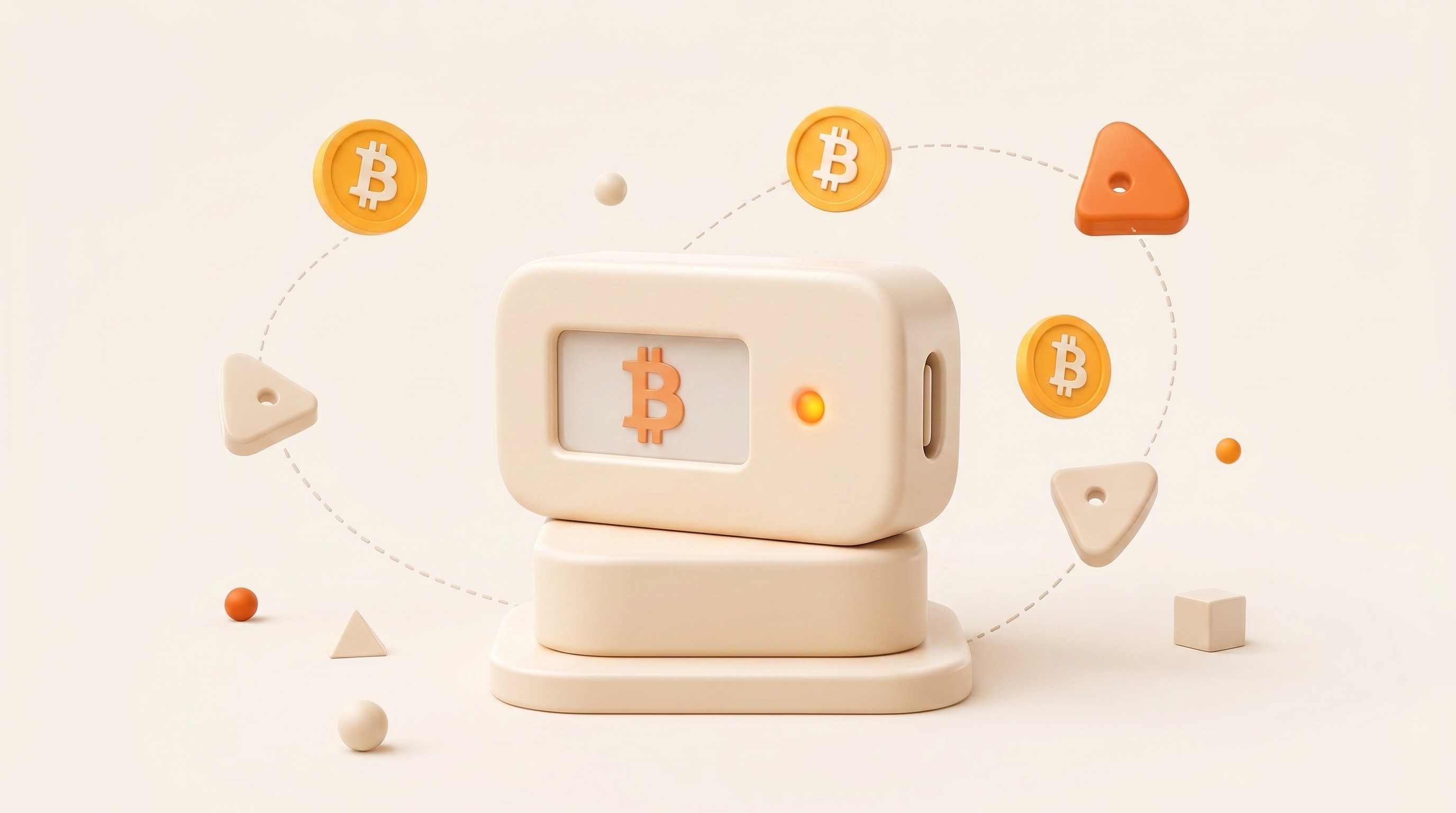
In the most common self-custody setup, a holder uses a hardware wallet — a small physical device from companies like Ledger, Trezor, Coldcard, or Foundation. The hardware wallet generates and stores the private keys on a secure chip that never connects to the internet. When you want to send Bitcoin, you confirm the transaction physically on the device. An attacker who compromises your laptop cannot extract the key, because the key never leaves the hardware wallet.
The wallet's seed phrase — a sequence of 12 or 24 English words standardized under BIP-39 — is a human-readable backup of the private keys. If the hardware wallet breaks, is lost, or stops working, you can recover all the Bitcoin by entering the seed phrase into a new device. Losing the seed phrase means losing access to the Bitcoin forever. No exceptions.
What self-custody protects against
Custodial insolvency. Your Bitcoin isn't on an exchange, in a lending platform, or in any company's balance sheet. If that company fails, your position is unaffected.
Government or platform freezes. A hardware wallet in your drawer cannot be frozen by a court order served on a third party. Whether this matters depends entirely on the holder's situation.
Rehypothecation and reuse. Your Bitcoin can't be loaned out by someone else, pledged to secure their borrowing, or used to generate yield for their depositors.
Surveillance of balance and transaction flow. A self-custody address isn't tied to a KYC account. Your on-chain activity is pseudonymous rather than identified.
What self-custody doesn't protect against
You losing the seed phrase. A widely cited Chainalysis study estimated 2.78–3.79 million BTC are permanently lost — almost all to misplaced keys, forgotten passwords, or deceased holders whose heirs couldn't recover access.
Physical theft or coercion. If someone learns you own a significant amount of Bitcoin and can force you to hand over a seed phrase or unlock a device, self-custody offers no institutional protection. Physical security is entirely your problem.
Home disasters. Fires, floods, hard drive failures, and house moves have destroyed seed-phrase backups that the holder only realized were gone when they needed them.
Death and inheritance. If you don't have a clear, tested plan for a trusted person to access your keys after you're gone, the Bitcoin is lost. Most self-custody inheritance plans look fine on paper and fail in practice.
Who self-custody tends to fit
Self-custody is the default Bitcoin ethos — "not your keys, not your coins." It suits technically confident holders, holders with amounts they can afford to lose, holders who value privacy and sovereignty over convenience, and holders who have done the work on backups, geographic distribution of keys, and inheritance planning.
It fits less well for holders who want institutional support, holders with very large balances that create outsized physical-security concerns, and holders whose heirs have no technical background.
Model 2 — Collaborative custody
Collaborative custody is a middle path that emerged in the last several years. It uses a Bitcoin feature called multisignature (or "multisig") to split control of the coins between the holder and a service provider, with the holder retaining the majority of the keys.
How multisignature works

A standard Bitcoin wallet has one private key; any one signature with that key can move the coins. A multisig wallet has multiple keys — say three — and requires a specified number of them to sign before the Bitcoin can move. The most common configuration is 2-of-3: three keys exist, and any two of them together can authorize a transaction. Modern multisig implementations follow BIP-87, the standard for deterministic multisig wallets.
Multisig is widely recognized as one of the most secure methods of storing Bitcoin. The security comes from eliminating the single point of failure: no individual key is enough to move the coins.
What makes it "collaborative"
In collaborative custody, one of the keys in the multisig is held by a service provider such as Casa, Unchained, or Nunchuk. The other two are held by the client. In a 2-of-3 multisig where you hold two keys and a collaborative partner holds one key, the client retains unilateral control — they can always move their Bitcoin using their two keys — but the partner is available to help if one of the client's keys is lost or compromised.
Critically, the partner cannot move the coins without the client's consent. The custodian's single key is not enough to produce a valid two-signature transaction.
Variants
Collaborative custody: Client holds two keys, service provider holds one. Client has unilateral spending control.
Multi-institution custody: Three independent institutions each hold one key. Transactions require a 2-of-3 quorum across institutions. The client gains resilience without managing keys themselves.
DIY multisig: The holder creates a 2-of-3 or 3-of-5 multisig with no third party, distributing keys across their own devices, locations, and trusted family members. Harder to set up, maximum privacy.
What collaborative custody protects against
Single-key loss. If you lose one of your two keys, the service provider's key acts as a backup. You can still recover using your remaining key plus the provider's.
Physical coercion with a single compromised device. If an attacker compromises just one of your devices, they can't move the coins — they'd need a second signature that the service provider won't give without verification.
Inheritance complexity. Service providers often offer inheritance planning as part of the product, which is one of the hardest problems in self-custody.
Rehypothecation. Same as self-custody — your coins are in a multisig that only moves with your signature. No one is lending them out.
What it doesn't protect against
Loss of both your keys simultaneously. In a 2-of-3 where you hold two keys and lose both, the provider's single key isn't enough to recover.
Service provider shutdown without transition. Reputable collaborative custody providers publish their multisig descriptors so clients can reconstitute their wallets with any compatible software if the provider disappears. Verify this before committing to a provider.
All the human-side risks of self-custody. You're still responsible for two devices, two backups, and understanding what happens when they fail.
Who collaborative custody tends to fit
Collaborative custody suits holders who want to stay closer to self-sovereignty than institutional custody offers, but who also want real professional support for setup, troubleshooting, and inheritance. It suits holders with meaningful balances who find pure self-custody's responsibility burden uncomfortable, and holders whose heirs aren't Bitcoin-native.
Model 3 — Qualified custody
Qualified custody means a regulated third-party institution holds the Bitcoin on your behalf. The institution owns and operates the key infrastructure. You own the asset — legally, as a beneficiary of the custodial arrangement — but you don't personally hold keys.
This is the model used by most institutional Bitcoin holders, corporate treasuries, Bitcoin ETFs, investment advisers, and financial services firms that interact with customer Bitcoin on the customer's behalf.
What makes a custodian "qualified"
The term "qualified custodian" has a specific legal meaning. Under the U.S. Investment Advisers Act of 1940, investment advisers managing client assets are generally required to hold those assets with a qualified custodian — a category that includes banks, broker-dealers, futures commission merchants, and certain foreign financial institutions that customarily hold and properly segregate financial assets for their customers. The full definition lives in SEC Rule 206(4)-2 (the "Custody Rule").
The SEC's stated purpose for the Custody Rule: to protect client funds against the possibility of being lost, misused, misappropriated or subject to investment advisers' financial reverses, including insolvency.
On September 30, 2025, the SEC Division of Investment Management issued a no-action letter allowing registered investment advisers and regulated funds to treat state-chartered trust companies as "banks" for custody purposes with respect to crypto assets, provided specific conditions are met — including authorization by the relevant state banking authority, segregation requirements, prohibition on rehypothecation without client consent, and an independent SOC 1 or SOC 2 audit confirming controls (Morrison Foerster summary).
In practice, in Bitcoin today, the main qualified custodians include:
BitGo Bank and Trust, N.A. — an OCC-chartered digital asset bank (converted from BitGo Trust Company, a South Dakota–chartered trust company, in December 2025)
Anchorage Digital Bank — an OCC-chartered national trust bank (the first federally chartered digital asset bank, approved January 2021)
Coinbase Custody Trust Company — a New York–chartered limited purpose trust company under NYDFS oversight
Fidelity Digital Assets — a New York state trust company chartered by NYDFS, operating as a subsidiary of Fidelity Investments
How qualified custody is structured
The structural features that make qualified custody meaningful — the things that distinguish a regulated custodian from "we hold crypto for our customers" — include:
Fiduciary duty. A qualified custodian owes legal duties to the client that a crypto exchange typically does not.
Segregated accounts. Client assets are held in accounts identified to the client, legally separate from the custodian's own corporate assets. Segregated funds mean client assets are isolated in the event the custodian's trading platform goes bankrupt.
Bankruptcy remoteness. Assets held in trust at a chartered trust company are not part of the trust company's bankruptcy estate. If the custodian fails, client assets transition to a successor custodian under the supervision of the relevant banking regulator — they do not become part of a creditor recovery pool.
Audit and examination. Qualified custodians publish SOC 1 Type II and SOC 2 Type II audit reports, maintain insurance on custodied assets, and are subject to state or federal banking examinations.
Policy-enforced controls. Institutional-grade custody typically uses multi-signature key management, insured cold storage, and policy-enforced withdrawal rules — with operational redundancy and independent asset verification frameworks.
What qualified custody protects against
Key management burden. You never touch a seed phrase. No hardware wallets to secure, no backups to distribute, no signing ceremonies.
Loss through personal error. House fires, forgotten passwords, and deceased holders are not catastrophic events — the custodian still has the Bitcoin.
Inheritance complexity. Ownership transfers through ordinary legal processes (beneficiary designations, estate plans, trust structures) rather than through the heir's ability to follow a multisig recovery procedure.
Operational fragility. Qualified custodians maintain 24/7 security operations, redundant facilities, and insurance coverage that individual holders effectively cannot reproduce.
What it doesn't protect against
Custodial misbehavior. The entire point of the regulatory structure is to prevent misbehavior, but the structure is only as good as its enforcement. Segregated accounts are only meaningful if they are actually segregated. Audits are only meaningful if auditors are competent and independent. A holder relying on qualified custody should read the SOC reports and attestations, not assume them.
Loss of privacy. Qualified custody is KYC'd. The custodian knows who you are, how much Bitcoin you have, and every transaction. For many holders this is a feature (clean legal status, tax simplicity). For others it is a non-starter.
Frozen accounts. A qualified custodian that is served with a valid court order, subpoena, or regulatory directive will comply. Self-custody is the only model that structurally cannot be frozen by an action served on a third party.
Bad actors at the institution. Internal fraud is rare at regulated custodians but not zero. Insurance and audit mitigate this; they don't eliminate it.
Who qualified custody tends to fit
Qualified custody fits institutional holders almost by default — funds, corporations, investment advisers, and anyone who has to answer to beneficiaries, regulators, or auditors about where assets are held. It fits individual holders with very large balances who have decided the physical-security profile of self-custody doesn't work for them, holders whose estate planning benefits from a regulated custodian, and holders who interact with financial products (loans, ETFs, retirement accounts) that structurally require a qualified custodian.
It fits less well for holders who prioritize privacy, holders deeply committed to the self-custody ethos, and holders with smaller balances where the operational overhead of a custodial relationship outweighs its benefits.
How the three models compare at a glance
Self-custody: You hold all the keys. You can move coins unilaterally. No regulatory oversight of the arrangement (you aren't a regulated entity). No custodian to fail. Protection against your own mistakes is zero. Privacy is high. Inheritance is the hardest problem. Fits active self-sovereignty, fits institutional scale poorly.
Collaborative custody: You hold the majority of keys, a partner holds one. You can move coins unilaterally. The provider is often regulated, the arrangement is partly overseen. Provider's key alone can't move your coins. Provider-assisted recovery if you lose one key. Some privacy reduction (the provider sees balances). Inheritance planning is a common add-on. Fits mid-to-large balances with some institutional support.
Qualified custody: The custodian holds all the keys. The custodian executes transfers at your instruction. Full regulatory oversight. Segregated accounts and bankruptcy remoteness protect you from custodian failure. Full protection against your own mistakes. No privacy — fully KYC'd. Inheritance uses traditional estate processes. Fits institutional scale excellently, fits active self-sovereignty poorly.
No row in this comparison is "better." Each reflects a tradeoff. The right answer depends on what the holder is optimizing for.
A note on custody and Bitcoin-backed financial services
Holders who want to use Bitcoin-backed financial services — loans, IRAs, ETFs, Bitcoin-denominated financial products — inherently interact with a custody arrangement, even if they would otherwise prefer self-custody. Financial products require the Bitcoin to be reachable to some controlled degree by the service provider in order for the service to function.
When evaluating any Bitcoin financial product, two custody questions matter more than any marketing claim:
First: who actually holds the Bitcoin, and in what type of account? The acceptable answers involve an independent qualified custodian holding the Bitcoin in a segregated account identified to the client — not the service provider holding it directly, not an "omnibus" pooled wallet, and not a smart contract pool.
Second: can the service provider's own insolvency affect access to the Bitcoin? The answer should be no. A properly structured custodial arrangement places the Bitcoin outside the service provider's bankruptcy estate. If the service provider's terms describe client Bitcoin as part of a general "platform asset pool," that is a structural warning sign.
These are the questions that separated the Bitcoin lending platforms that survived 2022 from the ones that didn't — a pattern described in detail in the New York Attorney General's reports on Celsius and the bankruptcy proceedings of Celsius Network and BlockFi.
A few common misconceptions
"Hardware wallet equals self-custody. Exchange equals not self-custody."
The correct distinction is simpler: you self-custody if you alone know the key. A hardware wallet is just the most common tool for managing keys you alone know. You don't self-custody just because your Bitcoin is on a particular device — you self-custody because of who holds the key, not what it sits in.
"Multisig is only for experts."
Pure DIY multisig is technical. But collaborative custody products have made multisig accessible to non-technical users — the provider handles most of the technical setup while the user retains the keys that matter. If you've been told multisig is beyond you, that may have been true five years ago; it mostly isn't now.
"A qualified custodian is the same as an exchange."
Not at all. A qualified custodian is a regulated trust company or bank with fiduciary obligations and segregated-account structures. A cryptocurrency exchange is typically a trading platform that may or may not hold customer assets in a properly segregated structure. Many exchange failures have turned on exactly this distinction — when customer assets weren't actually segregated from company operating assets, they became part of the bankruptcy estate, as happened in the FTX bankruptcy.
"Proof of reserves means a lender is safe."
Proof of reserves is a useful transparency signal — it cryptographically demonstrates that a custodian controls a stated amount of Bitcoin at a point in time. But it doesn't demonstrate that the Bitcoin is segregated by customer, doesn't demonstrate that the custodian has no offsetting liabilities, and doesn't substitute for a full financial audit. Read proof of reserves as necessary but not sufficient.
"Self-custody has no counterparty risk."
Self-custody removes the custodial counterparty. It does not remove the physical, operational, and inheritance counterparties — yourself, your storage environment, and your heirs.
Frequently asked questions
Is Bitcoin safe?
Bitcoin the protocol has operated continuously since the Genesis Block was mined on January 3, 2009 without a successful attack on its core consensus mechanism. The question "is Bitcoin safe" is almost always really a question about custody — where the coins sit and who can reach them. Bitcoin is as safe as the custody arrangement protecting any specific holder's coins. That arrangement can range from extremely safe to catastrophically unsafe depending on the choices made.
What is the safest way to hold Bitcoin?
There is no single answer. For a technically confident holder with modest balances, a well-set-up self-custody hardware wallet with a geographically distributed backup is extremely safe. For an institutional holder, a qualified custodian with segregated accounts and full audit trail is extremely safe. For a holder in between, collaborative custody combines elements of both. "Safest" depends entirely on the holder's threat model and capabilities.
Do I have to choose just one custody model?
No. Many holders split their Bitcoin across custody models — for example, a portion in self-custody for sovereignty, a portion in collaborative custody for supported recovery, and a portion in qualified custody for use with financial products. Diversifying custody models diversifies risk in a way that diversifying between Bitcoin wallets at a single custodian does not.
What is a "qualified custodian"?
A qualified custodian is, under U.S. securities law, a specific category of regulated institution — banks, broker-dealers, futures commission merchants, and certain state-chartered trust companies — that is permitted to custody client assets on behalf of SEC-registered investment advisers. The category reflects regulatory oversight, segregated-account requirements, and fiduciary standards, not a marketing designation.
What is the difference between an exchange and a custodian?
An exchange is primarily a trading venue. A custodian is primarily a secure storage provider. Many exchanges also offer custody services; many of those offerings do not meet the structural requirements of qualified custody (segregated accounts, bankruptcy remoteness, regulatory oversight). Whether a specific exchange qualifies as a real custodian for your purposes depends on the specific legal entity holding the Bitcoin, not the brand name on the app.
What happens to my Bitcoin if I die in self-custody?
Whatever your inheritance plan delivers. If your heirs have clear, tested access to your seed phrase or to a multisig key quorum, the Bitcoin transfers. If they don't, the Bitcoin is permanently inaccessible. A documented, tested inheritance plan — ideally written with an estate attorney who understands digital assets — is the single largest gap in most self-custody setups.
What happens to my Bitcoin if a qualified custodian goes bankrupt?
Assets held in trust at a properly structured qualified custodian are legally separate from the custodian's corporate assets. In a hypothetical custodian insolvency, client assets transition to a successor custodian under the supervision of the relevant banking regulator — they are not part of the bankruptcy estate and client holders are not general creditors. The structural protection depends on the assets actually being segregated, which is something a qualified custodian's SOC 2 audit is designed to confirm.
Is rehypothecation a custody issue?
It's a custody consequence. A custodian who rehypothecates is reusing your Bitcoin to secure their own borrowing or to generate yield. This changes the risk profile of your holdings — you are now exposed to the default risk of whoever the custodian is lending to. No-rehypothecation custody, whether self-custody, collaborative, or qualified, keeps your Bitcoin static and removes that exposure.
Is there a "best" custody model for most people?
No honest answer fits in one sentence. For new Bitcoin holders with small balances, a single-device self-custody wallet with a well-stored seed phrase is usually the right starting point. As balances grow into meaningful territory, most holders evolve toward either a multisig setup (if they want to retain direct control) or qualified custody (if they want institutional support and are comfortable with the tradeoffs). The transition is the hard part, and it's best made before it's urgent.
The short version
Bitcoin custody isn't one decision — it's the frame within which every other Bitcoin decision is made. Holders who understand the three models can choose intentionally: what to self-custody, what to place in collaborative custody, and what to route through qualified custody when institutional structure is needed.
The worst custody mistake is the default one: Bitcoin sitting on the exchange it was bought on, under terms that allow the exchange to treat it however it sees fit, under no one's specific care until the moment something goes wrong. Every other custody model — self, collaborative, qualified — is a step toward intentionality. Which one is right is yours to choose. Making the choice consciously is not optional.