" height="31.469717497114758px" id="eCOXNpv5s" transform="translate(0 8.53)" width="32.43161611406683px"/><path d="M 6.851 1.35 C 6.851 4.361 4.335 6.803 1.23 6.803 L 0 6.803 L 0 5.452 C 0 2.442 2.515 0 5.62 0 L 6.85 0 L 6.85 1.35 Z" fill="rgb(255, 87, 20)" height="6.8031511867128245px" id="yGyYVDzJf" transform="translate(16.216 0)" width="6.851178904096614px"/><path d="M 59.255 11.828 C 59.12 11.828 59.053 11.758 59.053 11.615 L 59.053 0.426 C 59.053 0.285 59.12 0.214 59.255 0.214 L 66.26 0.214 C 66.394 0.214 66.46 0.284 66.46 0.427 L 66.46 1.881 C 66.46 2.022 66.394 2.093 66.26 2.093 L 61.248 2.093 L 61.248 5.054 L 65.821 5.054 C 65.955 5.054 66.022 5.125 66.022 5.268 L 66.022 6.633 C 66.022 6.774 65.955 6.845 65.821 6.845 L 61.248 6.845 L 61.248 9.948 L 66.26 9.948 C 66.394 9.948 66.46 10.019 66.46 10.161 L 66.46 11.616 C 66.46 11.757 66.394 11.828 66.26 11.828 Z M 51.202 12.04 C 50.313 12.04 49.532 11.874 48.861 11.544 C 48.203 11.213 47.662 10.694 47.307 10.054 C 46.942 9.403 46.758 8.606 46.758 7.66 L 46.758 4.38 C 46.758 2.962 47.184 1.88 48.038 1.135 C 48.904 0.378 50.087 0 51.587 0 C 52.661 0 53.563 0.166 54.294 0.497 C 55.037 0.828 55.581 1.289 55.922 1.88 C 56.276 2.459 56.398 3.127 56.287 3.884 C 56.276 4.024 56.202 4.097 56.068 4.097 L 54.295 4.078 C 54.148 4.078 54.081 4.008 54.092 3.866 C 54.117 3.44 54.038 3.079 53.855 2.784 C 53.684 2.477 53.416 2.246 53.05 2.092 C 52.685 1.939 52.215 1.862 51.641 1.862 C 50.751 1.862 50.08 2.074 49.629 2.5 C 49.178 2.914 48.953 3.559 48.953 4.433 L 48.953 7.607 C 48.953 8.494 49.172 9.143 49.612 9.558 C 50.062 9.971 50.727 10.178 51.605 10.178 C 52.459 10.178 53.111 9.989 53.562 9.611 C 54.014 9.22 54.239 8.659 54.239 7.926 L 54.239 7.359 L 51.77 7.359 C 51.623 7.359 51.55 7.288 51.55 7.146 L 51.55 5.958 C 51.55 5.828 51.623 5.762 51.77 5.762 L 56.123 5.762 C 56.257 5.762 56.325 5.828 56.325 5.958 L 56.325 9.22 C 56.325 9.622 56.331 10.031 56.343 10.444 C 56.367 10.858 56.41 11.242 56.471 11.597 C 56.495 11.667 56.483 11.728 56.434 11.774 C 56.395 11.81 56.342 11.829 56.288 11.827 L 54.86 11.827 C 54.809 11.83 54.758 11.817 54.714 11.792 C 54.674 11.751 54.643 11.703 54.623 11.65 C 54.594 11.479 54.569 11.308 54.549 11.136 L 54.512 10.55 L 54.476 10.55 C 54.265 10.862 53.998 11.132 53.69 11.348 C 53.364 11.583 52.998 11.757 52.61 11.863 C 52.151 11.986 51.677 12.046 51.201 12.04 Z M 34.943 11.828 C 34.809 11.828 34.742 11.758 34.742 11.615 L 34.742 0.426 C 34.742 0.285 34.809 0.214 34.943 0.214 L 37.541 0.214 C 37.662 0.214 37.748 0.261 37.797 0.355 L 40.741 6.119 C 40.949 6.508 41.138 6.886 41.309 7.253 C 41.63 7.897 41.923 8.553 42.187 9.222 L 42.241 9.222 C 42.217 8.903 42.199 8.559 42.186 8.193 L 42.15 7.059 L 42.15 0.427 C 42.15 0.285 42.217 0.214 42.352 0.214 L 44.071 0.214 C 44.217 0.214 44.29 0.284 44.29 0.427 L 44.29 11.616 C 44.29 11.757 44.217 11.828 44.071 11.828 L 41.509 11.828 C 41.388 11.828 41.303 11.781 41.254 11.686 L 38.4 6.119 C 38.215 5.759 38.032 5.399 37.852 5.037 C 37.683 4.664 37.513 4.291 37.34 3.92 C 37.189 3.57 37.036 3.222 36.882 2.873 L 36.827 2.873 L 36.864 3.99 C 36.876 4.369 36.882 4.747 36.882 5.125 L 36.882 11.615 C 36.882 11.757 36.809 11.828 36.663 11.828 Z M 22.818 11.828 C 22.659 11.828 22.598 11.752 22.635 11.597 L 26.586 0.373 C 26.622 0.267 26.701 0.213 26.823 0.213 L 29.164 0.213 C 29.299 0.213 29.384 0.267 29.421 0.373 L 33.389 11.597 C 33.439 11.752 33.383 11.828 33.225 11.828 L 31.286 11.828 C 31.165 11.828 31.085 11.775 31.048 11.668 L 28.689 4.381 C 28.567 3.99 28.446 3.607 28.324 3.228 L 27.994 2.057 L 27.957 2.057 C 27.848 2.436 27.732 2.82 27.609 3.21 C 27.5 3.589 27.384 3.967 27.262 4.344 L 24.958 11.65 C 24.921 11.769 24.837 11.828 24.702 11.828 L 22.817 11.828 Z M 25.323 9.399 L 25.744 7.661 L 30.189 7.661 L 30.628 9.399 Z M 12.919 11.828 C 12.784 11.828 12.717 11.758 12.717 11.615 L 12.717 0.426 C 12.717 0.285 12.784 0.214 12.919 0.214 L 16.76 0.214 C 18.333 0.214 19.479 0.509 20.199 1.1 C 20.918 1.68 21.278 2.531 21.278 3.654 C 21.278 4.47 21.083 5.161 20.692 5.728 C 20.314 6.284 19.748 6.668 18.992 6.881 L 18.992 6.917 L 21.936 11.58 C 21.986 11.65 21.992 11.711 21.954 11.757 C 21.93 11.805 21.875 11.828 21.79 11.828 L 19.76 11.828 C 19.655 11.831 19.556 11.777 19.504 11.686 L 16.742 7.201 L 14.912 7.201 L 14.912 11.616 C 14.912 11.757 14.839 11.828 14.694 11.828 Z M 14.912 5.516 L 16.669 5.516 C 17.51 5.516 18.119 5.374 18.497 5.09 C 18.887 4.806 19.083 4.351 19.083 3.725 C 19.083 3.11 18.906 2.672 18.553 2.413 C 18.198 2.152 17.601 2.022 16.759 2.022 L 14.912 2.022 L 14.912 5.515 Z M 5.412 12.04 C 3.804 12.04 2.596 11.668 1.791 10.923 C 0.986 10.166 0.585 9.084 0.585 7.678 L 0.585 4.362 C 0.585 2.943 0.986 1.862 1.791 1.117 C 2.596 0.372 3.804 0 5.413 0 C 7.01 0 8.211 0.372 9.016 1.117 C 9.821 1.862 10.223 2.943 10.223 4.362 L 10.223 7.678 C 10.223 9.084 9.821 10.167 9.017 10.923 C 8.211 11.667 7.01 12.04 5.413 12.04 Z M 5.412 10.178 C 6.279 10.178 6.931 9.959 7.37 9.522 C 7.809 9.073 8.029 8.423 8.029 7.572 L 8.029 4.469 C 8.029 3.618 7.809 2.974 7.37 2.536 C 6.931 2.086 6.279 1.862 5.413 1.862 C 4.546 1.862 3.889 2.086 3.437 2.536 C 2.999 2.974 2.778 3.618 2.778 4.469 L 2.778 7.572 C 2.778 8.423 2.999 9.073 3.437 9.522 C 3.889 9.959 4.548 10.178 5.413 10.178 Z M 59.488 25.96 C 59.38 25.96 59.326 25.905 59.326 25.796 L 59.326 15.351 C 59.326 15.241 59.38 15.187 59.488 15.187 L 61.849 15.187 C 63.197 15.187 64.205 15.565 64.874 16.321 C 65.542 17.068 65.877 18.203 65.877 19.726 L 65.877 21.026 C 65.877 22.682 65.548 23.921 64.891 24.743 C 64.233 25.555 63.235 25.96 61.898 25.96 Z M 60.863 24.545 L 61.8 24.545 C 62.674 24.545 63.316 24.266 63.726 23.707 C 64.136 23.148 64.34 22.27 64.34 21.075 L 64.34 19.677 C 64.34 18.635 64.136 17.862 63.726 17.359 C 63.316 16.854 62.664 16.601 61.768 16.601 L 60.863 16.601 L 60.863 24.546 Z M 50.762 25.96 C 50.664 25.96 50.616 25.905 50.616 25.796 L 50.616 15.351 C 50.616 15.241 50.664 15.187 50.762 15.187 L 53.285 15.187 C 54.396 15.187 55.215 15.439 55.743 15.944 C 56.272 16.447 56.535 17.215 56.535 18.246 C 56.535 19.036 56.396 19.677 56.115 20.171 C 55.858 20.644 55.44 21.011 54.935 21.207 L 54.935 21.223 L 56.972 25.746 C 57.037 25.889 57 25.96 56.86 25.96 L 55.468 25.96 C 55.393 25.96 55.338 25.922 55.306 25.845 L 53.398 21.486 L 52.154 21.486 L 52.154 25.796 C 52.154 25.906 52.105 25.96 52.008 25.96 L 50.763 25.96 Z M 52.153 20.154 L 53.253 20.154 C 53.867 20.154 54.309 20.006 54.578 19.71 C 54.848 19.414 54.984 18.953 54.984 18.328 C 54.984 17.692 54.848 17.242 54.578 16.979 C 54.309 16.716 53.878 16.585 53.285 16.585 L 52.153 16.585 Z M 41.428 25.96 C 41.32 25.96 41.282 25.9 41.315 25.78 L 43.983 15.318 C 44.006 15.231 44.064 15.187 44.162 15.187 L 45.828 15.187 C 45.914 15.187 45.973 15.231 46.005 15.317 L 48.706 25.78 C 48.727 25.9 48.685 25.96 48.577 25.96 L 47.202 25.96 C 47.137 25.96 47.084 25.916 47.04 25.829 L 45.455 18.92 C 45.369 18.56 45.289 18.198 45.213 17.835 C 45.138 17.473 45.062 17.106 44.987 16.732 L 44.954 16.732 C 44.889 17.106 44.819 17.473 44.743 17.835 C 44.668 18.187 44.592 18.548 44.517 18.92 L 42.932 25.829 C 42.911 25.916 42.851 25.96 42.754 25.96 Z M 43.207 23.526 L 43.482 22.178 L 46.458 22.178 L 46.765 23.526 L 43.208 23.526 Z M 33.5 25.96 C 33.391 25.96 33.338 25.905 33.338 25.796 L 33.338 15.351 C 33.338 15.241 33.391 15.187 33.5 15.187 L 35.861 15.187 C 37.209 15.187 38.217 15.565 38.886 16.321 C 39.554 17.068 39.889 18.203 39.889 19.726 L 39.889 21.026 C 39.889 22.682 39.559 23.921 38.902 24.743 C 38.244 25.555 37.247 25.96 35.909 25.96 Z M 34.874 24.545 L 35.813 24.545 C 36.686 24.545 37.328 24.266 37.737 23.707 C 38.147 23.148 38.351 22.27 38.351 21.075 L 38.351 19.677 C 38.351 18.635 38.147 17.862 37.737 17.359 C 37.328 16.854 36.675 16.601 35.78 16.601 L 34.874 16.601 L 34.874 24.546 Z M 24.031 25.96 C 23.934 25.96 23.885 25.905 23.885 25.796 L 23.885 15.351 C 23.885 15.241 23.934 15.187 24.031 15.187 L 25.858 15.187 C 25.955 15.187 26.015 15.225 26.036 15.301 L 28.091 21.059 C 28.209 21.366 28.322 21.695 28.43 22.045 C 28.549 22.397 28.656 22.737 28.755 23.066 C 28.862 23.383 28.947 23.679 29.012 23.953 L 29.061 23.953 C 29.037 23.619 29.015 23.284 28.996 22.949 L 28.964 21.832 L 28.964 15.351 C 28.964 15.241 29.012 15.187 29.109 15.187 L 30.306 15.187 C 30.404 15.187 30.452 15.241 30.452 15.351 L 30.452 25.796 C 30.452 25.906 30.404 25.96 30.306 25.96 L 28.495 25.96 C 28.419 25.96 28.36 25.922 28.317 25.845 L 26.311 20.253 C 26.121 19.736 25.943 19.215 25.778 18.69 C 25.638 18.201 25.492 17.713 25.341 17.226 L 25.309 17.226 C 25.319 17.544 25.325 17.901 25.325 18.296 L 25.357 19.447 C 25.368 19.83 25.374 20.193 25.374 20.532 L 25.374 25.796 C 25.374 25.906 25.325 25.96 25.228 25.96 Z M 14.698 25.96 C 14.589 25.96 14.552 25.9 14.584 25.78 L 17.253 15.318 C 17.274 15.231 17.334 15.187 17.431 15.187 L 19.097 15.187 C 19.183 15.187 19.242 15.231 19.275 15.317 L 21.975 25.78 C 21.998 25.9 21.954 25.96 21.847 25.96 L 20.471 25.96 C 20.407 25.96 20.353 25.916 20.309 25.829 L 18.724 18.92 C 18.639 18.56 18.558 18.198 18.482 17.835 C 18.407 17.473 18.331 17.106 18.256 16.732 L 18.224 16.732 C 18.159 17.106 18.089 17.473 18.013 17.835 C 17.938 18.187 17.862 18.548 17.787 18.92 L 16.202 25.829 C 16.18 25.916 16.121 25.96 16.023 25.96 Z M 16.476 23.526 L 16.752 22.178 L 19.728 22.178 L 20.035 23.526 L 16.477 23.526 Z M 10.267 25.96 C 10.17 25.96 10.122 25.905 10.122 25.796 L 10.122 16.619 L 7.97 16.619 C 7.874 16.619 7.825 16.559 7.825 16.438 L 7.825 15.353 C 7.825 15.242 7.874 15.188 7.97 15.188 L 13.81 15.188 C 13.906 15.188 13.955 15.242 13.955 15.353 L 13.955 16.437 C 13.955 16.558 13.906 16.618 13.81 16.618 L 11.658 16.618 L 11.658 25.797 C 11.658 25.907 11.609 25.961 11.512 25.961 L 10.267 25.961 Z M 2.948 26.093 C 1.848 26.093 1.061 25.807 0.587 25.237 C 0.123 24.667 -0.066 23.91 0.02 22.967 C 0.03 22.814 0.085 22.737 0.182 22.737 L 1.378 22.737 C 1.487 22.737 1.54 22.814 1.54 22.968 C 1.498 23.548 1.6 23.987 1.848 24.282 C 2.107 24.568 2.495 24.711 3.013 24.711 C 3.52 24.711 3.892 24.595 4.128 24.365 C 4.366 24.135 4.485 23.773 4.485 23.28 C 4.485 23.027 4.452 22.802 4.387 22.605 C 4.32 22.403 4.209 22.218 4.063 22.062 C 3.897 21.877 3.7 21.721 3.481 21.602 L 1.751 20.566 C 1.169 20.204 0.743 19.803 0.473 19.365 C 0.215 18.915 0.09 18.367 0.101 17.72 C 0.111 16.854 0.355 16.195 0.829 15.746 C 1.314 15.285 2.015 15.055 2.932 15.055 C 3.946 15.055 4.706 15.324 5.212 15.861 C 5.729 16.387 5.945 17.134 5.859 18.099 C 5.838 18.263 5.784 18.345 5.697 18.345 L 4.469 18.345 C 4.361 18.345 4.317 18.263 4.34 18.098 C 4.383 17.582 4.281 17.183 4.033 16.898 C 3.796 16.602 3.44 16.453 2.965 16.453 C 2.545 16.453 2.222 16.558 1.995 16.766 C 1.769 16.963 1.655 17.27 1.655 17.687 C 1.645 18.071 1.72 18.389 1.881 18.64 C 2.043 18.882 2.313 19.112 2.69 19.333 L 4.372 20.351 C 4.782 20.592 5.105 20.851 5.343 21.124 C 5.59 21.388 5.769 21.695 5.876 22.046 C 5.985 22.385 6.038 22.797 6.038 23.28 C 6.038 24.168 5.79 24.858 5.294 25.352 C 4.798 25.846 4.016 26.092 2.949 26.092 Z" fill="rgb(23, 23, 23)" height="26.09262957451628px" id="G_jsIAzLG" transform="translate(40.54 11.039)" width="66.46047841033874px"/></g></svg>)
" height="31.469717497114758px" id="nxleYtm6x" transform="translate(1 8.53)" width="32.43161611406683px"/><path d="M 6.851 1.35 C 6.851 4.361 4.335 6.803 1.23 6.803 L 0 6.803 L 0 5.452 C 0 2.442 2.515 0 5.62 0 L 6.85 0 L 6.85 1.35 Z" fill="rgb(255, 87, 20)" height="6.8031511867128245px" id="ZZ56pTyUM" transform="translate(17.216 0)" width="6.851178904096614px"/></svg>)
Introduction: Where Is Bitcoin Legal and Widely Used?
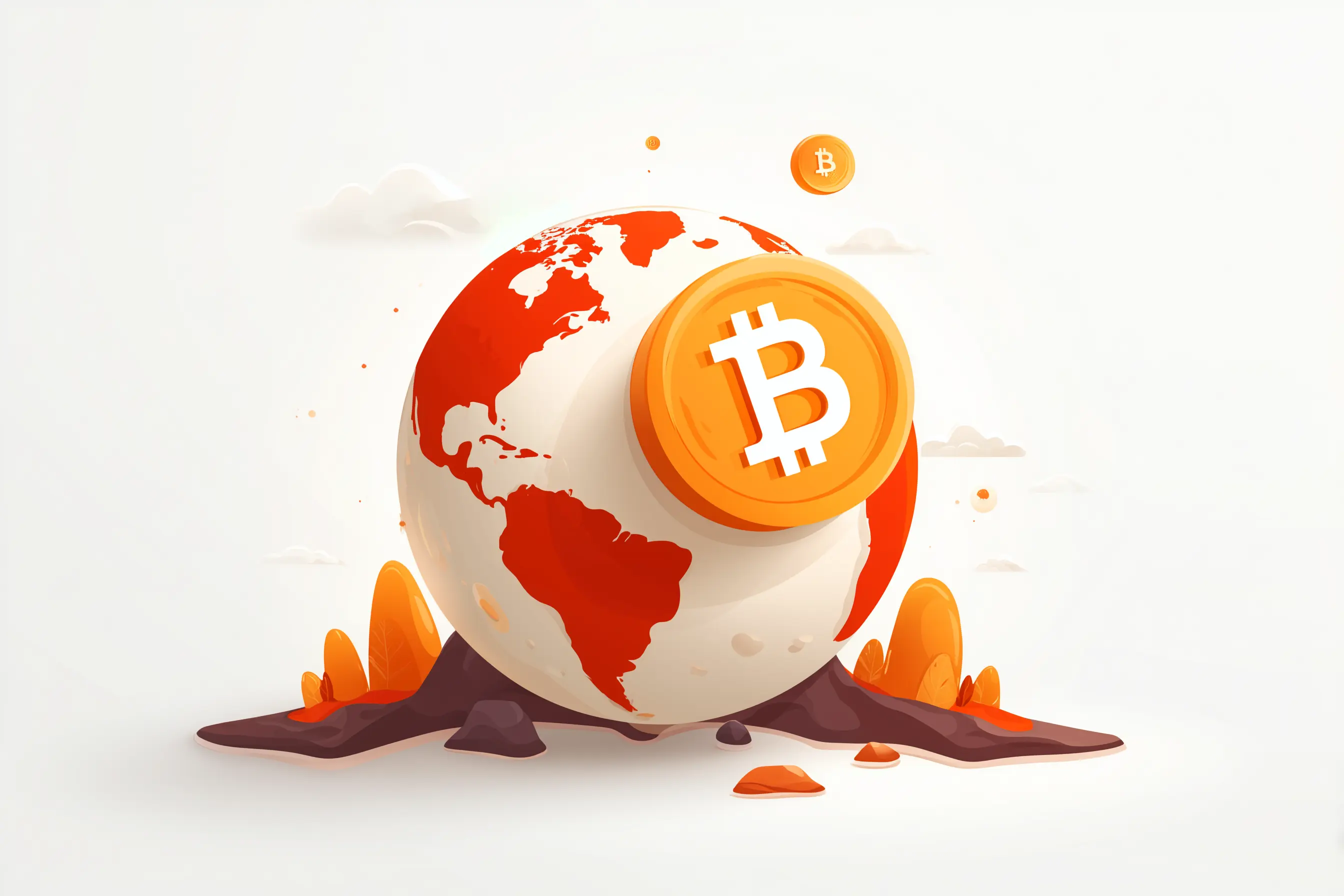
The question of which countries have Bitcoin, whether through legal recognition, widespread adoption, or government holdings, reveals a fascinating patchwork of policies across the globe. From El Salvador’s pioneering status as the first country to adopt Bitcoin as legal tender, to the United States embracing spot Bitcoin ETFs in 2024, to Japan’s early regulatory framework for crypto exchanges, nations have taken remarkably different approaches to this digital asset.
Many countries are actively developing or implementing diverse legal frameworks for cryptocurrency, ranging from outright bans to full legalization and digital currency adoption. This diversity highlights the evolving and varied global stance on crypto regulation.
This guide covers three essential angles for understanding Bitcoin’s global footprint: countries where Bitcoin is legal and actively used, jurisdictions where it faces restrictions or outright bans, and governments that actually hold Bitcoin reserves on their balance sheets. We’ll examine how the European Union’s comprehensive MiCA regulation differs from India’s evolving stance, why Nigeria leads in peer-to-peer trading despite banking restrictions, and how Bhutan quietly became a Bitcoin mining powerhouse.
The information presented reflects public data and regulations as of late 2025, but cryptocurrency rules can change rapidly. Central bank circulars, new legislation, and court rulings regularly reshape the landscape. Always verify current local rules with official government sources before making decisions about holding, trading, or using Bitcoin. That said, the broad reality is that most countries allow some form of Bitcoin ownership or trading, but recognition as legal tender remains exceptionally rare, limited to just a handful of nations worldwide.
Bitcoin Basics and Why Its Legal Status Varies
Bitcoin launched in January 2009 as the world’s first decentralized cryptocurrency, and by 2024-2025 it had grown to become the largest crypto asset by market capitalization, at various points exceeding $1 trillion. This digital money operates without central bank oversight, which is precisely what makes regulating it so complicated for governments worldwide.
Several key characteristics of Bitcoin challenge traditional regulatory frameworks:
Fixed supply cap of 21 million coins, with new issuance halving approximately every four years
Public blockchain that records all transactions permanently and transparently
Pseudonymous transactions that don’t require identity verification at the protocol level
Borderless transfers that can move value across jurisdictions in minutes
Different regulators have chosen to classify Bitcoin in various ways depending on their priorities. Some treat it as a currency or means of payment, others as property or a financial asset for tax purposes, others as a commodity, and still others as a prohibited instrument entirely. These classification decisions have real consequences for how citizens can legally conduct transactions and how businesses must operate.
Some countries have defined Bitcoin as a currency, property, or commodity for regulatory purposes, shaping how it is taxed and monitored. The legal basis for Bitcoin’s use varies widely, with certain nations enacting formal laws or regulations to establish its status. In several jurisdictions, Bitcoin is classified as a virtual asset, distinguishing it from legal tender or traditional currency.
This variation in approach creates five rough categories of national Bitcoin policy:
Legal tender – Bitcoin must be accepted for debts alongside fiat currency
Legal but not tender – Citizens can own and trade freely, but it’s not official money
Restricted/banking bans – Holding may be legal, but financial institutions cannot service crypto
Grey area – No explicit laws, leaving Bitcoin in a legal limbo
Total bans – Trading, mining, or ownership is prohibited outright
Countries Where Bitcoin Is Legal Tender or Officially Recognized
As of 2025, only a small number of nations have gone so far as to make Bitcoin legal tender, meaning merchants must accept it for debts where practicable. A larger group of countries officially recognise cryptocurrency as a regulated asset class without granting it the status of official money. Some countries have moved to recognize cryptocurrencies as legitimate assets and have introduced new rules to govern their use and trading.
The distinction matters significantly. Legal tender status means Bitcoin becomes part of a country’s monetary system alongside traditional currency. In contrast, “legal but not tender” status means citizens and businesses can voluntarily use Bitcoin, subject to applicable laws, but no one is obligated to accept it.
El Salvador
El Salvador became the first country in the world to adopt Bitcoin as legal tender on September 7, 2021, through the “Bitcoin Law” (Ley Bitcoin). President Nayib Bukele championed the initiative, arguing it would boost remittances, which comprise roughly 24% of the country’s GDP, and extend financial services to the approximately 70% of Salvadorans without bank accounts.
The country now operates a dual-currency system where both Bitcoin and the U.S. dollar function as legal tender. The government launched several supporting initiatives, including the Chivo Wallet (with $30 in Bitcoin distributed to citizens who signed up), a network of over 3,000 Bitcoin ATMs, and the ability to pay taxes in BTC. Starting in late 2022, El Salvador adopted a policy of purchasing 1 BTC per day, accumulating holdings that exceeded 5,800 BTC by early 2026, valued at over $400 million.
Ambitious plans continue to develop, including the proposed “Bitcoin City” funded by Bitcoin-backed bonds and volcano-powered Bitcoin mining facilities leveraging the country’s geothermal energy. The initiative has attracted significant Bitcoin-focused tourism and investment.
The adoption has not been without challenges. Bitcoin’s volatility, including a 50% drop in value during 2022, drew criticism from the IMF, which withheld a $1.3 billion loan over concerns about financial stability risks. On-the-ground merchant adoption remains limited, with estimates suggesting only about 20% of businesses actively use the Chivo system, partly due to volatility concerns and the need for further education.
Central African Republic
The Central African Republic (CAR) briefly became the second country to adopt Bitcoin as legal tender in April 2022 through the Sango project. President Faustin-Archange Touadéra announced the initiative as part of a broader digital transformation strategy.
However, significant infrastructure challenges limited real-world Bitcoin usage. The CAR has one of the world’s lowest internet penetration rates, minimal electricity access outside major cities, and a largely cash-based economy. These practical barriers meant that legal tender status remained more symbolic than functional for the average citizen seeking to conduct transactions.
By late 2023-2024, the legal framework was partially rolled back or reinterpreted following pressure from regional economic partners in the Central African Economic and Monetary Community (CEMAC). Bitcoin’s formal legal tender designation became more ambiguous, with the country stepping back from its initial proclamations.
The CAR experience illustrates the gap between legal announcements and on-the-ground adoption in low-income countries. Without robust infrastructure, reliable internet, and widespread financial literacy, declaring Bitcoin legal tender may have limited practical impact regardless of legislative intent.
Other States with Strong Official Recognition (But Not Legal Tender)
Japan was among the first major economies to create a comprehensive framework for digital currencies. Through its 2017 Payment Services Act, Japan officially recognised Bitcoin and other crypto assets, defining them as “crypto-assets” and establishing a licensing regime for cryptocurrency exchanges. The Japanese government requires exchanges to register with the Financial Services Agency (FSA), maintain customer asset segregation, and implement rigorous AML/KYC procedures.
Switzerland has positioned itself as a global leader in crypto-friendly regulation. Bitcoin is legal to hold and trade, with widespread crypto banking services available in places like Zug (nicknamed “Crypto Valley”). Swiss banks offer cryptocurrency custody, the city of Lugano has run pilot programs accepting Bitcoin for municipal payments, and crypto assets are integrated into various financial products. The country’s pragmatic approach attracts crypto businesses while maintaining strong AML oversight.
The European Union implemented the Markets in Crypto-assets Regulation (MiCA), phased in starting June 2024 with full implementation in 2025-2026. While MiCA does not make Bitcoin legal tender (the euro remains the sole legal tender in the Eurozone), it creates a harmonised framework for legal use of crypto assets across all EU countries. This includes licensing requirements for crypto asset service providers, reserve and disclosure standards, and consumer protection measures that recognise cryptocurrencies as legitimate but regulated instruments.
Countries Where Bitcoin Use Is Legal but Not Legal Tender
In most advanced economies, citizens can legally own, trade, and use Bitcoin, but it is treated as an asset or property rather than official money. This means Bitcoin transactions are subject to tax obligations, and businesses accepting crypto payments must comply with existing laws around financial reporting and consumer protection. In many countries, the taxation of Bitcoin is taxed based on how the asset is classified and the nature of the transaction.
The key distinction is that businesses can choose to accept Bitcoin for goods and services, but they have no legal obligation to do so. Regulatory frameworks typically focus on licensing crypto exchanges, enforcing AML/KYC requirements, and ensuring tax compliance rather than dictating whether private parties can transact in Bitcoin.
United States
Bitcoin is legal in the United States, though its regulatory classification varies by agency. The IRS treats Bitcoin as property for tax purposes, meaning every sale, exchange, or use to purchase goods and services triggers a capital gains tax event. Meanwhile, FinCEN classifies Bitcoin as a convertible virtual currency under the Bank Secrecy Act.
Crypto exchanges and payment processors must register as Money Service Businesses (MSBs) with FinCEN, implement comprehensive AML/KYC programs, and file reports on suspicious transactions. Major developments between 2021-2024 expanded regulatory oversight significantly:
Agency | Classification | Key Requirements |
IRS | Property | Capital gains reporting, cost basis tracking |
FinCEN | Virtual currency | MSB registration, SAR filings |
SEC | Securities (for some tokens) | Registration requirements for offerings |
CFTC | Commodity | Oversight of derivatives markets |
The Infrastructure Investment and Jobs Act introduced new reporting requirements for digital assets, requiring brokers to report cryptocurrency transactions to tax authorities starting in 2026. Debates continue about a potential U.S. central bank digital currency and the idea of a formal “Bitcoin strategic reserve.”
Individuals and public companies are free to accept Bitcoin payments if they comply with state and federal regulations. However, Bitcoin is not legal tender, the U.S. dollar remains the only currency that must be accepted for debts, and banks do not hold consumer deposits in BTC directly.
United Kingdom
The United Kingdom allows Bitcoin ownership and trading, regulating crypto under financial services and AML laws rather than treating it as legal tender. The 2023 Financial Services and Markets Act brought certain crypto-asset activities into the U.K.’s regulated perimeter, empowering the government and Financial Conduct Authority (FCA) to supervise them more closely.
HMRC treats Bitcoin as a taxable asset. Individuals pay capital gains tax on profits from selling or exchanging cryptocurrency, while businesses are subject to corporation tax. Both must maintain detailed records for tax purposes and comply with reporting duties.
The U.K. has explicitly stated its ambition to become a “global crypto hub,” attracting fintech startups and investment while simultaneously tightening rules around advertising and consumer protection. The FCA requires crypto businesses to register for AML purposes and has taken enforcement action against unregistered firms.
European Union (EU)
The EU as a bloc does not make Bitcoin legal tender, the euro remains the sole legal tender in Eurozone countries, and many EU countries maintain their own national currencies. However, Bitcoin and other crypto assets can be used legally across the bloc under the MiCA framework.
Key aspects of EU crypto regulation include:
MiCA Regulation: Licensing, reserve, and disclosure standards for all crypto asset service providers operating in the EU
VAT Treatment: The Court of Justice of the EU exempted Bitcoin exchange services from VAT in 2015, treating BTC more like a currency than a commodity for tax purposes
AML Directives: Crypto exchanges must conduct transactions with full KYC and report suspicious transactions to national authorities
Individual member states maintain their own tax rules. Germany, for example, allows tax-free gains on Bitcoin held for more than one year for private investors. France and the Netherlands have different calculation methods and rates for crypto taxation. The European Commission continues to refine rules as the cryptocurrency market evolves.
Canada
Bitcoin is legal in Canada and treated as a commodity for tax purposes. Whether gains are taxed as business income or capital gains depends on the nature and frequency of trading activity, the Canada Revenue Agency examines factors like trading frequency, holding periods, and whether crypto activity constitutes a business operation.
Crypto exchanges are regulated as Money Service Businesses and must register with FINTRAC (Financial Transactions and Reports Analysis Centre of Canada). Registration requires implementing AML/CFT programs, verifying customer identity, and maintaining transaction records.
Canada was among the first countries to approve Bitcoin exchange-traded funds (ETFs) in February 2021, well ahead of the U.S., giving institutional investors regulated access to Bitcoin exposure. The Purpose Bitcoin ETF and others quickly attracted significant assets under management.
Australia
Australia allows Bitcoin use and classifies it as a CGT (capital gains tax) asset under Australian Taxation Office (ATO) guidance. The tax treatment depends on how you use Bitcoin:
Use Case | Tax Treatment |
Investment (holding) | Capital gains tax on disposal |
Regular trading | Business income |
Personal purchases under $10,000 | Potential exemption for personal use assets |
Mining | Assessable income at market value when received |
AUSTRAC (Australian Transaction Reports and Analysis Centre) has required digital currency exchange registration since 2018. Requirements have tightened through 2023-2025, with enhanced obligations around customer identification, transaction monitoring, and reporting suspicious transactions to financial organizations.
Bitcoin is widely accessible in Australia through licensed exchanges, ATMs in major cities, and a growing number of merchants accepting crypto payments. The Reserve Bank of Australia has explored CBDC concepts but maintains that the Australian dollar remains the country’s legal currency.
Israel, Singapore and Other Crypto-Friendly Jurisdictions
Israel treats Bitcoin as an asset subject to capital gains tax, approximately 25% on profits for individuals. Despite not being legal tender, Bitcoin enjoys widespread retail acceptance through ATMs and merchants. The Israel Tax Authority requires detailed reporting of crypto holdings and transactions, and financial institutions have gradually become more accommodating of crypto businesses.
Singapore operates under the Monetary Authority of Singapore’s (MAS) Payment Services Act, which licenses crypto service providers. The approach is permissive but cautious, merchants can accept Bitcoin, but MAS regularly issues public warnings about volatility and scam risks. Singapore’s clear regulatory framework attracts crypto businesses while maintaining financial system stability.
Other notable crypto-friendly jurisdictions include:
Switzerland: Comprehensive banking integration and Crypto Valley ecosystem in Zug
UAE: Dedicated free-zone regulators like ADGM in Abu Dhabi and VARA in Dubai
Brazil: Specific crypto legislation passed in 2023 with sandbox frameworks
Mexico: Fintech law bringing crypto exchanges under regulatory oversight
These jurisdictions share a common approach: clear legal acceptance of Bitcoin combined with robust regulatory frameworks that balance innovation with consumer protection.
Countries with Banking Bans, Partial Restrictions, or Grey-Area Use
Some states do not outlaw Bitcoin for individuals but restrict banks and financial institutions from servicing crypto businesses. This creates a “banking ban” scenario where exchanges cannot obtain bank accounts, making lawful crypto trading difficult even if private holding is not technically illegal.
The effect is to push Bitcoin activity into peer-to-peer markets and offshore platforms. Citizens may legally own risk-bearing crypto assets, but the practical barriers to converting between Bitcoin and local currency become significant. Grey areas are common: laws may not mention Bitcoin explicitly, but regulators issue warnings, and banks de-risk by refusing to serve the sector.
India
India’s regulatory journey with Bitcoin has been particularly turbulent. The Reserve Bank of India (RBI) issued a 2018 circular effectively banning banks from dealing with crypto businesses, which severely disrupted the local exchange ecosystem. However, the Supreme Court of India overturned this banking ban in March 2020 in the landmark Internet and Mobile Association of India v. RBI case.
Since 2022, India has imposed a 30% flat tax on crypto gains and a 1% TDS (tax deducted at source) on cryptocurrency transactions exceeding certain thresholds. These measures significantly affected local trading volumes, pushing some activity to peer-to-peer platforms and offshore exchanges.
Regulation | Year | Impact |
RBI Banking Circular | 2018 | Barred banks from crypto services |
Supreme Court Ruling | 2020 | Overturned banking ban |
30% Crypto Tax | 2022 | Flat tax on all gains |
1% TDS | 2022 | Deducted on most transactions |
Bitcoin ownership and crypto trading remain legal, there is no outright ban on holding digital assets. However, India lacks dedicated crypto legislation, leaving the sector in regulatory uncertainty. Policymakers have discussed frameworks ranging from comprehensive regulation to potential bans, while the central bank has launched its own digital rupee (e-CNY) CBDC pilot.
Despite this uncertainty, India consistently ranks among world leaders in raw crypto adoption, driven by a young, tech-savvy population and interest in alternative financial assets.
Saudi Arabia and Selected Middle Eastern States
Saudi Arabian authorities have periodically warned citizens against dealing in virtual currencies, emphasizing lack of legal protection and warning about speculative risks. The Saudi Central Bank (SAMA) has generally barred financial organizations from servicing crypto exchanges, creating effective barriers to institutional crypto activity.
However, individuals still access Bitcoin through offshore platforms and peer-to-peer markets. The absence of explicit criminalization means Saudis can hold Bitcoin at their own risk, even if converting to Saudi riyals through domestic banking channels proves difficult.
The contrast with the UAE is striking. While the UAE central bank has not declared crypto legal tender, dedicated free-zone regulators have created welcoming environments:
ADGM (Abu Dhabi): Comprehensive crypto framework since 2018
VARA (Dubai): New regulator established in 2022 specifically for virtual assets
DIFC: Sandbox programs for crypto businesses
This divergence shows the diversity of approaches even within the Gulf region, Saudi caution contrasts sharply with Emirati embrace of crypto innovation.
Other Countries with Significant Restrictions
Turkey introduced 2021 regulations prohibiting the use of virtual currencies to pay for goods and services, while still allowing trading and holding on platforms. Crypto exchanges must register with Turkish authorities, but the payment ban means Bitcoin cannot legally function as a payment method for everyday transactions.
Nigeria’s central bank issued 2021 directives restricting banks from serving crypto businesses, despite the country’s position as a global leader in peer-to-peer Bitcoin volume. By 2023-2024, authorities began softening this stance, introducing clearer guidelines and exploring regulatory frameworks rather than outright prohibition.
In some Latin American and African states, crypto is not banned but remains legally undefined. Heavy reliance on peer-to-peer platforms and informal OTC markets fills the gap, with citizens using Bitcoin for remittances and savings despite the absence of explicit legal regulation.
Countries with Total or Near-Total Bans on Bitcoin
A minority of governments have chosen to outlaw Bitcoin trading, Bitcoin mining, or even ownership altogether. These prohibitions typically cite concerns about financial stability, money laundering, terrorist financing, and capital flight. Enforcement intensity varies significantly, some countries actively prosecute violations, while others have bans that exist primarily on paper.
China
China progressively tightened cryptocurrency restrictions over nearly a decade before implementing a comprehensive ban:
Year | Action |
2013 | PBoC warnings about Bitcoin risks |
2017 | ICO ban and exchange shutdowns |
2021 | Complete ban on crypto trading and mining |
By September 2021, the People’s Bank of China and multiple other government agencies announced a blanket prohibition on all cryptocurrency transactions and mining operations. The ban characterized participation in crypto markets as illegal financial activity, with potential criminal penalties.
The 2021 mining ban had global consequences. Major Bitcoin mining operations relocated from China to the United States, Kazakhstan, Russia, and other countries seeking to benefit from the exodus. China’s share of global hash rate collapsed from over 65% to near zero within months.
Chinese authorities block domestic cryptocurrency exchanges, restrict banking relationships with crypto entities, and actively monitor for violations. VPN usage to access offshore exchanges remains a legal grey area with enforcement risks.
Notably, China continues developing its own central bank digital currency, the digital yuan (e-CNY), as a state-controlled alternative to decentralized digital currencies. This reflects a preference for monetary control rather than opposition to digital money itself.
Other Countries with Formal Bans
Algeria enacted its ban through the 2018 Finance Law, explicitly prohibiting the purchase, sale, use, or holding of virtual currencies. Violations can result in penalties under existing laws governing foreign exchange and financial crimes.
Nepal’s central bank has issued prohibitions on crypto trading, with authorities occasionally arresting individuals operating exchanges or promoting cryptocurrency investment.
Bangladesh has taken strong positions against other virtual currencies under anti-terror financing and money laundering frameworks, treating crypto activity as potentially criminal.
Other countries with formal restrictions include Bolivia, Morocco, and Egypt, though enforcement levels and specific prohibitions vary. The number of countries with absolute bans has gradually declined as more jurisdictions move toward regulation rather than prohibition, recognizing that outright bans often push activity underground rather than eliminating it.
Top Governments and Institutions Holding Bitcoin
Beyond individuals and companies, some national governments and state-related legal entities have accumulated significant on-chain Bitcoin holdings. These holdings come from various sources: law enforcement seizures, strategic purchases, state-backed mining operations, and in some cases, illicit activity by state-affiliated groups.
Exact numbers change rapidly due to market movements, sales, and incomplete reporting. The figures below represent estimates based on on-chain analysis and public disclosures, with dates specified where possible.
United States Government Holdings
U.S. federal agencies including the DOJ, IRS Criminal Investigation, and U.S. Marshals Service have seized substantial amounts of Bitcoin through criminal prosecutions. Major sources include the Silk Road marketplace shutdown, Bitfinex hack recoveries, and ransomware enforcement actions.
As of early 2025, on-chain analysts estimated that U.S. government-linked wallets collectively held over 200,000 BTC, though the exact figure under direct U.S. Marshals control at any given time fluctuates as seizures occur and auctions conclude.
Seized Bitcoin is periodically sold through public auctions or OTC deals with licensed brokers. Political debates have emerged about whether the U.S. should establish a formal “Bitcoin strategic reserve” rather than liquidating seizures, with proposals introduced in Congress.
El Salvador’s Bitcoin Treasury
El Salvador’s government has publicly disclosed periodic BTC purchases since September 2021, financed from state funds. The country implemented a policy of buying 1 BTC per day starting in late 2022, systematically accumulating Bitcoin holdings as part of its national treasury strategy.
Public trackers analyzing on-chain wallet activity estimate El Salvador’s total holdings in the range of 5,800+ BTC as of early 2026. The government has diversified storage across multiple wallet addresses and reportedly uses both hot and cold storage solutions.
The strategy remains controversial. International organizations and domestic critics question exposing public finances to Bitcoin’s volatility, paper losses exceeded $50 million during 2022’s market downturn. Supporters view it as a pioneering monetary experiment that could pay dividends if Bitcoin appreciates long-term.
Bhutan and State-Linked Mining
Reports emerged that Bhutan, via state-owned or state-backed entities like Druk Holding and Investments, has engaged in hydro-powered Bitcoin mining since approximately 2019-2020. The Himalayan kingdom’s abundant hydroelectric capacity provides cheap, renewable energy ideal for mining operations.
On-chain evidence suggests Bhutan-linked wallets have handled thousands of BTC, with holdings varying over time due to periodic sales. Media reports and leaked documents indicate that mining revenue has contributed to public finances, with estimates suggesting the operation generated over $20 million in 2022 revenue alone.
Bhutan’s approach aligns sustainability with economic development, using clean energy for mining while generating revenue that reportedly supported civil servant wage increases. However, the government has not always transparently disclosed Bitcoin holdings, and numbers rely substantially on investigative reporting and blockchain analysis.
United Arab Emirates (UAE)
The UAE’s direct sovereign Bitcoin holdings remain opaque, but government-owned or government-backed entities have been linked to Bitcoin mining and accumulation since around 2022. The country’s push to become a crypto hub extends to state-adjacent investment in the sector.
Some sources attribute several thousand BTC to UAE-related mining companies, though verification is difficult. Rumors of much larger holdings (hundreds of thousands of BTC) are unconfirmed and should be treated as speculation.
What is verifiable is the regulatory push in Dubai and Abu Dhabi to host crypto businesses, with state-linked corporate involvement in mining infrastructure. The line between “government holdings” and “state-affiliated corporate holdings” is often blurred in the UAE’s economic structure.
North Korea’s Lazarus Group
Blockchain analytics firms and United Nations reports attribute major exchange hacks and DeFi exploits to North Korea-linked Lazarus Group. These are not official government reserves but represent state-sponsored criminal activity generating foreign currency for a sanctioned regime.
At peaks following major hacks, including incidents in 2022-2024, Lazarus-controlled wallets held tens of thousands of BTC equivalent across various crypto assets. These funds are subsequently laundered through mixing services, bridge protocols, and small exchanges with weak KYC.
Current BTC balances are lower due to law enforcement pressure, sanctions enforcement, and liquidations, but cryptocurrency theft remains a significant component of North Korea’s illicit foreign-currency earnings. It’s important to emphasize these are criminal holdings subject to international sanctions, not legitimate reserves.
China’s Seized and Reportedly Liquidated Bitcoin
Chinese authorities seized approximately 190,000 BTC from the PlusToken Ponzi scheme in 2019, according to court documents. At the time, this represented one of the largest government Bitcoin holdings globally.
On-chain evidence suggests that much of this BTC has since been moved to exchanges via mixing services, indicating systematic liquidation between 2020-2024. Analysts observed patterns consistent with state-controlled selling, converting the seized Bitcoin to fiat currency.
As a result, most analysts no longer count China among major government Bitcoin holders, even though it once controlled a substantial seized stash. The liquidation approach contrasts with countries like the U.S. and El Salvador, which have maintained or grown their holdings.
Top Countries by Real-World Bitcoin and Crypto Usage
Third-party indices like the Chainalysis Global Crypto Adoption Index (published annually since 2020) rank countries by on-chain and off-chain activity, providing insight into where Bitcoin sees the most real-world use. The findings often surprise observers: top usage frequently occurs in emerging markets rather than wealthy economies.
Countries like Nigeria, Vietnam, the Philippines, Turkey, and India consistently rank near the top due to factors including:
Remittance corridors where Bitcoin offers cheaper cross-border transfers
Local inflation driving demand for alternative stores of value
Capital controls making traditional currency exchange difficult
Strong tech ecosystems with young, mobile-first populations
High adoption doesn’t always correlate with clear legal status, many top-ranked countries operate under ambiguous or restrictive regulatory frameworks.
Emerging-Market Leaders (Nigeria, Vietnam, Philippines, Turkey)
Nigeria has exceptionally strong peer-to-peer Bitcoin markets, with Chainalysis data indicating over $56 billion in P2P volume during 2022-2023. Young Nigerians use Bitcoin for remittances from diaspora communities, savings amid naira volatility, and small-business payments, despite the 2021 banking ban that pushed activity to decentralized platforms.
Vietnam and the Philippines benefit from massive remittance inflows from overseas workers. Bitcoin and stablecoins offer alternatives to traditional money transfer services that charge 5-10% fees. Both countries also have vibrant Web3 ecosystems, including play-to-earn gaming that drives crypto familiarity among younger demographics.
Turkey experiences heavy BTC and USDT usage as a hedge against persistent inflation (exceeding 70% at points in 2022-2023) and lira depreciation. Despite 2021 restrictions on Bitcoin usage as a payment method, Turkish citizens actively trade cryptocurrencies to preserve purchasing power.
Developed Economies with High Institutional and Retail Participation
The United States remains home to major cryptocurrency exchanges, the largest mining operations post-China-ban, ETF issuers like BlackRock and Fidelity, and significant institutional investors. Estimates suggest 15-20% of American adults own some cryptocurrency, with access through familiar brokerage platforms.
Strong adoption continues across the EU, U.K., Canada, Japan, South Korea, and Australia, where regulated derivatives, ETFs, and growing merchant acceptance integrate Bitcoin into mainstream finance. Over 450 registered crypto firms operate in the U.S. alone, with similar concentrations in other developed markets.
In these economies, Bitcoin use tends to skew toward investment, trading, and long-term holding rather than everyday retail payments. Institutional comfort comes from clearer regulatory frameworks, custody solutions, and integration with traditional financial institutions and payment systems.
Benefits and Risks Driving Bitcoin Policies by Country
Countries weigh potential benefits against significant risks when crafting Bitcoin laws. The policy balance each nation strikes reflects its unique economic circumstances, existing financial system robustness, and tolerance for innovation versus stability concerns.
Financial Inclusion: Countries with large unbanked populations, like El Salvador, where 70% lacked bank accounts, see potential in Bitcoin to extend financial services without traditional banking infrastructure. Remittance-heavy economies hope to reduce transfer costs that often exceed 10% through traditional channels.
Innovation and Investment: Jurisdictions positioning as crypto hubs, including the UAE, U.K., Singapore, and Switzerland, aim to attract startups, talent, and capital. Clear regulatory frameworks can turn crypto-friendliness into competitive advantage for a country’s financial sector.
Macro-Stability and Capital Controls: Some countries impose restrictions fearing capital flight, currency substitution, or undermining monetary policy effectiveness. The risk of citizens abandoning volatile local currencies for Bitcoin concerns central bank officials globally.
Law Enforcement and Consumer Protection: Concerns about Bitcoin facilitating money laundering, terrorist financing, and scams drive many restrictions. Consumer protection worries about volatility and fraud lead government agencies to issue warnings or limit retail access.
How to Check Bitcoin Legality and Use in Your Country
Given how rapidly crypto regulations evolve, relying solely on any article, including this one, risks working with outdated information. Here’s a practical approach to verifying current rules:
Check central bank notices: Most central banks publish circulars, warnings, or guidance on cryptocurrency. Search your central bank’s official website for terms like “virtual currency,” “cryptocurrency,” or “digital assets.”
Review financial regulator statements: Securities commissions, financial conduct authorities, and AML regulators often publish guidance on crypto licensing, registration requirements, and prohibited activities.
Consult tax authority guidance: Understand how your tax authorities classify Bitcoin, as property, currency, commodity, or something else, and what reporting obligations apply. Many have dedicated crypto tax guidance pages.
Monitor FATF recommendations: The Financial Action Task Force issues global recommendations on AML/KYC and the “travel rule” that influence national policies. Countries generally align their crypto rules with FATF standards.
Seek professional advice: If you operate a business accepting or holding Bitcoin, consult legal and tax professionals who specialize in cryptocurrency. The intersection of fintech law, tax rules, and AML compliance requires expert navigation.
Remember that even in jurisdictions where Bitcoin is legal, specific activities, like operating an unlicensed exchange or failing to file reports, can create legal exposure. Understanding the rules means knowing not just whether Bitcoin is permitted, but exactly what compliance obligations apply.
Conclusion: A Rapidly Changing Map of Countries with Bitcoin
The global map of countries with Bitcoin reveals a spectrum from full embrace to outright prohibition, with most nations falling somewhere in the middle, allowing ownership and trading while treating Bitcoin as a regulated asset rather than official currency. Legal tender status remains rare, limited primarily to El Salvador’s pioneering experiment, while comprehensive bans persist in China and a handful of other jurisdictions.
What makes this landscape particularly fascinating is the direct involvement of governments as Bitcoin holders. U.S. federal agencies control hundreds of thousands of BTC from seizures, El Salvador systematically accumulates Bitcoin in its national treasury, Bhutan mines with hydroelectric power, and even state-linked criminal actors like North Korea’s Lazarus Group hold significant amounts. Bitcoin has moved far beyond retail speculation to become intertwined with national finance and geopolitics.
Regulations continue evolving at pace. The EU’s MiCA rollout, new U.S. reporting requirements, shifting stances in India and Nigeria, and emerging frameworks across Latin America and Africa ensure that any static list of crypto legal status will age quickly. For investors, businesses, and curious observers alike, the essential practice is staying informed through official sources and professional guidance. Bitcoin’s global footprint will continue expanding, but how it integrates into each country’s financial system depends on regulatory clarity and responsible policy choices still being made.
Bitcoin Mining and Energy Consumption
Bitcoin mining is the backbone of the Bitcoin network, responsible for validating cryptocurrency transactions and securing the blockchain through a process known as proof-of-work. This process, while essential for maintaining the integrity of digital currencies, has drawn global attention due to its substantial energy requirements. As miners compete to solve complex mathematical puzzles and add new blocks to the blockchain, the collective energy consumption of Bitcoin mining operations has reached levels comparable to those of entire small countries. Some estimates suggest that Bitcoin mining could account for up to 64 megatons of CO2 emissions annually, raising significant concerns about its environmental footprint.
The energy intensity of Bitcoin mining stems from the proof-of-work consensus algorithm, which requires vast computational resources to process and verify Bitcoin transactions. As the cryptocurrency market has expanded and the value of Bitcoin has increased, so too has the incentive for miners to deploy more powerful hardware, further driving up energy consumption. This has led to a global debate about the sustainability of crypto assets and the broader impact of cryptocurrency transactions on the environment.
In response to these challenges, governments and regulatory bodies around the world have begun to address the environmental implications of Bitcoin mining. The European Union, for example, has proposed regulatory measures that could restrict or even ban proof-of-work mining in an effort to reduce energy consumption and limit the environmental impact of digital currencies. Similarly, China, once the epicenter of global Bitcoin mining, has implemented sweeping bans on mining activities in several provinces, citing concerns over energy use and the need to meet climate targets. These actions have prompted many mining operations to relocate to other countries with more favorable regulatory environments or access to renewable energy sources.
Despite these regulatory pressures, the Bitcoin mining industry is actively seeking ways to become more sustainable. A growing number of mining operations are transitioning to renewable energy sources such as hydroelectric, solar, and wind power, significantly reducing their carbon footprint.
Innovations in mining hardware and the development of more energy-efficient algorithms are also helping to mitigate the environmental impact of Bitcoin transactions. These efforts are particularly important for countries that have recognized Bitcoin as legal tender, such as El Salvador, where the government has invested in geothermal-powered mining facilities to align with environmental goals.
The legal status of Bitcoin mining varies widely across countries. In the United States, Bitcoin mining is recognized as a legitimate activity and is subject to regulation under the Bank Secrecy Act. Mining operations must register with the Financial Crimes Enforcement Network (FinCEN) and comply with anti-money laundering (AML) and know-your-customer (KYC) requirements, ensuring that crypto transactions remain transparent and secure.
In contrast, the European Union is moving toward a harmonized regulatory framework that addresses both the legal and environmental aspects of Bitcoin mining, aiming to balance innovation in the cryptocurrency market with consumer protection and the prevention of money laundering and terrorist financing.
Other countries have taken a range of approaches, from outright bans to supportive policies that encourage the use of renewable energy in mining operations. This patchwork of legal regulation reflects the ongoing debate about how best to integrate crypto assets and blockchain technology into the global financial system while safeguarding environmental and societal interests.
As the adoption of digital currencies and crypto exchanges continues to grow, the issue of Bitcoin mining and energy consumption will remain at the forefront of regulatory discussions. Financial institutions, government agencies, and legal entities will need to work together to develop solutions that support the responsible growth of the cryptocurrency market. By prioritizing sustainability, consumer protection, and compliance with existing laws, countries can harness the benefits of Bitcoin and other virtual currencies while minimizing their environmental impact and ensuring a secure, innovative financial future.